


 English
  русский
  Español
  عربى
عربى  日本語
日本語 
-
● Customization Service
We provide comprehensive, end-to-end services covering design and development, material selection, lubrication optimization, failure analysis, and customized packaging.
-
● Bearing Custom Development
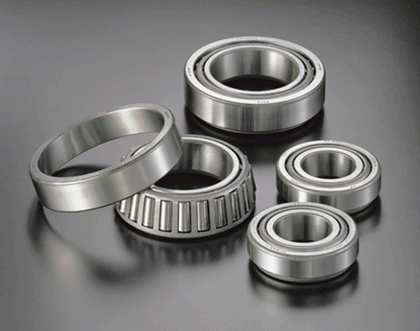
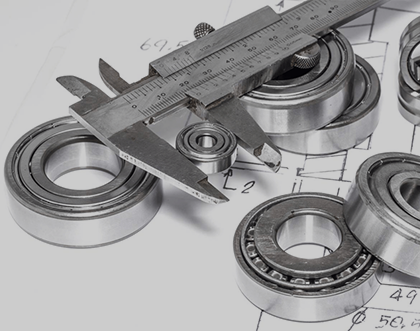
We can strictly manufacture according to customer drawings, including tolerance grades, internal clearance, material specifications, lubrication methods, and sealing types. Besides, our engineers can assist with structural design and material matching to develop suitable solutions.
-
● Bearing Design & Optimization
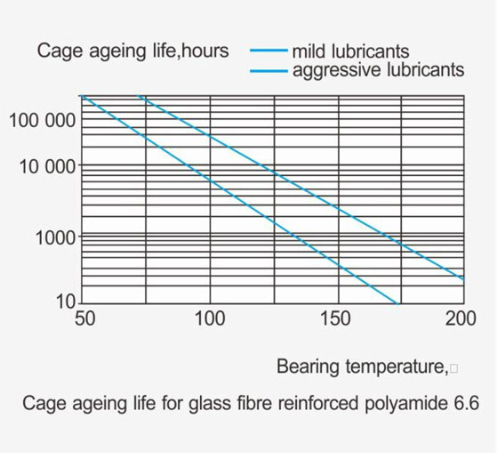
The fit between the bearing, shaft, and housing bore directly affects service life and performance. We also provide services including analysis and tolerance recommendations, clearance calculations, load and speed assessments, and application optimization solutions.
-
● Failure Analysis & Technical Support
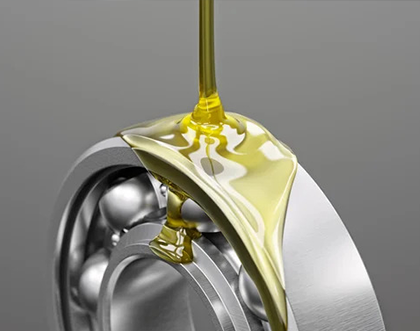
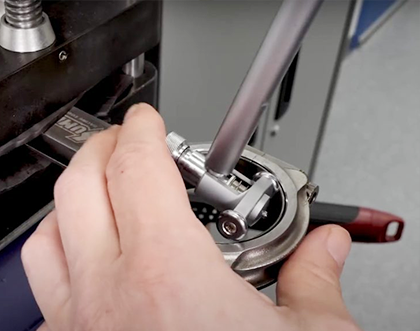
For bearing failure issues, we provide root cause analysis, vibration and noise testing, lubrication condition assessment, installation inspection, and improvement recommendations.

And Non-standard Bearings.
Quickly respond to customers' personalized and differentiated needs, providing a full-process service from solution design, prototype production, mass delivery to after-sales technical support.
-
01. Drawings/SamplesWe will get drawings/samples from customers.
-
02. Drawing ConfirmationWe will draw 3D drawings according to the customer's 2D drawings or samples and send the 3D drawings to the customer for confirmation.
-
03. Quotation SubmissionWe will quote after getting customer confirmation, or directly quote based on customer's 3D drawings.
-
04. Mold FabricationWe will make molds or patterns after receiving mold orders from customers. Use the molds to make real samples and send to customers for confirmation.
-
05. Mass ProductionProducts are produced after receiving confirmation and order from customers.
-
06. Quality InspectionInspect the products by inspectors or ask customers to inspect with us after completion.
-
07. Shipment / DeliveryAfter the inspection results are confirmed and approved by the customer, we will deliver the goods to the customer.
(OEM & ODM) CONTACT US
-
0+ Sets
Advanced Production Equipment
-
0+ People
R&D Team
-
0Year
Warranty Period
-
24/7
Customer Service
FAQ
-
How long will it take to receive a reply after an inquiry?
We value every inquiry. On weekdays, we will reply within 12 hours of receiving your inquiry.
-
Are you a factory or a trading company?
We are a direct manufacturer with our own production capabilities. We have 3 large production plants, and have an international sales department, providing end-to-end services from production to export.
-
What products do you mainly offer?
We specialize in the production of cooperating with customers to develop special requirements for non-standard bearings.
-
In which fields are your products mainly used?
Products are widely used in all kinds of precision instruments, household appliances, medical equipment, massage equip-ment, sports equipment, textile machinery, micro motor, electric tools, transmission equipment, computers, and fishing gear, model aircraft, toys and other fields.
-
Do you support customized production?
Customized production is our core business. We can develop and manufacture according to your drawings or samples.
-
What is the company's production capacity?
We have 3 modern energy-saving and environmentally friendly production bases, with an annual precision bearing capacity exceeding 20,000 tons, which can stably meet various order demands.
-
What is the company's size and personnel structure?
Our company currently has more than 200 employees, including more than 20 professional technicians.
-
How do you guarantee product quality?
We implement full-process quality management. Each process is inspected after completion, and finished products undergo full final inspection according to customer requirements and international standards.
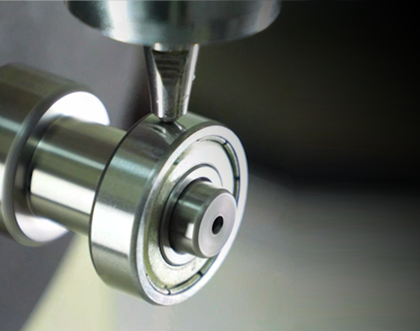
We have an advanced laboratory equipped with a full range of testing equipment, including spectrometers, coordinate measuring machines, and X-ray flaw detectors, ensuring comprehensive monitoring of chemical composition, mechanical properties, non-destructive testing, and geometric dimensions to deliver high-precision products.
-
What are the payment terms?
Trade terms (such as FOB, CIF, etc.) will be confirmed when quoting. For mass production, a 30% prepayment is usually required, with the balance paid upon presentation of a copy of the bill of lading. T/T is the primary payment method, but L/C can also be negotiated.
-
How are goods transported?
Our location is close to the port, and we primarily use sea freight, which is convenient and efficient. For urgent delivery, we can also arrange air freight through Ningbo or Shanghai airports.
-
Which markets are your products mainly exported to?
Our products are exported to more than 30 countries and regions worldwide, including the United States, Germany, Japan, Spain, Italy, the United Kingdom, South Korea, Australia, and Canada. We provide products and services to many Fortune 500 companies and well-known OEM customers.

- Contact Information
-
-
+86 162 6918 9999 +86 136 1619 2555

-
+86 153 0641 4247

-
jeffrey@yhu1988.com

rose@yhu1988.com -
Yinghong Industrial Park, Zexin Avenue, Xingou Auto Parts Industrial Park, Funing County, Yancheng City, Jiangsu Province, China

-
- QR Code

