


 English
 русский
 Español
 عربى
 日本語


Thrust Ball Bearings Manufacturers
-
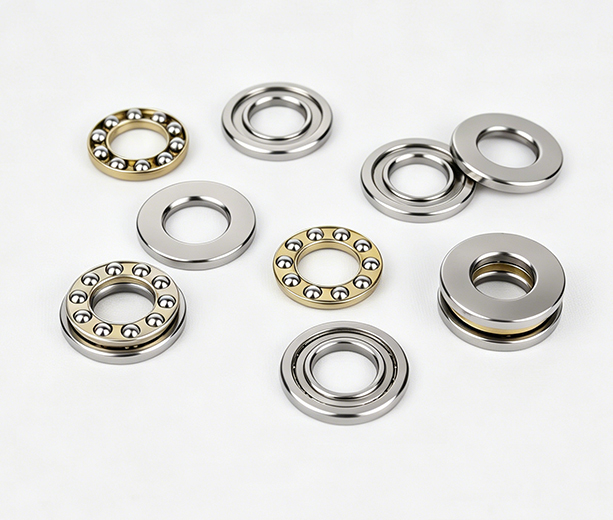
Bearing Steel Miniature Thrust Ball Bearings
Precision bearings - Choose high-reliability precision bearings designed to meet demanding application conditions, ensur...View More
-
Stainless Steel Miniature Thrust Ball Bearings
Thrust ball bearings are a type of bearing specifically designed to withstand axial loads and are widely used in various...View More
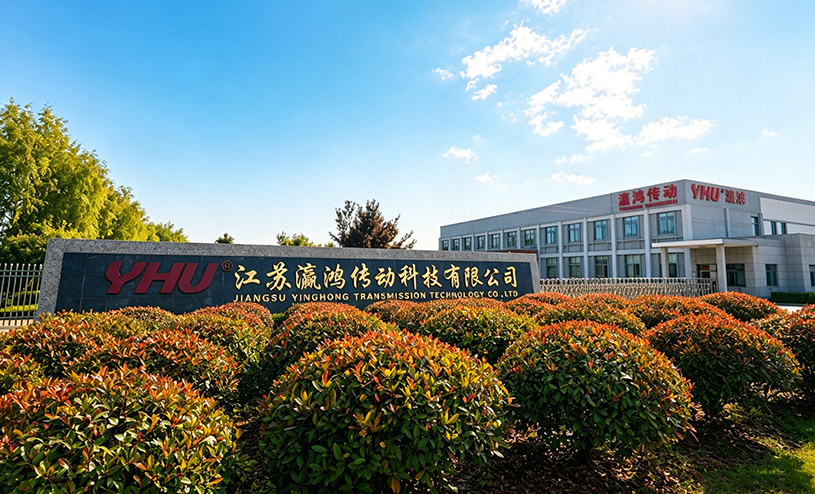
About Us
The company covers more than 70 mu of land and operates nearly 10,000 square meters of manufacturing facilities. As a professional manufacturer of precision special bearings in China, we have introduced advanced Japanese precision manufacturing technology and equipped our facility with automated production lines and high-precision testing equipment. A comprehensive quality management system ensures consistent product quality and reliable performance.
As a National High-Tech Enterprise, Yinghong holds multiple invention and utility model patents and has obtained internationally recognized certifications including IATF 16949, RoHS, CE, and SGS. These certifications enable us to meet diverse customer requirements and provide effective solutions for demanding applications and complex technical challenges.
We specialize in the production of high-precision deep groove ball bearings and custom non-standard bearings under our registered trademark, “YHU”. Our main products include bearing steel bearings, stainless steel bearings, ceramic bearings, and plastic bearings.
YHU bearings are designed to deliver low noise, low vibration, low friction, high precision, great sealing performance, and high-speed operation. They also offer self-lubrication, corrosion resistance, rust resistance, acid and alkali resistance, chemical resistance, electrical insulation, non-magnetic properties, high-temperature resistance, low-temperature adaptability, and long service life, making them suitable for demanding operating environments.
Our bearings and bearing assemblies are widely used in electric motors, power tools, pneumatic tools, robotics, drones, household appliances, precision instruments, semiconductor equipment, medical devices, marine equipment, aerospace applications, financial equipment, textile machinery, fishing equipment, and a wide range of specialized industrial equipment.
Honor
-
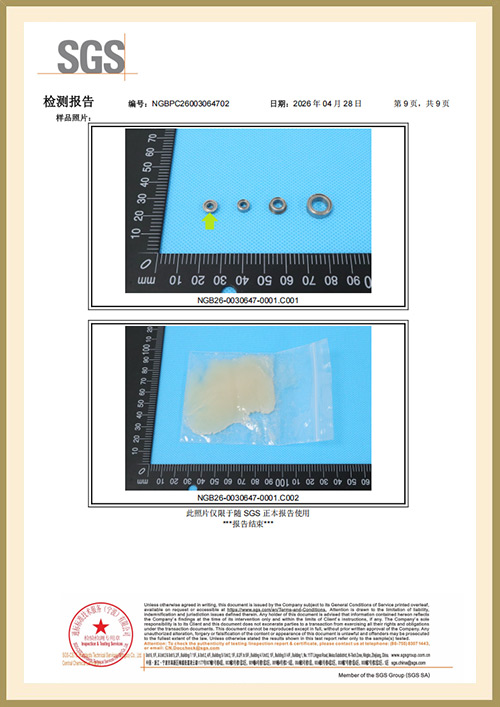 SGS Test Report
-
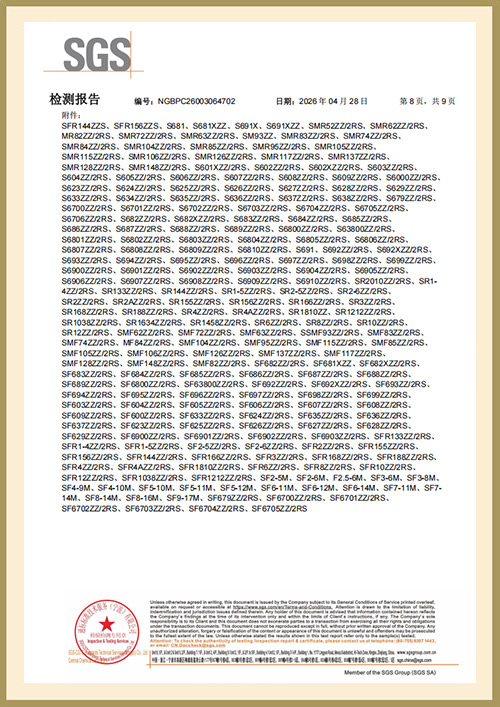 SGS Test Report
-
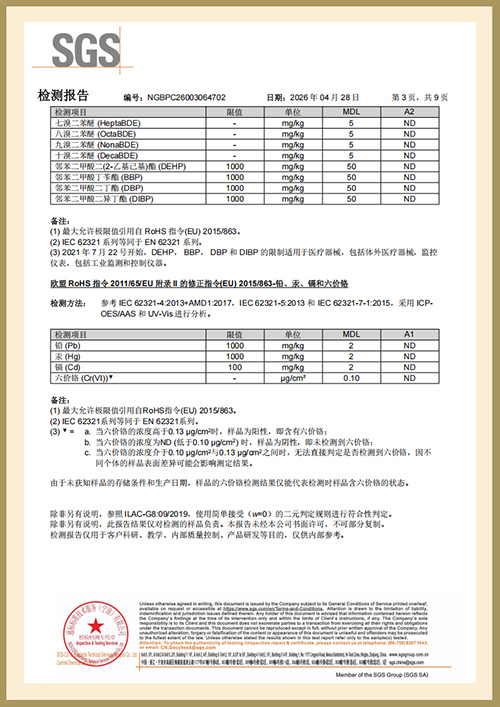 SGS Test Report
-
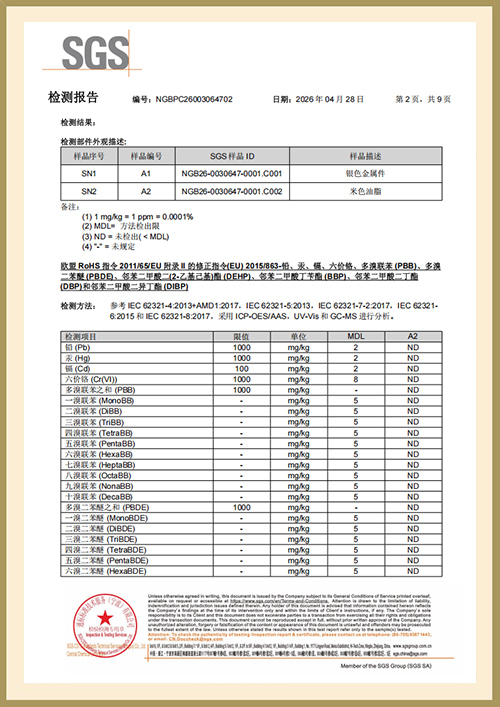 SGS Test Report
-
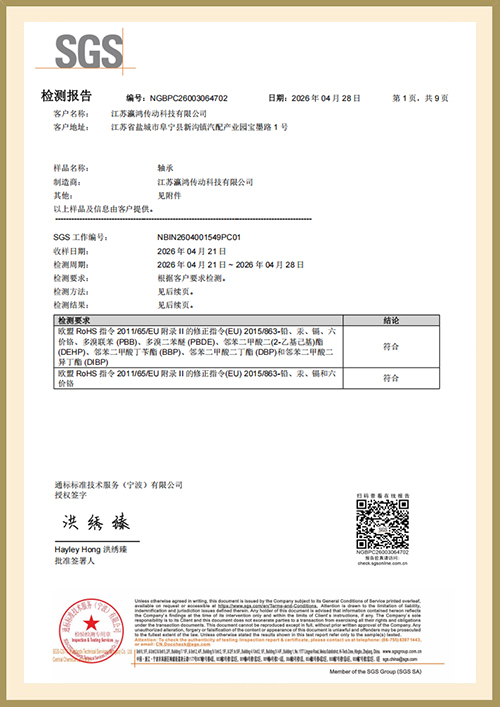 SGS Test Report
News
-
Industry News 2026-11-20
Construction Defines the Difference A full ceramic bearing uses ceramic rolling...
View More -
Industry News 2026-11-13
Ceramic vs Steel Bearings: The Practical Differences That Drive Selection Ceram...
View More -
Industry News 2026-11-06
Start With the Three Numbers: Bore, Outer Diameter, and Width The right miniatu...
View More -
Industry News 2026-10-30
Miniature Ball Bearings at a Glance A miniature ball bearing is a rolling-eleme...
View More -
Industry News 2026-10-23
Stainless Steel Bearings: More Than Just Rust Protection Stainless steel bearin...
View More -
Industry News 2026-10-16
Engineering Reference Deep Groove Ball Bearing Reference: Applications, Axial ...
View More -
Industry News 2026-09-21
A flange bearing is a housed bearing assembly in which the outer housing carrie...
View More
Contact us now
Industry Knowledge Extension
- Lead-screw and ball-screw end supports in positioning stages, printers and packaging machines
- Small worm and bevel gear thrust points in gearmotors and actuators
- Vertical shaft support in miniature pumps, mixers and stirrers
- Robot wrist axes, gimbal drives and drone mechanisms requiring smooth axial rotation
- Instrument spindles, encoders and rotary switching assemblies
For applications that combine axial and radial loads, combine a thrust bearing with a radial bearing such as our Deep Groove Ball Bearings. Miniature thrust bearings accept only minimal angular misalignment, so the housing and shaft shoulder must provide square, parallel locating faces.
Critical Specifications We Work With
When preparing a proposal, the following parameters determine the bearing configuration:
- Bore diameter, outside diameter and height envelope available in the customer's housing
- Dynamic axial load rating (Ca) and static axial load rating (C0a)
- Operating speed and duty cycle, which affect ball complement, cage material and lubricant
- Flatness and parallelism of the raceway washers for even load distribution
- Ball grade, surface finish and internal clearance of the assembled bearing
- Material, heat treatment and any surface coating
Thrust ball bearings are not designed for radial load or significant misalignment. For combined loading, the radial component should be carried by a separate radial bearing. Our engineering team can recommend the correct pairing and the necessary shaft and housing fits for your working point.
Configuration and Custom Development
YHU accepts standard series orders and full ODM/OEM development. Starting from a drawing, a sample or a performance target, we can adjust raceway diameters, ball size and count, cage type, face flatness, material grade and lubricant fill without changing the bearing's basic function.
- Custom bore and outside diameters in metric or inch dimensions
- Modified height to meet stacked assembly tolerances
- Different lubricants for low noise, high speed, vacuum or food-contact service
- Special packaging for automated assembly lines and cleanrooms
- Engineering support from solution design and prototype production to mass delivery
Our precision special bearing capabilities also extend to adjacent families, including high-speed Dental Handpiece Bearings and other custom non-standard shapes, so projects can be consolidated at one qualified supplier.
Quality Approach and Compliance
As a National High-Tech Enterprise, we combine Japanese precision manufacturing technology with automated production and high-precision inspection equipment. Our quality management system is certified to IATF 16949, RoHS, CE and SGS requirements, and we verify core bearing performance including precision, noise, vibration, sealing, wear resistance and corrosion resistance before delivery.
For ODM projects we document material specifications, dimensional reports and, where required, the specific test protocol agreed in the purchase contract. This allows your incoming inspection to match our released data pack.
Information We Use to Configure Your Solution
- Application description and installation layout
- Axial load direction, magnitude, and any shock or peak loads
- Shaft speed (rpm) and duty cycle
- Available space for bore, outside diameter and height
- Material, corrosion, temperature and environmental requirements
- Lubrication preference and any noise or vibration limits
- Target annual quantity, packaging and marking needs
Frequently Asked Questions
What is the difference between bearing steel and stainless steel miniature thrust ball bearings?
Bearing steel offers high hardness and fatigue resistance at lower material cost, making it the default for indoor precision mechanisms. Stainless steel versions, especially SUS304 and SUS316, add corrosion resistance and non-magnetic behavior for medical, food, semiconductor and marine equipment. SUS420 and SUS440 provide higher hardness while improving corrosion resistance over plain bearing steel.
Can you customize the bore or outside diameter of a thrust ball bearing?
Yes. We manufacture custom dimensions from customer drawings or from a performance target. Bore, outside diameter, height, ball complement, cage material and lubricant can all be adjusted, and we support the project from prototype to mass production.
Can a thrust ball bearing carry radial load?
No. Thrust ball bearings are intended for axial load only. If your shaft sees radial load, we recommend combining the thrust bearing with a radial bearing such as a deep groove ball bearing or, where space is tight, one of our other precision bearing families.
Which stainless steel grade should I choose for a washdown or high-humidity environment?
SUS316 provides the best corrosion resistance in the standard range and is well suited to coastal, chemical and washdown applications. SUS304 is a reliable non-magnetic option for less aggressive exposure. For applications requiring hardness and corrosion protection together, SUS440 balances both properties.
What quality documentation do you provide with the bearings?
Our management system is certified to IATF 16949, RoHS, CE and SGS requirements. We provide dimensional reports and material or process documentation as agreed for each order. Customized test protocols can be included in the supply contract.
Related Products and Categories
Our portfolio also includes Products for applications with different operating ranges, interfaces or integration requirements.

- Contact Information
-
-
+86 162 6918 9999 +86 136 1619 2555

-
+86 153 0641 4247

-
jeffrey@yhu1988.com

rose@yhu1988.com -
Yinghong Industrial Park, Zexin Avenue, Xingou Auto Parts Industrial Park, Funing County, Yancheng City, Jiangsu Province, China

-
- QR Code

