


 English
  русский
  Español
  عربى
عربى  日本語
日本語 


About Us
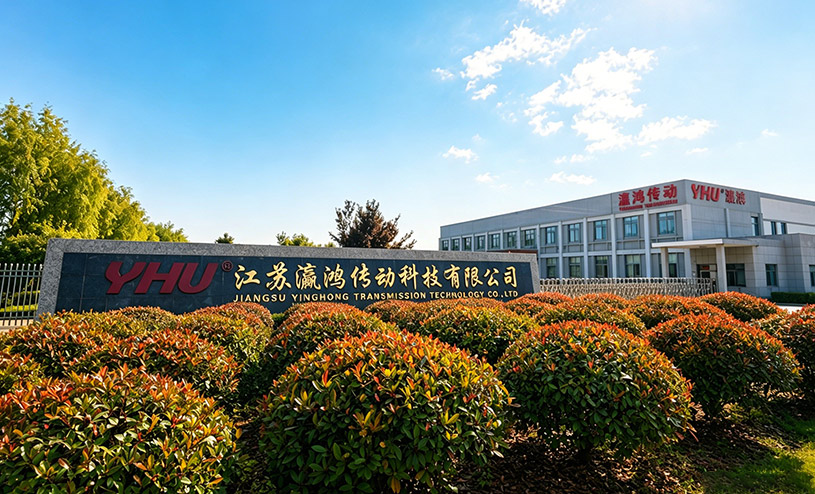
The company covers more than 70 mu of land and operates nearly 10,000 square meters of manufacturing facilities. As a professional manufacturer of precision special bearings in China, we have introduced advanced Japanese precision manufacturing technology and equipped our facility with automated production lines and high-precision testing equipment. A comprehensive quality management system ensures consistent product quality and reliable performance.
As a National High-Tech Enterprise, Yinghong holds multiple invention and utility model patents and has obtained internationally recognized certifications including IATF 16949, RoHS, CE, and SGS. These certifications enable us to meet diverse customer requirements and provide effective solutions for demanding applications and complex technical challenges.
Yinghong is China Specially Modified Plastic Bearings Manufacturers and OEM Specially Modified Plastic Bearings Suppliers, we specialize in the production of high-precision deep groove ball bearings and custom non-standard bearings under our registered trademark, “YHU”. Our main products include bearing steel bearings, stainless steel bearings, ceramic bearings, and plastic bearings.
YHU bearings are designed to deliver low noise, low vibration, low friction, high precision, great sealing performance, and high-speed operation. They also offer self-lubrication, corrosion resistance, rust resistance, acid and alkali resistance, chemical resistance, electrical insulation, non-magnetic properties, high-temperature resistance, low-temperature adaptability, and long service life, making them suitable for demanding operating environments.
Our bearings and bearing assemblies are widely used in electric motors, power tools, pneumatic tools, robotics, drones, household appliances, precision instruments, semiconductor equipment, medical devices, marine equipment, aerospace applications, financial equipment, textile machinery, fishing equipment, and a wide range of specialized industrial equipment.
Honor
-
 SGS Test Report
 -
 SGS Test Report
 -
 SGS Test Report
 -
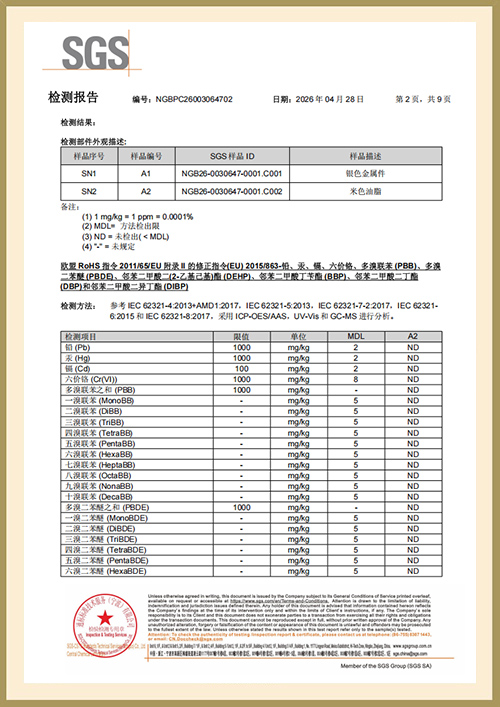 SGS Test Report
 -
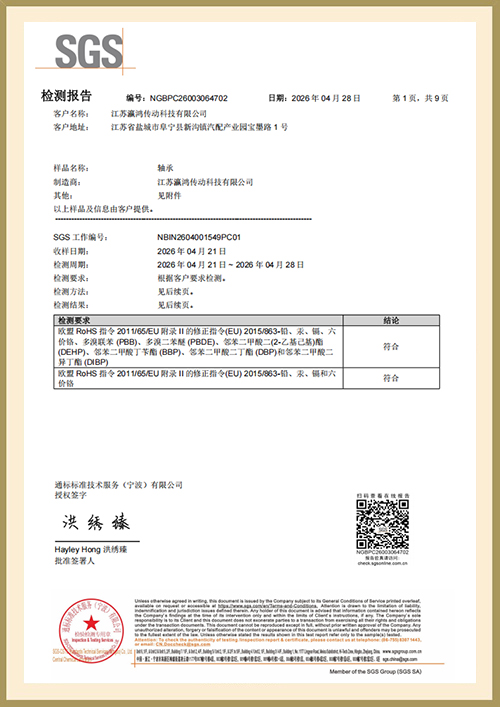 SGS Test Report
News
-
Industry News 2026-09-21
A flange bearing is a housed bearing assembly in which the outer housing carries a machined flange plate drilled with mounting holes. The flange plate allows the unit to be bolted directly onto a mac...
View More -
Industry News 2026-09-21
Most procurement teams comparing stainless steel bearings hold a material comparison sheet. 440C versus 316. Hardness versus corrosion resistance. Magnetic versus non-magnetic. None of that informati...
View More -
Industry News 2026-09-21
Bearing Steel: The Metallurgical Foundation Behind Every Rolling Contact Every rotating assembly in modern machinery depends on a handful of highly engineered contact points. A pump running at 3,600 ...
View More -
Industry News 2026-04-22
Angular contact ball bearings are essential for handling combined loads because their inner and outer raceways are offset along the bearing axis. This built-in contact angle creates a direct, uninter...
View More
Contact us now
Industry Knowledge Extension
As a Specially Modified Plastic Bearings manufacturer, Jiangsu Yinghong Transmission Technology Co., Ltd. produces the YHU polymer bearing family alongside our precision steel, stainless steel and ceramic lines. Our modified plastic bearings are moulded or machined from compounded engineering thermoplastics and are chosen where corrosion, chemical exposure, washdown, electrical insulation, non-magnetic behaviour or lubrication-free running rule out bearing steel. The range covers POM, PP, UPE, PEEK, PTFE, PVDF, PA66 and PI grades, including reinforced and internally lubricated compounds that we match to a defined working point rather than to a catalogue number alone.
Our Position in the Plastic Bearing Range
The base polymer decides what a plastic bearing can survive; the modification decides how it behaves under load, heat and friction. We keep those two decisions separate and confirm both with the project engineer before tooling or machining begins.
- POM (acetal) — general mechanical grade with stable dimensions, low friction and dependable fatigue behaviour in dry running.
- PP — economical polymer with broad chemical resistance and very low water absorption; suited to light radial loads in chemical-handling equipment.
- UPE — high impact and abrasion resistance with very low friction for conveyor, guide and sliding-contact positions.
- PA66 — tough and wear-resistant, with moisture sensitivity that we plan into the bore and clearance dimensions.
- PVDF — higher stiffness than PTFE with good chemical resistance for high-purity and wet-process equipment.
- PTFE — the broadest chemical resistance and lowest friction of the common polymers, normally supported by fillers or a metal/ceramic rolling element because of its creep behaviour.
- PEEK — high continuous service temperature and good creep resistance under sustained load in hot or aggressive positions.
- PI (polyimide) — high-strength polymer for thermally demanding, mechanically loaded positions.
- Specially modified compounds — glass-fibre, carbon-fibre and solid-lubricant (PTFE, graphite, MoS2) modified grades that raise stiffness, cut the wear rate or lower the coefficient of friction.
Where a project also calls for a hardened rolling element, a shielded assembly or a bolted housing interface, our full bearing range covers those components so a mixed bill of material stays with one production source.
Grade Selection by Working Condition
Plastic bearing selection starts from the environment, not from the bore size. The table below shows how we narrow the compound shortlist and what we need confirmed before the grade is frozen.
| Working condition | Candidate grades | What it demands of the bearing | Confirmed before production |
|---|---|---|---|
| Continuous dry running, no lubricant permitted | POM, UPE, PTFE-based and internally lubricated compounds | Low friction, controlled wear rate, heat removal through the housing | PV at working speed, shaft roughness, ambient temperature |
| Acid, alkali or solvent contact | PP, PVDF, PTFE, PEEK | Resistance to the specific medium at concentration and temperature | Medium list, concentration, contact temperature, cleaning agents |
| Hot air, steam or autoclave exposure | PEEK, PI, PVDF | Retention of stiffness and internal clearance at temperature | Continuous and peak temperature, cycle duration |
| Frequent washdown or water immersion | PP, UPE, PVDF, POM | Low water absorption, no rust path, stable fit | Absorption allowance, housing fit, detergent type |
| Electrical insulation or non-magnetic requirement | POM, PEEK, PP, PVDF | No conductive or magnetic path through the bearing | Insulation value, rolling element material, adjacent sensor fields |
| High load at low speed | Reinforced PEEK, PI, reinforced PA66 | Creep resistance and limited deformation under static load | Load at temperature, mating shaft material and hardness |
| Higher speed, light load | POM, UPE, PTFE-based grades | Low friction and low heat build-up at the ball path | Speed, duty cycle, cooling path, clearance |
| Precision positioning and runout control | Machined PEEK, POM, PI grades | Tight bore and outside diameter tolerance, controlled runout | Tolerance band, runout limit, inspection method |
Critical Specifications We Confirm Before Production
Because polymer rings move with temperature and moisture, we agree the specification as a working set rather than as isolated numbers. These are the parameters we lock down on the drawing before a batch is released.
- Bore diameter and tolerance band, outside diameter and tolerance band, width, and radial runout limit.
- Radial internal clearance at the operating temperature, with an allowance for thermal expansion of the polymer.
- Rolling element material — polymer, glass, stainless or ceramic — and ball grade where non-metallic or non-magnetic behaviour is required.
- Cage or full-complement configuration, shield or seal arrangement, and whether the bearing runs open.
- Radial and axial load at the working temperature, limiting speed, PV value and duty cycle.
- Continuous and peak ambient or media temperature, and the resulting clearance change.
- Water absorption class of the selected compound and the dimensional allowance applied to the moulding or machined part.
- Shaft material, hardness and surface roughness, plus housing material and its expansion rate.
- Fit and interference at both rings, mounting method, and any clamp, groove or flange interface.
- Cleanliness level, particle limits and packaging requirement for the end application.
Application Fit Across Equipment Types
YHU bearings and bearing assemblies run in electric motors, power tools, pneumatic tools, robotics, drones, household appliances, precision instruments, semiconductor equipment, medical devices, marine equipment, aerospace applications, financial equipment, textile machinery and fishing equipment. Plastic grades carry specific positions inside that list.
Chemical, water-treatment and marine equipment — PP, UPE and PVDF bearings for submerged or splash-exposed rollers where steel would corrode.
Semiconductor and medical equipment — PEEK, PVDF and PI grades for wet-process stations, clean handling and non-magnetic assemblies.
Textile, packaging and financial equipment — POM and PA66 bearings for quiet, oil-free rotation in dust-loaded or paper-handling positions.
Robotics, drones and precision instruments — machined POM, PEEK and PI bearings where weight, insulation and low starting torque matter.
For positions that combine a polymer requirement with a flanged mounting face, Flanged Bearings and the Deep Groove Ball Bearings family can be supplied to the same drawing set where the load case moves beyond what a polymer ring should carry.
Configuration, Mounting and Line Integration
We configure the bearing around the interface the machine already has. Bore and outside diameter can be machined to an agreed tolerance band, and radial clearance can be set for the temperature the assembly actually reaches rather than for room temperature.
- Plain, flanged, grooved or snap-ring retention, with bore fits from light press to clearance depending on the housing material.
- Shielded, sealed or open running, and lubrication-free execution where grease or oil is prohibited.
- Rolling element choice matched to the load and insulation requirement.
- Press-fit and installation instructions issued with the drawing, including the maximum interference the polymer ring accepts without cracking.
- Replacement interval guidance based on wear rate, load and temperature instead of a fixed calendar period.
Quality Control, Acceptance Testing and Compliance
Incoming compound is checked against the batch data before it enters production, and the closed-loop quality system follows the part from raw material through machining, moulding, assembly and final inspection. Our facility in Yancheng City, Jiangsu, China runs automated production equipment together with high-precision inspection instruments.
- Dimensional verification against the agreed drawing, including bore, outside diameter, width and runout.
- Rotational checks covering noise, vibration and running stability where the application requires them.
- Wear, sealing and corrosion assessment for bearings intended for wet or chemically loaded service.
- Material identification and batch traceability through to finished product delivery.
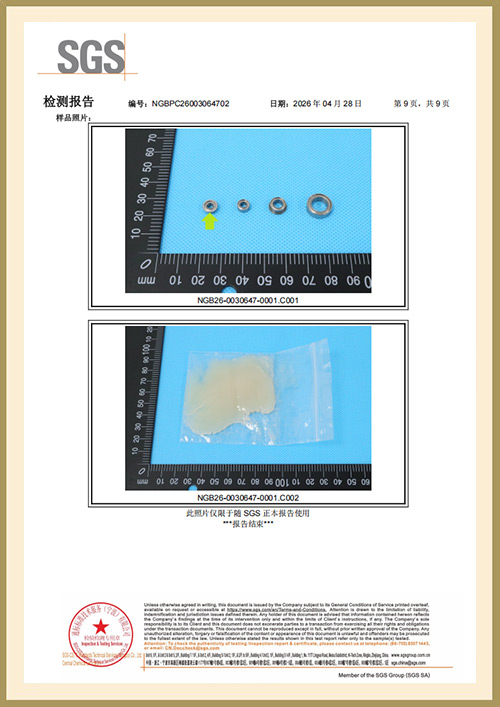
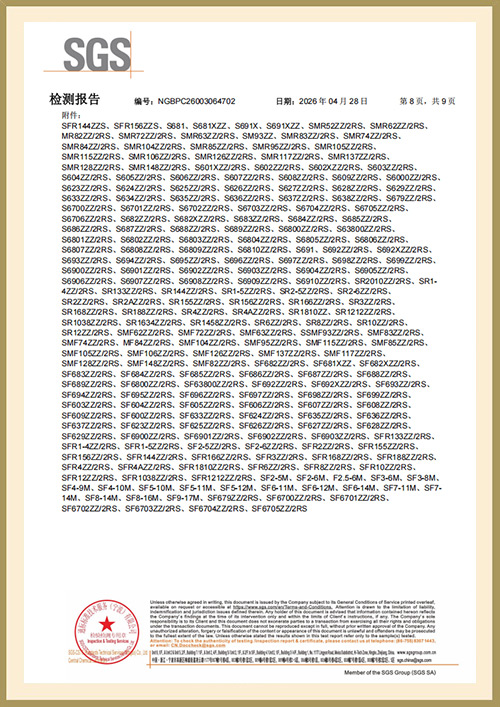
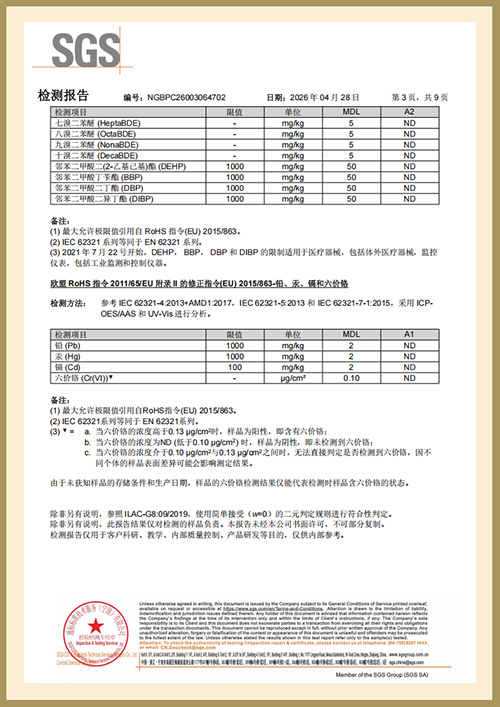
- Quality system and product conformity supported by IATF 16949, RoHS, CE and SGS certification, with SGS test reports available.
Acceptance criteria for a project are agreed with the customer as part of the drawing package, so inspection results can be read directly against the same numbers used to manufacture the part.
Custom Development, Prototyping and Support
As a manufacturer with both standard precision bearing design and non-standard customization capability, we take modified plastic bearing projects from solution design through prototype production to mass delivery. Compounds, ring geometry, wall thickness and clearance can be adjusted for a specific machine condition instead of forcing the machine to accept an off-the-shelf part.
Prototype sets are produced from the selected compound so that fit, starting torque and wear behaviour can be verified before production tooling is committed. After commissioning we support replacement orders against retained drawings and part numbers, and provide failure analysis and technical support when a bearing is returned from the field.
Information We Use to Configure Your Solution
A complete enquiry lets us quote a compound, a geometry and an inspection plan in one step. The useful inputs are:
- Existing bearing number, drawing or sample, with bore, outside diameter and width.
- Radial and axial load, speed, duty cycle and expected service life.
- Ambient and media temperature, including peaks and duration.
- Chemicals, cleaning agents and washdown routine the bearing meets.
- Shaft and housing material, hardness, surface finish and current fit.
- Whether lubrication, magnetic response or electrical conduction is permitted.
- Annual quantity, first order quantity and prototype requirement.
- Packaging, marking and documentation required for incoming inspection.
Frequently Asked Questions
Can specially modified plastic bearings run continuously without lubricant?
Yes, for grades such as POM, UPE and internally lubricated compounds. The limiting factor is heat: friction generates heat at the ball path and the polymer must conduct it away through the shaft and housing. We size the allowable PV at your actual speed and confirm the shaft surface finish, because a rough or worn shaft accelerates wear regardless of the compound.
Which grade suits chemical or washdown exposure?
PP, PVDF, PTFE and PEEK carry aggressive chemical contact, while POM, UPE and PP handle water-based washdown and immersion. A polymer that resists one solvent can swell in another, so we screen the compound against your actual medium list, concentration, temperature and cleaning agents rather than against a general resistance chart.
How do plastic bearing tolerances differ from steel?
Polymer rings expand with temperature and absorb a small amount of moisture, so the fit measured at room temperature is not the fit in service. We define bore and outside diameter tolerance bands, runout and internal clearance on the drawing with an allowance for the end environment, instead of transferring a steel tolerance class unchanged onto a plastic part.
Do you supply prototypes before mass delivery?
We do. Prototype sets are machined from the selected compound for fit, torque and function trials, then production moves to the agreed process once the design is frozen. This is part of our standard customization route from solution design through prototype production to mass delivery and after-sales technical support.
What documentation is issued with a shipment?
Parts are supplied with dimensional inspection records against the agreed drawing, material identification and batch traceability. Conformity evidence including IATF 16949 quality system, RoHS, CE and SGS certification is available for the supplied items, and SGS test reports can be provided with the order documentation.
Can you match an existing plastic bearing from a sample?
Send the sample or a full dimensional drawing together with the working conditions. We identify the polymer where the part allows it, measure the geometry, and propose either a matching compound or a modified grade that removes the failure mode seen on the original part. Retained drawings and part numbers keep repeat orders consistent with the first delivery.

- Contact Information
-
-
+86 162 6918 9999 +86 136 1619 2555

-
+86 153 0641 4247

-
jeffrey@yhu1988.com

rose@yhu1988.com -
Yinghong Industrial Park, Zexin Avenue, Xingou Auto Parts Industrial Park, Funing County, Yancheng City, Jiangsu Province, China

-
- QR Code

