


 English
  русский
  Español
  عربى
عربى  日本語
日本語 

-
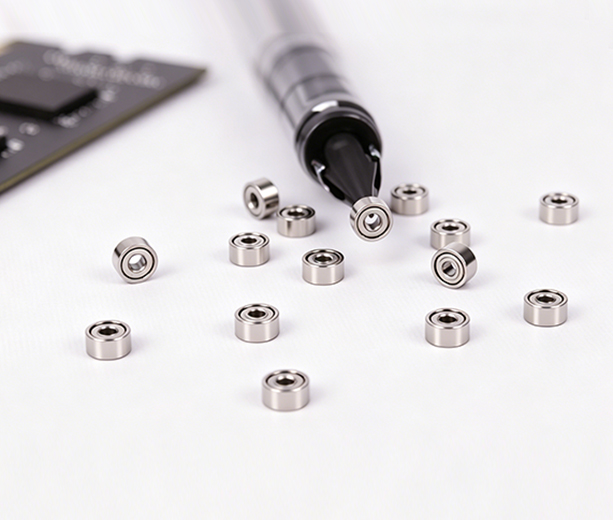
Low-Speed Dental Handpiece Bearings Manufacturers
View MoreDental handpiece bearings have the characteristics of ultra-low vibration and ultra-low noise, corrosion resistance, and rust resistance. Dental handpiece bearings produced by YHU can replace the bearings of well-known foreign brands.

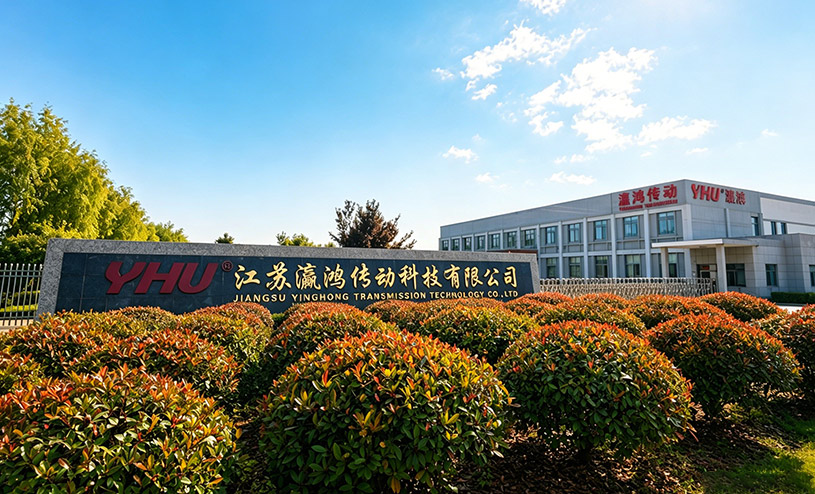
About Us
The company covers more than 70 mu of land and operates nearly 10,000 square meters of manufacturing facilities. As a professional manufacturer of precision special bearings in China, we have introduced advanced Japanese precision manufacturing technology and equipped our facility with automated production lines and high-precision testing equipment. A comprehensive quality management system ensures consistent product quality and reliable performance.
As a National High-Tech Enterprise, Yinghong holds multiple invention and utility model patents and has obtained internationally recognized certifications including IATF 16949, RoHS, CE, and SGS. These certifications enable us to meet diverse customer requirements and provide effective solutions for demanding applications and complex technical challenges.
Yinghong is China Low-Speed Dental Handpiece Bearings Manufacturers and OEM Low-Speed Dental Handpiece Bearings Suppliers, we specialize in the production of high-precision deep groove ball bearings and custom non-standard bearings under our registered trademark, “YHU”. Our main products include bearing steel bearings, stainless steel bearings, ceramic bearings, and plastic bearings.
YHU bearings are designed to deliver low noise, low vibration, low friction, high precision, great sealing performance, and high-speed operation. They also offer self-lubrication, corrosion resistance, rust resistance, acid and alkali resistance, chemical resistance, electrical insulation, non-magnetic properties, high-temperature resistance, low-temperature adaptability, and long service life, making them suitable for demanding operating environments.
Our bearings and bearing assemblies are widely used in electric motors, power tools, pneumatic tools, robotics, drones, household appliances, precision instruments, semiconductor equipment, medical devices, marine equipment, aerospace applications, financial equipment, textile machinery, fishing equipment, and a wide range of specialized industrial equipment.
Honor
-
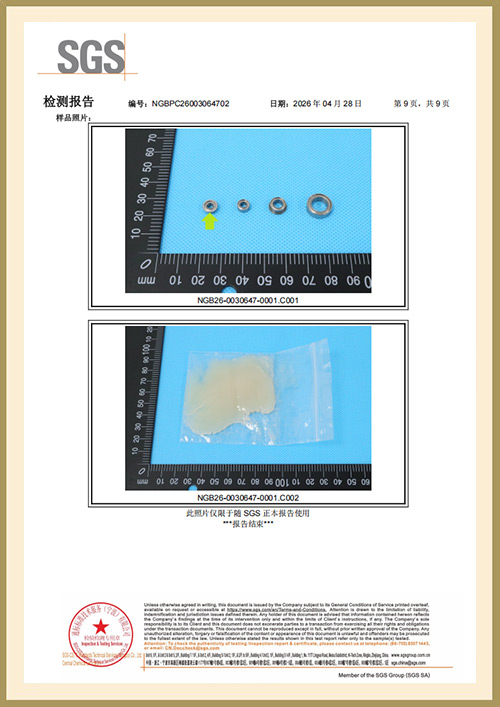 SGS Test Report
 -
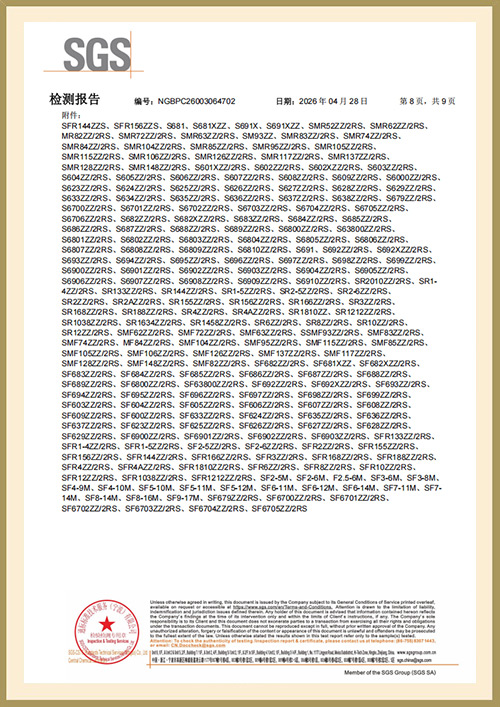 SGS Test Report
 -
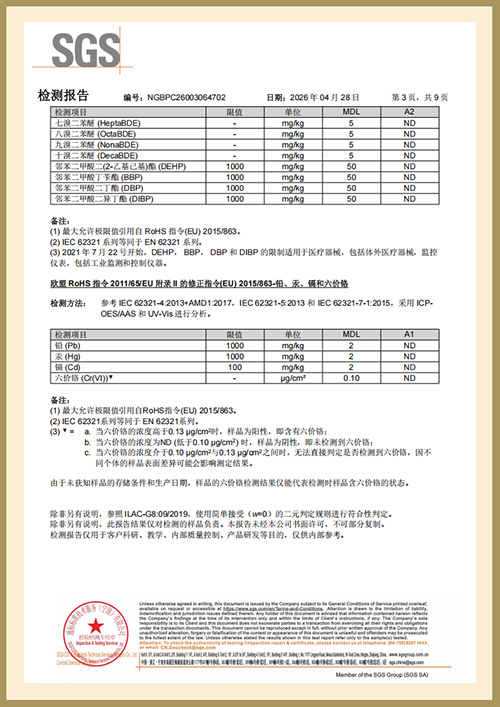 SGS Test Report
 -
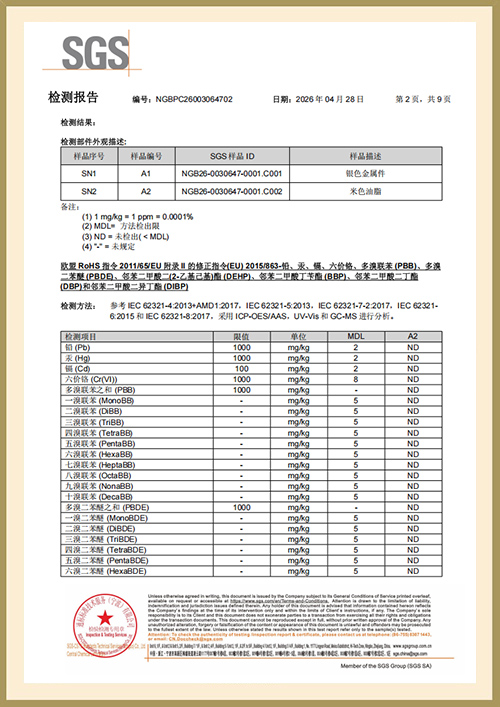 SGS Test Report
 -
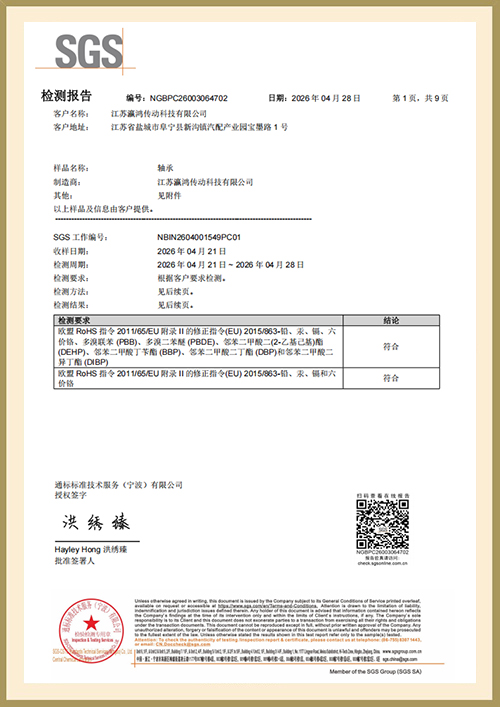 SGS Test Report
News
-
Industry News 2026-09-21
A flange bearing is a housed bearing assembly in which the outer housing carries a machined flange plate drilled with mounting holes. The flange plate allows the unit to be bolted directly onto a mac...
View More -
Industry News 2026-09-21
Most procurement teams comparing stainless steel bearings hold a material comparison sheet. 440C versus 316. Hardness versus corrosion resistance. Magnetic versus non-magnetic. None of that informati...
View More -
Industry News 2026-09-21
Bearing Steel: The Metallurgical Foundation Behind Every Rolling Contact Every rotating assembly in modern machinery depends on a handful of highly engineered contact points. A pump running at 3,600 ...
View More -
Industry News 2026-04-22
Angular contact ball bearings are essential for handling combined loads because their inner and outer raceways are offset along the bearing axis. This built-in contact angle creates a direct, uninter...
View More
Contact us now
Industry Knowledge Extension
At Jiangsu Yinghong Transmission Technology Co., Ltd., we make precision dental handpiece bearings under our registered YHU brand. Our Low-Speed Dental Handpiece Bearings manufacturer range is built on the company's Deep Groove Ball Bearings platform, giving dental equipment OEMs, handpiece repair shops and distributors a direct source for low-noise, corrosion-resistant replacement bearings. As a China bearing factory, we combine Japanese precision manufacturing technology, automated production lines and in-house testing to keep quality consistent from first article to series delivery.
Low-Speed Dental Handpiece Bearing Range
Low-speed dental handpieces operate below the air-turbine speeds of high-speed drills, but they still require smooth torque transmission, low starting torque and stable running in a moist, frequently sterilized environment. Our Low-Speed Dental Handpiece Bearings are intended for contra-angle handpieces, straight handpieces, prophylaxis angles and slow-speed attachments, and for the spare-parts market when an original bearing is no longer available.
We operate as an OEM Low-Speed Dental Handpiece Bearings supplier for dental equipment brands, repair networks and spare-parts distributors. The range includes:
- Bearing steel miniature deep groove ball bearings for standard OEM assembly and general repair work.
- Stainless steel miniature deep groove ball bearings where repeated autoclave sterilization and chemical cleaning require rust and corrosion resistance.
- Custom non-standard bearings matched to the handpiece housing fit, shaft fit, width, seals or lubrication without altering the original assembly.
YHU dental handpiece bearings are produced to run with ultra-low vibration and ultra-low noise, and are designed as replacements for the bearing sizes found in established low-speed handpiece designs. Within our Dental Handpiece Bearings line, we separate low-speed handpiece bearings from turbine and grinding-machine bearings so each configuration receives the correct internal clearance, cage and lubrication. For applications that use an air turbine, please see High-Speed Dental Drill Bearings.
Application Fit and Operating Conditions
In a contra-angle handpiece, the bearing set supports a gear train that changes direction and reduces drive speed; in a straight handpiece, bearings guide the spindle under radial and axial cutting loads. Because these instruments are sterilized between patients, the bearings face moisture, steam heat and chemical residues. That operating pattern, not just rpm, drives our material and sealing decisions.
Typical low-speed handpiece bearing requirements
- Low vibration and low noise for patient and operator comfort
- Resistance to corrosion and rust after repeated autoclave cycles
- Stable grease behavior between maintenance intervals
- Tight dimensional tolerance for simple press-fit replacement
- Low starting torque in compact, lightly loaded assemblies
Materials and Specification Considerations
We supply low-speed handpiece bearings in bearing steel and stainless steel, with sealing, cage, ball and grease options defined during quotation. Bearing steel provides hardness and wear resistance at an economic cost. Stainless steel grades such as SUS420 and SUS440 balance hardness with corrosion resistance, while SUS304 and SUS316 give a higher level of resistance to aggressive disinfectants and humid storage.
- Dimensions: bore, outside diameter, width, chamfer, and any flange or snap-ring feature must match the original bearing.
- Radial clearance: small-bore bearings are typically specified with a normal or reduced clearance depending on shaft and housing interference.
- Sealing: metal shields for low torque, or contact and non-contact rubber seals for protection against steam and debris.
- Lubrication: high-temperature or food-compatible grease can be selected to match the sterilization process and required service life.
- Accuracy: raceway finish, ball grade and running accuracy are controlled to deliver quiet rotation without noticeable resistance.
Manufacturing, Testing and Compliance Evidence
Our factory operates automated production lines and high-precision testing equipment under a closed-loop quality system that covers raw material, production process and finished product. Every bearing lot is checked for dimensional accuracy, noise, vibration, sealing, wear resistance and corrosion resistance, so we can match a defined acceptance level before series delivery.
As a National High-Tech Enterprise, we hold invention and utility model patents and maintain IATF 16949, RoHS, CE and SGS certifications. For dental bearing projects, we can provide SGS test reports and batch inspection documentation that describe the actual measured parameters for the delivered bearings.
Integration, Installation and Maintenance
For OEM customers, we treat the bearing as part of the handpiece assembly. We confirm housing and shaft fits, recommend whether a shield or seal is appropriate for the sterilization method, and agree on preload if the handpiece design uses a spring-loaded bearing pair. For repair shops and distributors, we pack bearings so they arrive clean, rust-protected and ready to install.
Maintenance in low-speed handpieces usually means removing the bearing, cleaning the cavity, drying it completely and checking for signs of corrosion before re-greasing. We provide technical guidance for disassembly, pressing and run-in so replacement bearings reach the expected service life.
Information We Use to Configure Your Solution
To prepare a correct drawing, configuration and quotation, we need a small set of project inputs. The more precisely the sterilization and speed profile is described, the better we can select steel grade, seal, grease and internal specification.
| Project Input | What We Need | How It Affects the Proposal |
|---|---|---|
| Original bearing detail | Part number, drawing, sample or accurate bore, OD and width dimensions | Confirms interchangeability, housing fit and shaft fit |
| Handpiece assembly | Model, exploded view or assembly drawing | Defines spacing, preload and fit requirements |
| Operating conditions | Speed range, load, duty cycle and torque expectations | Guides cage, clearance, grease and raceway finish |
| Sterilization process | Autoclave temperature, cycle time and cleaning chemicals | Determines stainless steel grade, seal type and grease selection |
| Performance targets | Noise or vibration limit, expected service life and failure history | Sets test criteria and final inspection level |
| Order profile | Annual volume, packaging preference and delivery location | Defines prototype schedule, batch control and packaging design |
What we return with a proposal
- Dimensional and material specification for the proposed bearing
- Clearance, seal, cage and grease selection with reasons
- Sample plan or series delivery plan aligned to your quantities
- Packaging, protection and documentation approach
- OEM design optimization and test criteria when relevant
Low-Speed Dental Handpiece Bearing FAQs
Can YHU low-speed dental handpiece bearings replace original bearings in imported handpieces?
Yes. Our bearings are produced as dimensional and performance replacements for the common miniature deep groove ball bearing sizes used in low-speed handpieces. Send us the original bearing, a part number or a dimensioned sample, and we will confirm interchangeability before we suggest a configuration.
Which material should be used for a handpiece that is autoclaved daily?
For frequent autoclaving, we normally recommend a stainless steel bearing with seals that block steam and cleaning agents. Bearing steel still works in moderate cleaning cycles, but stainless steel gives a longer service life when moisture cannot be avoided.
Do you support non-standard low-speed dental handpiece bearing customization?
Yes. We design and manufacture custom bearings from drawings or samples, including non-standard dimensions, special seals, modified clearances, custom grease and optional marking. Our engineering team supports the project from solution design and prototype production through mass delivery and after-sales technical support.
What do you need to prepare a quotation?
At minimum we need a drawing, part number, sample or accurate dimensions, together with the sterilization method, expected speed and load, and annual quantity. For a worn original bearing, dimensions and a short description of the failure mode also help us identify a more durable configuration.
How are low-speed dental handpiece bearings packed and delivered?
We pack the bearings with anti-rust protection, layer separation and export-class cartons to prevent transit damage. Depending on your order, we can deliver as loose bearings, matched pairs, or service kits for repair shops, and we include the agreed inspection documentation with each batch.

- Contact Information
-
-
+86 162 6918 9999 +86 136 1619 2555

-
+86 153 0641 4247

-
jeffrey@yhu1988.com

rose@yhu1988.com -
Yinghong Industrial Park, Zexin Avenue, Xingou Auto Parts Industrial Park, Funing County, Yancheng City, Jiangsu Province, China

-
- QR Code

