


 English
  русский
  Español
  عربى
عربى  日本語
日本語 


About Us
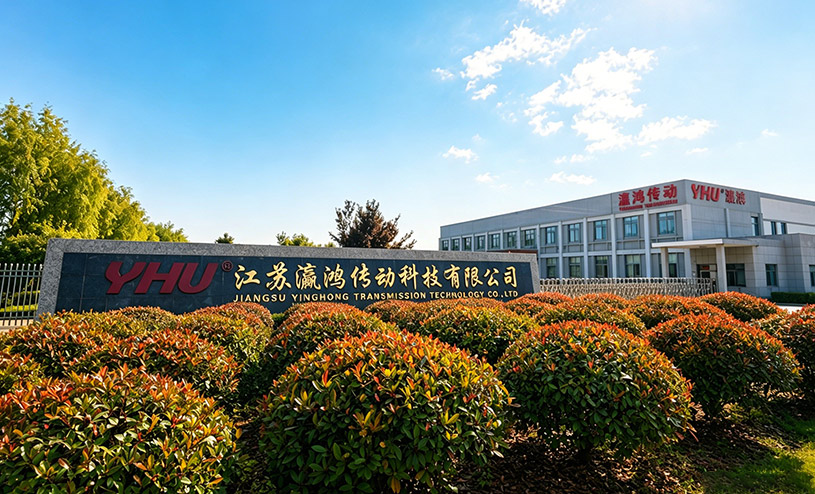
The company covers more than 70 mu of land and operates nearly 10,000 square meters of manufacturing facilities. As a professional manufacturer of precision special bearings in China, we have introduced advanced Japanese precision manufacturing technology and equipped our facility with automated production lines and high-precision testing equipment. A comprehensive quality management system ensures consistent product quality and reliable performance.
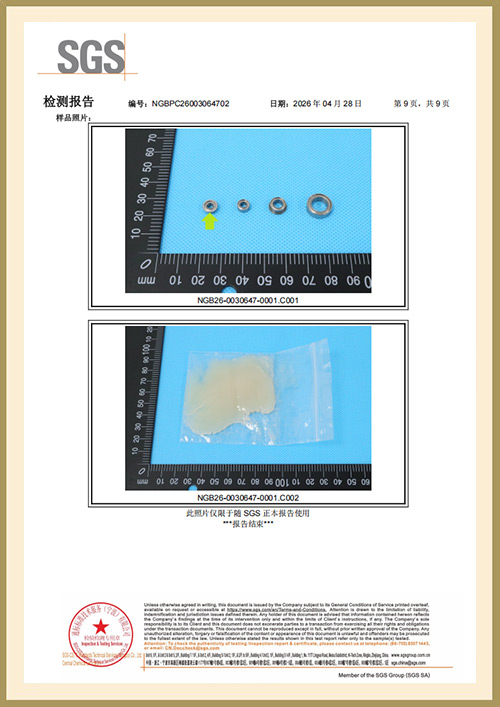
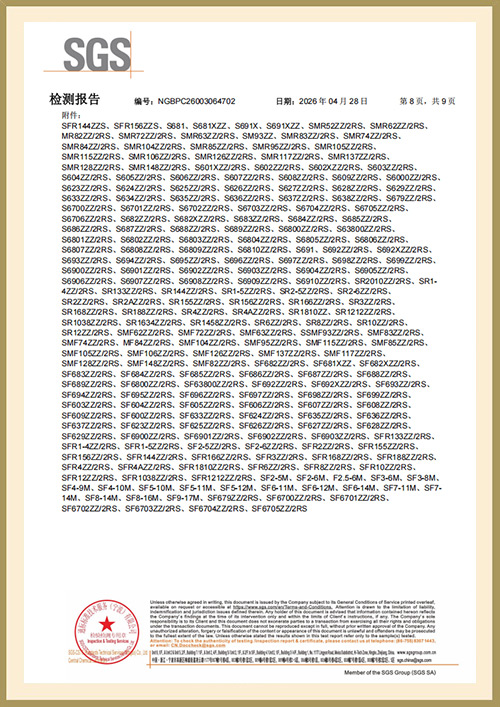
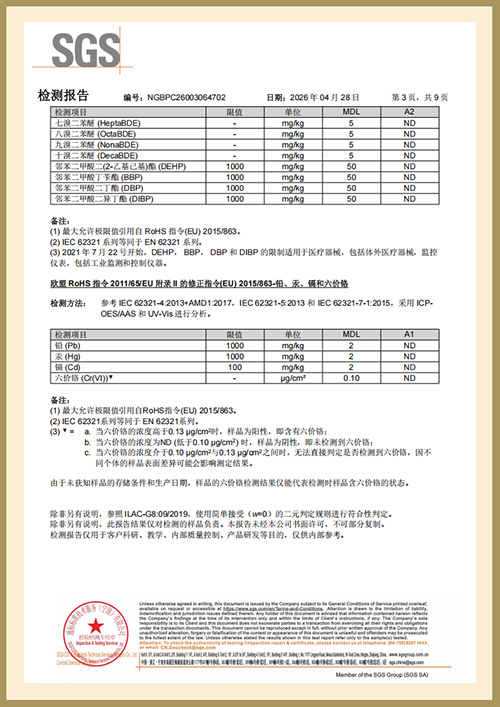
As a National High-Tech Enterprise, Yinghong holds multiple invention and utility model patents and has obtained internationally recognized certifications including IATF 16949, RoHS, CE, and SGS. These certifications enable us to meet diverse customer requirements and provide effective solutions for demanding applications and complex technical challenges.
Yinghong is China PVDF Bearings Manufacturers and OEM PVDF Bearings Suppliers, we specialize in the production of high-precision deep groove ball bearings and custom non-standard bearings under our registered trademark, “YHU”. Our main products include bearing steel bearings, stainless steel bearings, ceramic bearings, and plastic bearings.
YHU bearings are designed to deliver low noise, low vibration, low friction, high precision, great sealing performance, and high-speed operation. They also offer self-lubrication, corrosion resistance, rust resistance, acid and alkali resistance, chemical resistance, electrical insulation, non-magnetic properties, high-temperature resistance, low-temperature adaptability, and long service life, making them suitable for demanding operating environments.
Our bearings and bearing assemblies are widely used in electric motors, power tools, pneumatic tools, robotics, drones, household appliances, precision instruments, semiconductor equipment, medical devices, marine equipment, aerospace applications, financial equipment, textile machinery, fishing equipment, and a wide range of specialized industrial equipment.
Honor
-
 SGS Test Report
 -
 SGS Test Report
 -
 SGS Test Report
 -
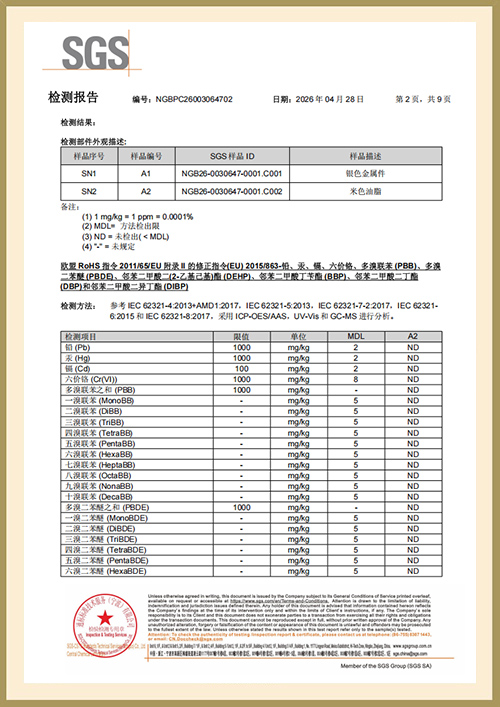 SGS Test Report
 -
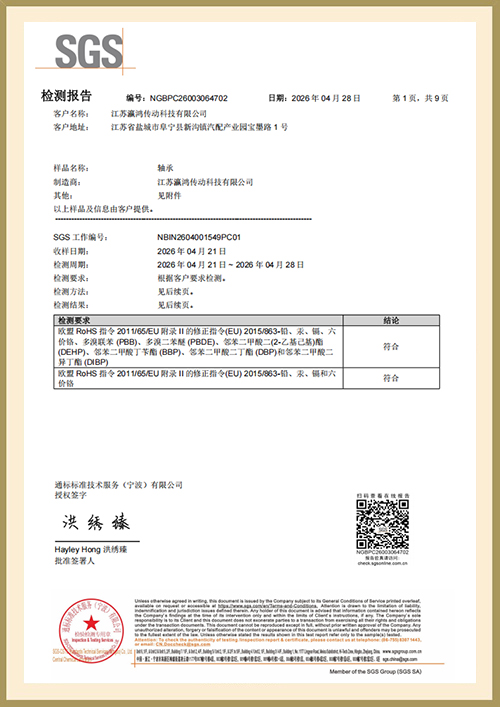 SGS Test Report
News
-
Industry News 2026-09-21
A flange bearing is a housed bearing assembly in which the outer housing carries a machined flange plate drilled with mounting holes. The flange plate allows the unit to be bolted directly onto a mac...
View More -
Industry News 2026-09-21
Most procurement teams comparing stainless steel bearings hold a material comparison sheet. 440C versus 316. Hardness versus corrosion resistance. Magnetic versus non-magnetic. None of that informati...
View More -
Industry News 2026-09-21
Bearing Steel: The Metallurgical Foundation Behind Every Rolling Contact Every rotating assembly in modern machinery depends on a handful of highly engineered contact points. A pump running at 3,600 ...
View More -
Industry News 2026-04-22
Angular contact ball bearings are essential for handling combined loads because their inner and outer raceways are offset along the bearing axis. This built-in contact angle creates a direct, uninter...
View More
Contact us now
Industry Knowledge Extension
Jiangsu Yinghong Transmission Technology Co., Ltd. manufactures PVDF Bearings as part of the plastic bearing family we produce under the YHU brand. We are a group-based transmission products manufacturer formed through the joint investment of Dongguan Yinghong, Linqing Boshuo and Yancheng Jiwei, running automated production lines and high-precision inspection equipment at our facility in Funing County, Yancheng City, Jiangsu. Polyvinylidene fluoride bearings serve rotating assemblies that meet acids, bases, halogens, salt water and warm process media on the same shaft.
PVDF is not a commodity plastic. It is the strongest and stiffest of the common fluoropolymers, keeps usable strength at 100 °C, absorbs almost no water, and remains electrically insulating and non-magnetic throughout its working range. We build it as a complete bearing — rings, balls, cages and covers — so corrosion protection comes from the whole assembly instead of a surface treatment.
Our PVDF Bearing Range and Material Positioning
PVDF sits inside a plastic bearing programme that already covers POM, PP, UPE, PEEK, PTFE, PA66, PI and specially modified polymers. That breadth matters in practice, because PVDF is chosen when chemical exposure and mechanical strength both have to hold, while a lighter polyolefin or a softer fluoropolymer would fail on one of the two.
- Construction: open assemblies for direct media contact, plus shielded or sealed builds where contamination control or washdown protection is part of the requirement.
- Geometry: miniature and thin-section outlines produced as standard or to drawing, with bore and outside diameter tolerances matched to the mating shaft and housing.
- Ball choice: polymer balls keep the assembly fully non-metallic and non-magnetic; ceramic or glass balls raise stiffness and load capability when the duty needs it.
- Clearance: running clearance is set for the interference of the installation and the expected temperature rise at the working point.
- Customisation: non-standard rings, cages and complete assemblies developed from your drawing or sample through design, prototype and series production.
| Property | Typical PVDF data | Bearing relevance |
|---|---|---|
| Continuous service temperature | -40 °C to +150 °C; embrittlement point below -60 °C | Covers hot process lines and steam-cleaned enclosures, with cold-store handling still inside range |
| Tensile strength | About 53.9 MPa at room temperature, about 34.3 MPa at 100 °C | Keeps load capability in warm chemical service where polyolefin rings soften noticeably |
| Creep behaviour | About 2.2 % strain at 9.8 MPa ambient, about 7 % at 100 °C | Supports sustained radial preload without progressive ovalisation of the ring |
| Water absorption | About 0.03 % at 80 °C | Bore and outside diameter stay dimensionally stable in wet or humid operation |
| Chemical resistance | Unaffected by most acids, bases, halogens, aliphatic and aromatic hydrocarbons, alcohols and aldehydes; swells in fuming sulfuric acid, strong bases, ketones and ethers | Defines the media list we confirm before fixing the material grade |
| Electrical and magnetic | Volume resistivity around 3×10¹² Ω·cm; dielectric constant 6-8 | Suits insulated, non-magnetic assemblies where metal rings are excluded by design |
| Weathering and radiation | High UV and weather resistance; notable radiation tolerance | Relevant to outdoor, marine deck and irradiation-adjacent equipment |
Where PVDF Bearings Fit
PVDF bearings perform best in slow to moderate speed positions where the environment, not the load, is the constraint: chemical dosing and transfer pumps, plating and etching lines, wet benches, water and effluent treatment, marine deck hardware, and washdown zones in medical, food and textile equipment. Semiconductor tooling and precision instrument assemblies also use them where metal contamination and magnetic interference must be excluded.
They are not a general replacement for hardened steel in high-load, high-speed shafts. Where the duty exceeds what a polymer ring can carry, we move the project to our Deep Groove Ball Bearings or Flanged Bearings lines in stainless steel, and keep the PVDF part for the positions where chemistry dictates the material.
Selecting Between PVDF and Our Other Plastic Materials
The table below reflects how we position PVDF against the polymers we already produce in volume. It is the comparison we run internally before confirming a grade, and it keeps the choice anchored to the working point rather than to habit.
| Material | Mechanical character | Temperature band | Chemical behaviour | Typical fit |
|---|---|---|---|---|
| POM | Strong and fatigue-resistant for a plastic | Moderate | Weak against strong acids | General mechanical and dry-running positions |
| PP | Moderate stiffness | Moderate | Good against acids and bases | Cost-driven chemical contact parts |
| PVDF | Highest strength and stiffness among common fluoropolymers | -40 to +150 °C | Excellent against acids, bases and halogens | Aggressive chemical, wet and cleanroom hardware |
| PTFE | Low stiffness, lowest friction | Very wide | Broadest chemical tolerance | Low-load, high-purity positions |
| PEEK | Very high, retained when hot | Up to roughly 250 °C | Good, with sensitivity to some strong acids | High-temperature and high-load positions |
Configuration Detail We Fix Before Production
Plastic bearings behave differently from steel ones in the housing, so the configuration work is mostly about fit, clearance and wall thickness. We confirm each of these on the drawing release, not at assembly.
- Interference and press fit: PVDF has a lower elastic modulus than steel, so the recommended bore interference is set to hold the ring without distorting the raceway.
- Thermal clearance: differential expansion between the polymer ring and a metal shaft is calculated across the full temperature range, including peak conditions.
- Ring section: wall thickness and cage design are matched to the radial and axial load split the application actually applies.
- Retention: press fit, shoulder location, adhesive bonding or retaining rings are selected against the mounting method in the equipment.
- Lubrication: dry running with the self-lubricating polymer, or a chemically compatible grease where the seal arrangement allows it.
Capacity, Speed and Thermal Practice
Load capacity in a PVDF bearing is governed by contact geometry, running clearance and temperature together, which is why a single static load figure is not useful on its own. We size the bearing against the real working point: the load split, the speed and duty cycle, and the temperature the rings will actually see.
Creep resistance is one of the reasons PVDF works in sustained preload positions. Under a 9.8 MPa load, creep strain stays near 2.2 % at ambient and about 7 % at 100 °C, so the ring keeps its form instead of relaxing out of the housing over a long service interval. Speed limits follow the PVDF grade, the ball material and the clearance we set, and we state the permissible window on the proposal rather than leaving it to field trial.
Quality Control and Acceptance
Yinghong operates a closed-loop quality management system covering raw material intake, production processes and finished product release, supported by high-precision inspection and testing equipment. We are a National High-Tech Enterprise holding invention and utility model patents, certified to IATF 16949, RoHS, CE and SGS.
- Dimensional verification of bore, outside diameter, width and running clearance against the released drawing.
- Rotation checks covering friction, noise and vibration behaviour of the assembled bearing.
- Sealing and cover integrity where a shielded or sealed build is specified.
- Material and corrosion verification appropriate to the polymer grade and the media list.
- Documentation agreed for the order, with the certification set behind it including RoHS, CE and SGS test reports.
Information We Use to Configure Your Solution
A PVDF bearing proposal is only as good as the working point behind it. The table shows what we work from and how each input changes the design we release.
| Input we need | How we use it |
|---|---|
| Shaft and housing dimensions with tolerances | Sets bore and outside diameter fit, press interference and clearance after installation |
| Load type and magnitude, radial and axial | Drives ring section, ball size and cage form |
| Speed, duty cycle and start-stop pattern | Confirms the PVDF grade, clearance and permissible speed window |
| Operating and peak temperature range | Sets thermal clearance allowance and checks the material limit of -40 to +150 °C |
| Chemical media, concentration and contact time | Confirms PVDF or redirects the position to PTFE, PEEK or another grade in our range |
| Mounting method and lubrication intent | Defines retention, surface finish and whether the bearing runs dry or greased |
| Environment: washdown, salt spray, vacuum, cleanroom | Selects open, shielded or sealed construction and cleanliness level |
| Drawing, sample or mating component | Basis for prototype build and dimensional confirmation before series release |
| Volume, batch pattern and packaging expectation | Feeds production planning, tooling decisions and delivery scope |
Custom PVDF Bearing Development and Project Support
Our customisation programme integrates R&D, production, sales and after-sales service, and it covers standard and non-standard PVDF bearing projects from solution design and prototype production through mass delivery and technical follow-up. Where an existing assembly is failing, we work from the failure description, the media list and the mounting arrangement, then design or optimise the ring structure, polymer grade and running clearance for the application.
The same engineering group supports the wider range we manufacture, so a project that starts with a PVDF position and grows into stainless or ceramic hardware stays with one technical contact. Our complete bearing product range covers the material families and geometries that most chemical, medical, semiconductor, marine and precision instrument projects require.
Frequently Asked Questions
Which chemicals can PVDF bearings handle?
PVDF withstands most acids, bases, halogens, aliphatic and aromatic hydrocarbons, alcohols and aldehydes at room temperature, and it resists chlorinated media particularly well because of its low permeability. Fuming sulfuric acid, strong bases, ketones and ethers cause swelling, and strongly polar solvents such as dimethylacetamide and dimethyl sulfoxide dissolve the polymer. We confirm the full media list, concentration and temperature before releasing a grade.
How does PVDF compare with PTFE and PEEK for bearing duty?
PVDF delivers higher strength and stiffness than PTFE while keeping excellent acid, base and halogen resistance, which makes it the better choice where the position carries real load in an aggressive medium. PTFE remains the option for the widest chemical tolerance and lowest friction at low load. PEEK takes over where temperatures run above the PVDF range or where mechanical demands are highest.
What temperature range do your PVDF bearings work in?
Long-term service runs from -40 °C to +150 °C, with an embrittlement point below -60 °C and a crystalline melting point near 180 °C. Peak conditions matter as much as the nominal figure, so we ask for both and set the running clearance accordingly.
Can you produce a non-standard PVDF bearing from our drawing or sample?
Yes. Custom development of standard and non-standard bearings is core to what we do, and we support it through solution design, prototype production, mass delivery and after-sales technical support. Send the drawing or a mating sample together with the working point, and we return a configuration and quotation against it.
Do PVDF bearings need lubrication?
The polymer is self-lubricating, so dry running is normal and often preferred in chemical contact positions where grease would be attacked or would contaminate the process. Where the speed or load benefits from lubrication, we configure a chemically compatible grease and select the cover or seal arrangement that keeps it in place.
Are the bearings non-magnetic and electrically insulating?
PVDF rings and polymer balls produce a fully non-metallic, non-magnetic bearing with high volume resistivity and a dielectric constant between 6 and 8. That combination suits instrument, semiconductor and medical positions where metal rings would interfere with the measurement or the process.

- Contact Information
-
-
+86 162 6918 9999 +86 136 1619 2555

-
+86 153 0641 4247

-
jeffrey@yhu1988.com

rose@yhu1988.com -
Yinghong Industrial Park, Zexin Avenue, Xingou Auto Parts Industrial Park, Funing County, Yancheng City, Jiangsu Province, China

-
- QR Code

