


 English
  русский
  Español
  عربى
عربى  日本語
日本語 

-
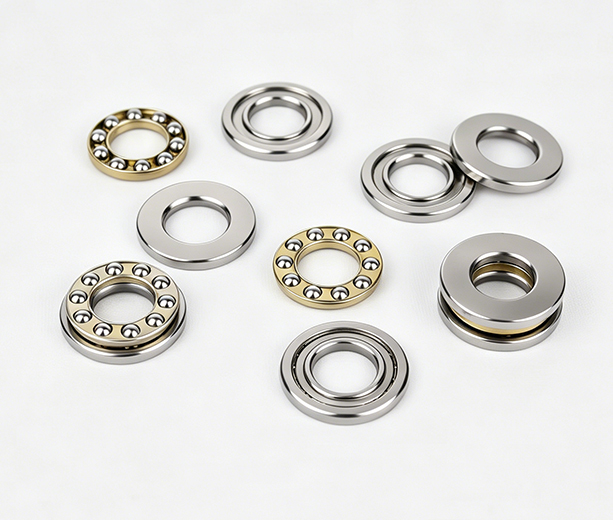
Stainless Steel Thrust Ball Bearing Manufacturers
View MoreThrust ball bearings are a type of bearing specifically designed to withstand axial loads and are widely used in various industrial fields and equipment. Their main feature is the ability to withstand large...

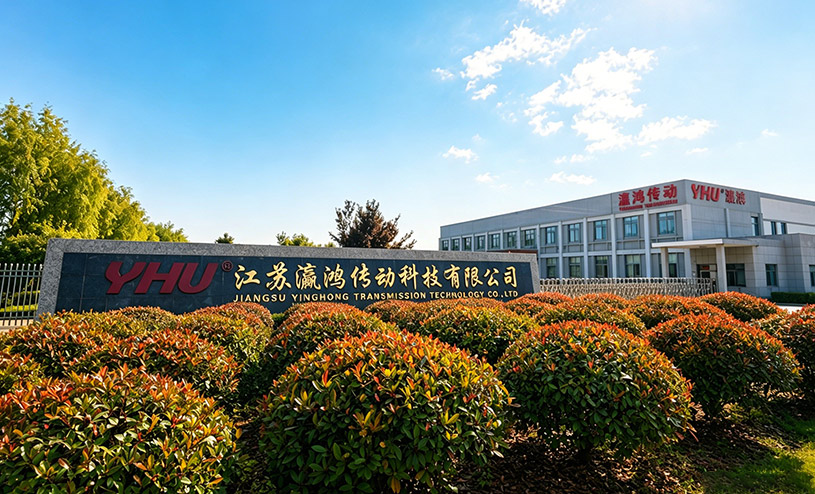
About Us
The company covers more than 70 mu of land and operates nearly 10,000 square meters of manufacturing facilities. As a professional manufacturer of precision special bearings in China, we have introduced advanced Japanese precision manufacturing technology and equipped our facility with automated production lines and high-precision testing equipment. A comprehensive quality management system ensures consistent product quality and reliable performance.
As a National High-Tech Enterprise, Yinghong holds multiple invention and utility model patents and has obtained internationally recognized certifications including IATF 16949, RoHS, CE, and SGS. These certifications enable us to meet diverse customer requirements and provide effective solutions for demanding applications and complex technical challenges.
Yinghong is China Stainless Steel Thrust Ball Bearing Manufacturers and Wholesale Stainless Steel Thrust Ball Bearing Factory, we specialize in the production of high-precision deep groove ball bearings and custom non-standard bearings under our registered trademark, “YHU”. Our main products include bearing steel bearings, stainless steel bearings, ceramic bearings, and plastic bearings.
YHU bearings are designed to deliver low noise, low vibration, low friction, high precision, great sealing performance, and high-speed operation. They also offer self-lubrication, corrosion resistance, rust resistance, acid and alkali resistance, chemical resistance, electrical insulation, non-magnetic properties, high-temperature resistance, low-temperature adaptability, and long service life, making them suitable for demanding operating environments.
Our bearings and bearing assemblies are widely used in electric motors, power tools, pneumatic tools, robotics, drones, household appliances, precision instruments, semiconductor equipment, medical devices, marine equipment, aerospace applications, financial equipment, textile machinery, fishing equipment, and a wide range of specialized industrial equipment.
Honor
-
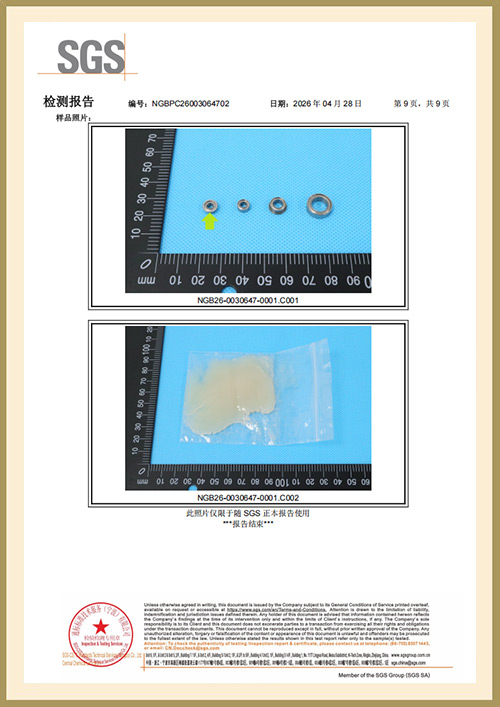 SGS Test Report
 -
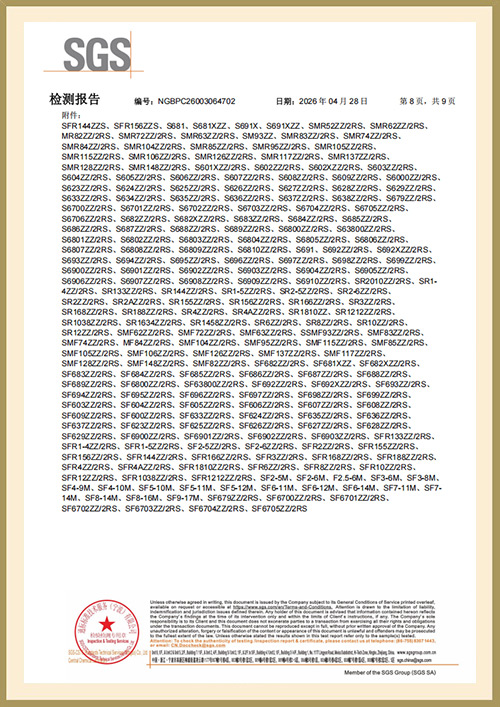 SGS Test Report
 -
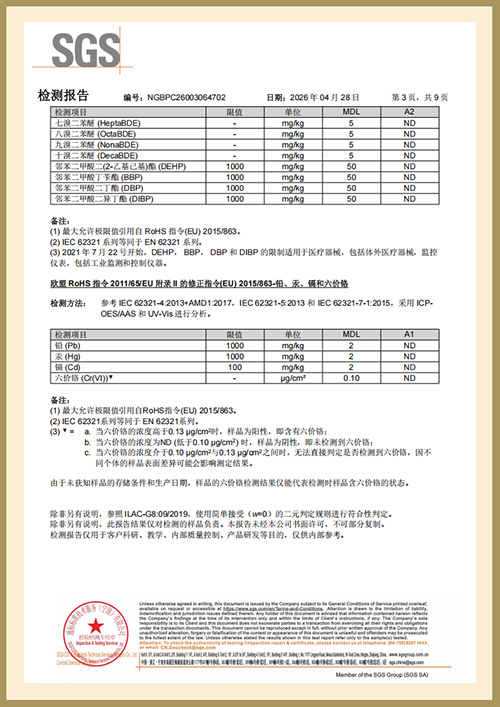 SGS Test Report
 -
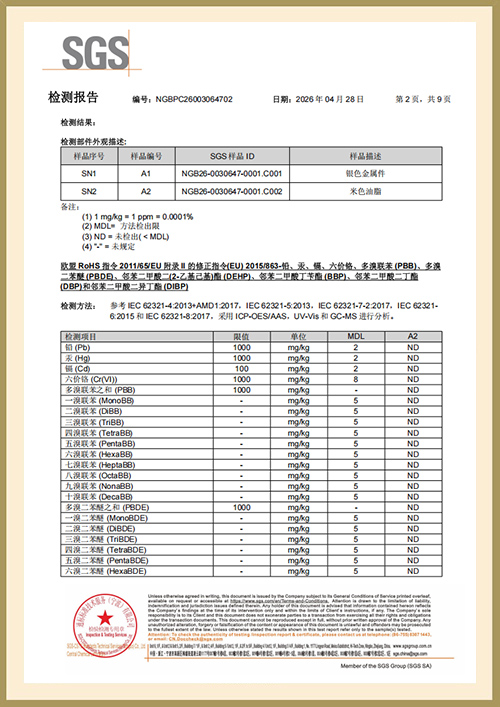 SGS Test Report
 -
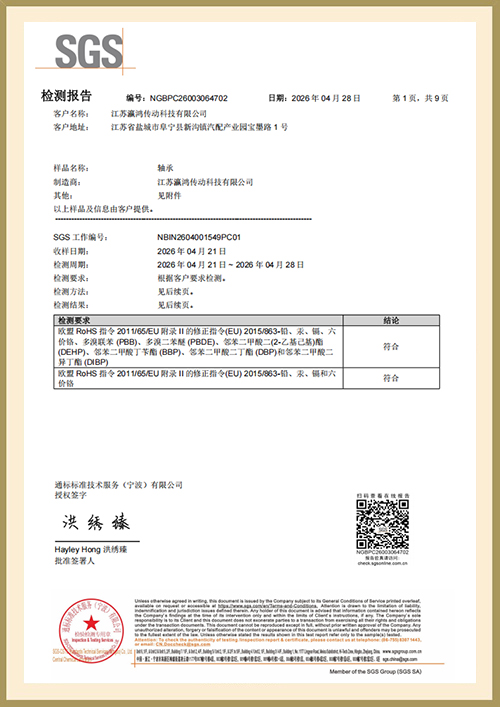 SGS Test Report
News
-
Industry News 2026-09-21
A flange bearing is a housed bearing assembly in which the outer housing carries a machined flange plate drilled with mounting holes. The flange plate allows the unit to be bolted directly onto a mac...
View More -
Industry News 2026-09-21
Most procurement teams comparing stainless steel bearings hold a material comparison sheet. 440C versus 316. Hardness versus corrosion resistance. Magnetic versus non-magnetic. None of that informati...
View More -
Industry News 2026-09-21
Bearing Steel: The Metallurgical Foundation Behind Every Rolling Contact Every rotating assembly in modern machinery depends on a handful of highly engineered contact points. A pump running at 3,600 ...
View More -
Industry News 2026-04-22
Angular contact ball bearings are essential for handling combined loads because their inner and outer raceways are offset along the bearing axis. This built-in contact angle creates a direct, uninter...
View More
Contact us now
Industry Knowledge Extension
Jiangsu Yinghong Transmission Technology Co., Ltd. produces precision miniature bearings under the registered YHU brand from our plant in Yancheng, Jiangsu, and stainless steel thrust bearings are one of the families we build. We operate as a Stainless Steel Miniature Thrust Ball Bearings manufacturer supplying standard sizes alongside custom non-standard parts, with SUS420, SUS440, SUS304, SUS316 and special stainless grades run as separate lines. These bearings are specified where a compact axial locating function has to keep working through moisture, chemical contact, washdown or cleanroom conditions without rusting or seizing.
How the Range Is Organised
The range splits along two axes: stainless grade, which sets hardness and corrosion behaviour, and bearing arrangement, which sets how the axial load is carried through the assembly. A single-direction miniature thrust ball bearing takes axial load one way through a shaft washer, a ball and cage assembly and a housing washer, while a double-direction unit adds a second ball set and a centre washer so the shaft is located in both directions inside the same envelope.
- Single-direction, flat seat — the simplest axial locating element, used where the housing face is machined flat and square to the shaft.
- Single-direction, banded housing washer — a spherically seated washer that tolerates slight misalignment between shaft and housing faces.
- Double-direction — two ball rows with a centre washer for bidirectional axial location in one compact stack.
- Custom and non-standard — bores, heights, washer thicknesses and cage styles built to a drawing or a supplied sample.
Because miniature thrust bearings sit at the small end of the size spectrum, the working envelope is usually defined by the shaft and housing geometry in your drawing rather than by a catalogue number. We confirm washer outside diameters, overall height, ball complement and cage material against that geometry, and we check the parallel stack height that the assembly can actually accept. The wider bearing product range we manufacture covers radial, flanged, ceramic and plastic families for projects that need more than one bearing type on the same bill of materials.
Where Miniature Stainless Thrust Bearings Fit
Thrust ball bearings carry axial load only. They do not provide radial guidance, so in a real assembly they are paired with a radial bearing — commonly a deep groove type — that centres the shaft while the thrust bearing takes the end load. We review that load sharing when the assembly drawing is supplied, because the radial bearing takes the side loads and the thrust bearing sets the axial position.
- Medical devices and dental or laboratory handpieces where small axial stacks must stay clean and corrosion free.
- Semiconductor equipment, precision instruments and optical positioning stages requiring low noise and low vibration.
- Robotics, drones and micro motors with compact gearbox or actuator end-floats to control.
- Marine and fishing equipment exposed to salt air, spray and humid storage.
- Power tools, pneumatic tools, household appliances, textile machinery and financial equipment with continuous duty cycles.
Environment usually decides the grade before load does. A unit that runs dry indoors can use a hardened martensitic grade, while a washdown or saline duty pushes the selection towards an austenitic grade even though the allowable load drops. Where the shaft also needs radial support in the same envelope, a flanged or deep groove ball bearing is normally the companion part, and both can be produced to the same drawing set.
Stainless Grades Across the Range
Each stainless grade we run trades hardness against corrosion resistance. The table below shows how we position them for miniature thrust applications and what usually drives the choice.
| Grade | Metallurgical character | Typical environment fit | Why projects select it |
|---|---|---|---|
| SUS420 | Martensitic, hardenable through heat treatment | Indoor machinery, mild humidity, incidental condensation | Standard-duty axial location where hardness is wanted with basic rust protection |
| SUS440 | High-carbon martensitic, highest hardness of the stainless grades we run | Wear-driven duties with only occasional moisture; not intended for aggressive chloride service | Higher contact stress and longer raceway life in a very small section height |
| SUS304 | Austenitic, essentially non-magnetic in the annealed condition | Washdown, food-adjacent lines, general aqueous and humid service | Light to moderate axial loads where corrosion resistance outranks hardness |
| SUS316 | Austenitic with molybdenum; non-magnetic characteristics suited to sensor-adjacent builds | Chloride, saline, chemical and sterilised medical environments | Lowest axial duty in the most aggressive media we regularly quote |
| Special stainless | Customer-specified grade, heat treatment or surface condition | Specific media lists, elevated or sub-zero service, or a client material standard | Used when a catalogue grade cannot satisfy the media or documentation requirement |
Grade choice is confirmed together with the washer and ball heat treatment, because a hardened washer with matching balls behaves differently from a mixed stack. Where a customer already maintains an approved material list, we build to that list and record the incoming material certificates with the batch.
Critical Specifications We Confirm
Miniature thrust bearings fail for predictable reasons: too little axial load, a seating face that is not square, or a cage that cannot survive the speed. The following variables are fixed before production is released.
- Axial load at the working point — continuous, peak and shock values, with the direction of loading.
- Speed and duty cycle — including the minimum axial load needed to keep the balls tracking rather than skidding.
- Envelope dimensions — bore, washer outside diameter, overall height, washer thickness and ball size.
- Geometry of the seating faces — flatness, squareness to the shaft axis and abutment diameter.
- Fit and mounting method — shaft and housing tolerance, fillet clearance and whether the bearing is pressed, bonded or spring-preloaded.
- Running accuracy — the precision class and axial run-out the assembly can accept.
- Clearance or preload — how axial play is set and held over the life of the unit.
- Lubrication intent — grease grade, oil, dry running or lubrication by the customer's process fluid.
- Media and temperature — chemical exposure list, humidity, cleaning agents and operating temperature range.
- Acceptance criteria — the tests and documents required at goods receipt.
Configuration, Sealing and Line Integration
We configure each order around how the bearing is assembled and how it arrives at the line. Cage style, washer form, lubrication and packaging are treated as configurable items rather than fixed features, so a part can be adapted to automated feeding, manual assembly or a service-replacement channel without changing the load rating.
- Cage and ball complement selected for the speed band and lubrication method.
- Flat or banded housing washers depending on how accurately the mating faces are machined.
- Open bearings, shielded variants or grease-retaining arrangements where the adjacent structure allows space.
- Spring preload or shim control where axial play has to be removed at assembly.
- Tubing, tray or bulk packing formats matched to manual or automated insertion.
- Marking and traceability references that fit the customer's own identification system.
Sealing and shielding are decided with the speed limit and the contamination risk in view. A shielded miniature thrust bearing retains grease and keeps coarse debris out, but adds drag; a fully open bearing runs cooler and relies on the housing for protection. We state the trade-off at quotation instead of adding a seal that the duty cannot tolerate.
Quality Control and Acceptance Evidence
Yinghong is a National High-Tech Enterprise holding multiple invention and utility model patents, and our quality system is certified to IATF 16949, RoHS, CE and SGS. Production uses Japanese precision manufacturing technology with automated lines and high-precision testing equipment, and the quality system runs as a closed loop from raw material intake through processing to finished goods release.
- Incoming material verification with grade certificates held against the production batch.
- In-process checks on washer dimensions, height and face geometry before assembly.
- Finished bearing verification covering precision, noise, vibration, sealing, wear resistance and corrosion resistance.
- Salt-spray and corrosion testing for stainless grades where the application requires documented media resistance.
- Rust-prevention treatment, individual or bulk packing and batch traceability through to despatch.
- SGS test reports and inspection records supplied with the shipment where a project specifies them.
Information We Use to Configure Your Solution
A quotation for stainless steel miniature thrust bearings is built from the working point, not from a size list alone. The inputs below are what our engineering team needs to select the grade, arrangement and internal configuration and to issue a drawing for approval.
| Project input | How it changes the design | What we return |
|---|---|---|
| Shaft and housing drawing, or a sample | Fixes bore, outside diameter, stack height and seating geometry | Dimensioned part drawing and size confirmation |
| Axial load, peak load and load direction | Selects single or double direction, grade and heat treatment | Bearing selection with a load statement for the assembly |
| Speed, duty cycle and lubrication intent | Sets cage style, clearance and minimum axial load requirement | Lubricant recommendation and mounting note |
| Media, humidity and temperature range | Drives the choice between SUS420, SUS440, SUS304, SUS316 or a special grade | Material recommendation with sealing or shielding option |
| Fit, abutment diameter and mounting method | Determines seating tolerance and whether preload hardware is needed | Fit recommendations and assembly instructions |
| Annual volume and delivery pattern | Sets batch planning, packing format and stock policy | Production plan, packing format and documentation list |
| Acceptance and documentation requirement | Defines the test plan and the certificate package released with the order | Inspection plan, batch records and applicable SGS test reports |
Customization, Maintenance and Delivery Scope
Our group structure allows us to combine standard precision bearing design with non-standard customization development. We accept projects from drawing or sample and provide a full-process service covering solution design, prototype production, mass delivery and after-sales technical support. Typical adaptation work includes bearing structure, material and performance parameter changes for specific industries such as motors, power tools, medical, semiconductor and aerospace equipment.
- Prototype and sample runs before volume release, with first-article documentation.
- Design and optimization of washer form, cage and internal geometry for an existing assembly.
- Failure analysis and technical support where a bearing has not met service life or has shown abnormal vibration.
- Return batches produced to the same approved drawing for continuity of replacement parts.
- Corrosion protection and packing suitable for sea freight and long storage, with customer labelling where required.
Where a miniature thrust bearing reaches the end of its service interval, the practical maintenance items are the seating faces, the lubrication state and the axial clearance in the assembly. We supply replacement bearings to the original approved configuration so that a rebuilt unit holds the same axial position. The companion parts for those builds — including flanged bearings used in the same housing — can be produced and packed in the same delivery to simplify the kitting operation.
Frequently Asked Questions
Can a miniature thrust ball bearing carry radial load?
No. This bearing type is designed for axial load only and provides no radial guidance. The shaft must be centred by a radial bearing in the same assembly, normally a deep groove ball bearing, while the thrust bearing sets the end position. Send the full assembly drawing and we confirm how the two parts share the load before selecting the thrust element.
Which stainless grade suits a wet, saline or chemical environment?
SUS316 is our usual starting point for chloride, saline and chemical exposure, and for medical equipment that is repeatedly cleaned. SUS304 covers general washdown and humid service. SUS420 and SUS440 are chosen when hardness and wear life drive the requirement and corrosion exposure is mild. Where the media list falls outside these grades, we build to a special stainless specification.
What do you need to quote a custom miniature thrust bearing?
A drawing or sample gives us the envelope. From there we work with the axial load, speed and duty cycle, the media and temperature range, the shaft and housing fit, annual volume, and the inspection or certificate package required at goods receipt. With those inputs we issue a selection, a dimensioned drawing and a production plan.
Are non-magnetic or high-temperature versions available in this range?
Austenitic grades such as SUS304 and SUS316 are the normal selection where a non-magnetic assembly is needed, since they are essentially non-magnetic in the annealed condition. For elevated or sub-zero service we select the grade, heat treatment and lubricant combination that suits the operating temperature, and we confirm the applied configuration on the quotation drawing.
How is quality documented for a project order?
Production runs under a quality management system certified to IATF 16949 with RoHS, CE and SGS certification held by the company. Bearings are verified for precision, noise, vibration, sealing, wear resistance and corrosion resistance before release, and material certificates, inspection records and SGS test reports are issued with the shipment when the project requires them.

- Contact Information
-
-
+86 162 6918 9999 +86 136 1619 2555

-
+86 153 0641 4247

-
jeffrey@yhu1988.com

rose@yhu1988.com -
Yinghong Industrial Park, Zexin Avenue, Xingou Auto Parts Industrial Park, Funing County, Yancheng City, Jiangsu Province, China

-
- QR Code

