


 English
  русский
  Español
  عربى
عربى  日本語
日本語 


About Us
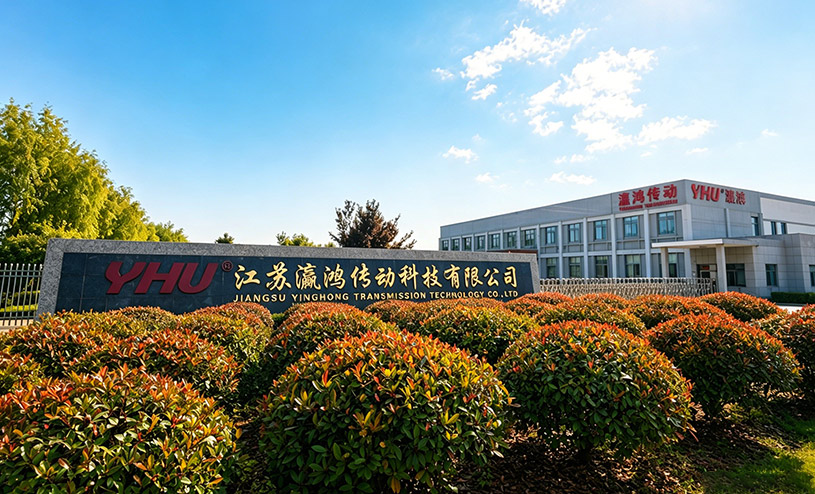
The company covers more than 70 mu of land and operates nearly 10,000 square meters of manufacturing facilities. As a professional manufacturer of precision special bearings in China, we have introduced advanced Japanese precision manufacturing technology and equipped our facility with automated production lines and high-precision testing equipment. A comprehensive quality management system ensures consistent product quality and reliable performance.
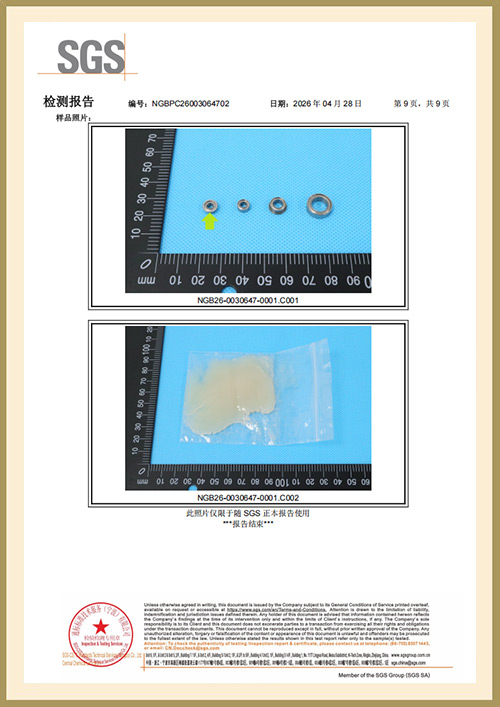
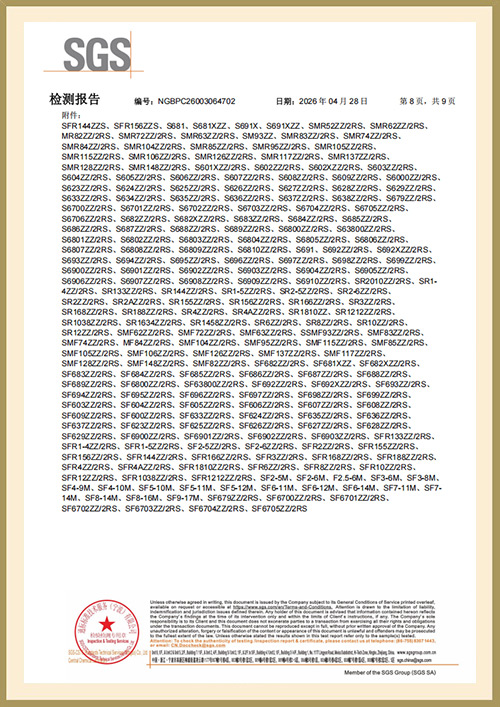
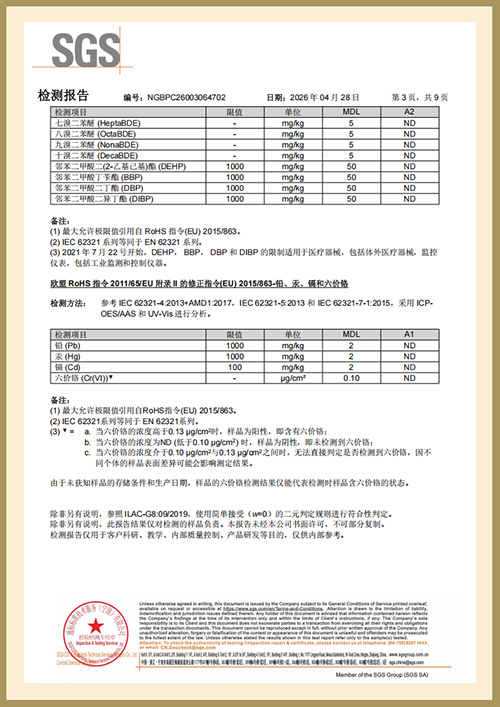
As a National High-Tech Enterprise, Yinghong holds multiple invention and utility model patents and has obtained internationally recognized certifications including IATF 16949, RoHS, CE, and SGS. These certifications enable us to meet diverse customer requirements and provide effective solutions for demanding applications and complex technical challenges.
Yinghong is China PTFE Bearings Manufacturers and OEM PTFE Bearings Suppliers, we specialize in the production of high-precision deep groove ball bearings and custom non-standard bearings under our registered trademark, “YHU”. Our main products include bearing steel bearings, stainless steel bearings, ceramic bearings, and plastic bearings.
YHU bearings are designed to deliver low noise, low vibration, low friction, high precision, great sealing performance, and high-speed operation. They also offer self-lubrication, corrosion resistance, rust resistance, acid and alkali resistance, chemical resistance, electrical insulation, non-magnetic properties, high-temperature resistance, low-temperature adaptability, and long service life, making them suitable for demanding operating environments.
Our bearings and bearing assemblies are widely used in electric motors, power tools, pneumatic tools, robotics, drones, household appliances, precision instruments, semiconductor equipment, medical devices, marine equipment, aerospace applications, financial equipment, textile machinery, fishing equipment, and a wide range of specialized industrial equipment.
Honor
-
 SGS Test Report
 -
 SGS Test Report
 -
 SGS Test Report
 -
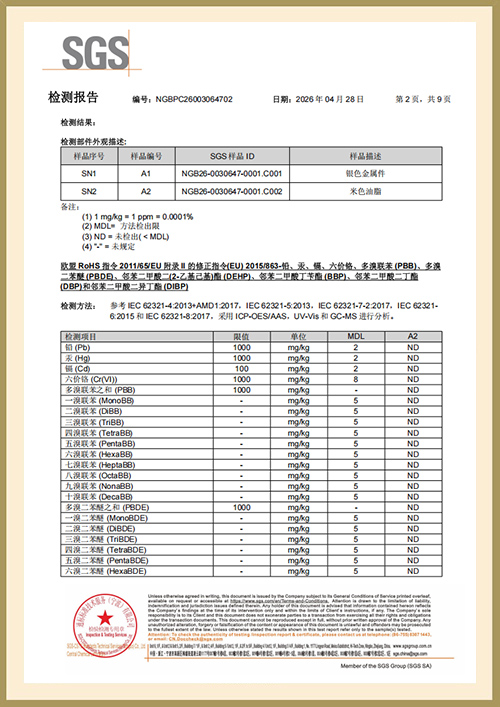 SGS Test Report
 -
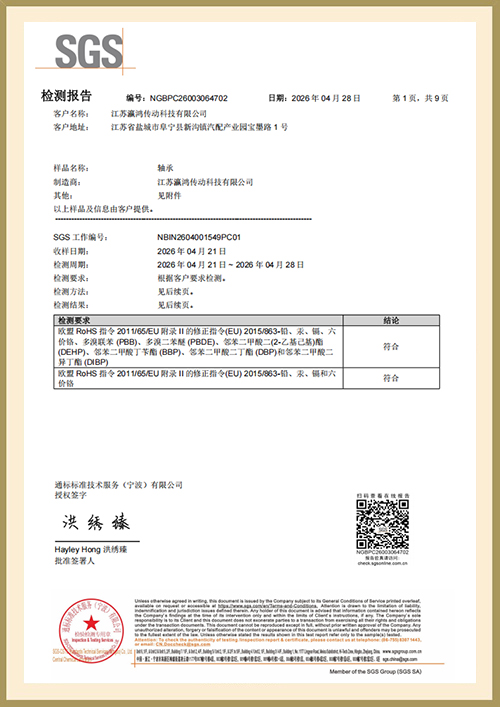 SGS Test Report
News
-
Industry News 2026-09-21
A flange bearing is a housed bearing assembly in which the outer housing carries a machined flange plate drilled with mounting holes. The flange plate allows the unit to be bolted directly onto a mac...
View More -
Industry News 2026-09-21
Most procurement teams comparing stainless steel bearings hold a material comparison sheet. 440C versus 316. Hardness versus corrosion resistance. Magnetic versus non-magnetic. None of that informati...
View More -
Industry News 2026-09-21
Bearing Steel: The Metallurgical Foundation Behind Every Rolling Contact Every rotating assembly in modern machinery depends on a handful of highly engineered contact points. A pump running at 3,600 ...
View More -
Industry News 2026-04-22
Angular contact ball bearings are essential for handling combined loads because their inner and outer raceways are offset along the bearing axis. This built-in contact angle creates a direct, uninter...
View More
Contact us now
Industry Knowledge Extension
We are a PTFE Bearings manufacturer working from Yancheng, Jiangsu, where Jiangsu Yinghong Transmission Technology Co., Ltd. produces precision bearings under the registered YHU brand. The company is a group-based enterprise formed through the joint investment of Dongguan Yinghong, Linqing Boshuo and Yancheng Jiwei, and we mass-produce precision bearings in four material families: bearing steel, stainless steel, ceramics and specialty plastics. PTFE is the grade we build where chemical exposure, permanent moisture, electrical insulation or a strict no-lubricant requirement rules out a conventional steel bearing.
Our PTFE work sits inside a broader plastic bearing programme that also covers POM, PP, UPE, PEEK, PVDF, PA66, PI and specially modified compounds. Bore, wall thickness, flange geometry, running clearance and compound are set per project, so the component is matched to the shaft, the housing and the working point instead of being picked from a fixed shelf list.
- Site area over 15,000 m² with nearly 10,000 m² of manufacturing buildings, automated production lines and high-precision inspection equipment.
- Material scope in series production: bearing steel, stainless steel, ceramic and specialty plastics.
- Custom development from customer drawings and samples, from solution design and prototype through mass delivery.
- Quality framework certified to IATF 16949, RoHS, CE and SGS.
What Our PTFE Bearing Range Covers
PTFE components are supplied to drawing, in the geometry the assembly actually needs. Typical forms we produce:
- Cylindrical sleeve bushings — dry-running radial support in pumps, valves, dosing units and instrument linkages.
- Flanged sleeve bushings — radial guidance plus axial location against a housing face, where a separate washer would add parts and assembly steps.
- Thrust washers and bearing pads — axial load paths in low-speed pivots, swivel joints and slide plates.
- Machined and shaped parts — grooves, shoulders, blind bores, slots and non-standard outlines produced as custom non-standard components.
- Filled PTFE variants — glass-, carbon- or bronze-filled compounds where wear resistance and dimensional stability under load matter more than maximum chemical inertness.
Where the design calls for a rolling element instead of a sliding surface, we supply the mating steel side of the assembly as well, including stainless steel bearings and flanged bearings in the same project package.
Material Grades Across Our Plastic Range
PTFE is rarely the only candidate on the table. Our plastic range exists so the compound can follow the duty rather than the other way round — a chemically aggressive but lightly loaded pivot behaves very differently from a dry-running bushing carrying continuous radial load.
| Material | Chemical and thermal character | Load and wear behaviour | Where it fits in our range |
|---|---|---|---|
| PTFE | Highest chemical inertness in the range; stable from cryogenic service up to roughly 260 °C continuous; electrically insulating and non-magnetic. | Lowest friction, but soft; prone to creep under sustained load and to wear unless filled. | Chemical, semiconductor, medical and marine pivots; insulating and non-magnetic assemblies. |
| PEEK | Broad chemical resistance with high stiffness retention at elevated temperature. | Higher strength and better creep resistance than PTFE at comparable temperatures. | Loaded high-temperature bushings, wet-process tooling, precision instruments. |
| PVDF | Strong resistance to acids, oxidisers and solvents; mechanically stiffer than PTFE. | Good dimensional stability for a fluoropolymer; moderate friction. | Chemical plant fittings, pipe supports, semiconductor fluid handling. |
| POM | Low moisture uptake with good dimensional repeatability; not for aggressive chemistry. | High stiffness and fatigue resistance; clean sliding behaviour against steel shafts. | Power tools, household appliances, office and financial equipment. |
| PA66 | Tough and oil-resistant; moisture-sensitive in dimension. | Good impact and abrasion behaviour in unlubricated contacts. | Textile machinery, gear and roller applications, structural spacers. |
| UPE | Very low water absorption with good chemical tolerance. | Excellent sliding wear performance and impact strength. | Conveying, guide and wear-pad duties in wet environments. |
| PI | Highest temperature capability in the plastic range with low outgassing. | High strength and creep resistance under thermal load. | High-temperature tooling, aerospace and vacuum-adjacent assemblies. |
| Specially modified plastics | Compounds tuned for a single duty, such as conductivity, flame behaviour or reinforced stiffness. | Adjusted friction, wear and creep values against a defined working point. | Projects where no standard grade meets the specification. |
Where PTFE Bearings Fit in Service
PTFE is the choice when the environment is hostile to steel, when lubricant cannot be present, or when the bearing must electrically isolate the shaft from the housing. Our PTFE components are working in chemical dosing and transfer equipment, semiconductor wet benches and precision instruments, medical devices, marine and deck equipment, textile machinery and financial equipment.
- Wet or wash-down equipment — permanent moisture favouring a polymer sliding surface over a greased steel bearing.
- Acid, alkali and solvent contact — where the bearing sees splash, vapour or immersion.
- Clean processes — dry running avoids grease migration and particulate attraction.
- Electrical insulation and non-magnetic assemblies — instrument and sensor-adjacent pivots where a conductive path is unwanted.
- Low-speed, high-cycle linkages — robotics, automation grippers, drones and appliance mechanisms.
Where load, speed or temperature exceeds what an unfilled PTFE part can carry, we move the application to a filled compound or to another grade in the plastic family and show the reasoning at quotation stage.
Critical Specifications We Confirm Before Production
- Bore, outside diameter, length, wall thickness, flange diameter and flange thickness, together with the dimensional tolerance class for each.
- Running clearance and fit: press fit into the housing, running fit on the shaft, or both, including the effect of PTFE's high thermal expansion on the installed bore.
- Load type and magnitude — static or dynamic, radial, axial or combined — and whether the load is continuous or intermittent.
- Sliding speed and duty cycle, since surface pressure and velocity together govern wear life in a dry-running polymer bearing.
- Shaft material, hardness and surface finish; a ground counterface in the region of Ra 0.4–0.8 µm limits abrasive wear on a soft polymer surface.
- Continuous and peak operating temperature, considering that PTFE performance degrades above roughly 260 °C.
- Chemical contact list, including cleaning agents and sterilisation media, and any exposure to molten alkali metals or elemental fluorine, which PTFE cannot take.
- Electrical insulation, magnetic and outgassing requirements, where applicable to the instrument or vacuum side of the machine.
- Assembly method, orientation marking and annual volume, so tooling, machining strategy and inspection routine are sized correctly.
Configuration, Fit and Line Integration
For automated assembly we agree lead-in chamfers, press-fit force windows and orientation features with the machine builder before the first batch, so the part can be fed and seated by the equipment already on the line. Retention is normally handled by interference fit, a shoulder, a flange or a retaining ring, and we machine the corresponding feature into the component rather than leaving it to the assembly station.
Tolerances are quoted on the installed condition where the application is temperature-cycled, because a free-state bore measurement on PTFE changes once the bushing is pressed into a rigid housing. Paired with our full bearing product range, a single project package can carry the polymer contact parts and the steel rolling bearings from the same production and quality system.
Quality Control and Acceptance
Our quality management system runs from raw material intake through production to finished goods, with high-precision testing equipment used to verify precision, noise, vibration, sealing, wear behaviour and corrosion resistance. PTFE and other plastic components are checked against the agreed drawing dimensions, and the material grade of each production batch is traceable.
- Certifications held: IATF 16949, RoHS, CE and SGS, with SGS test reports available for the relevant material and product scope.
- Acceptance criteria are written into the project scope before the first production run and tested against those criteria.
- Inspection covers dimensional conformity, surface condition and the functional parameters agreed for the application.
- Customisation projects follow the same path as series parts, from prototype samples and confirmation to mass delivery and after-sales technical support.
Installation, Running-In and Serviceability
- Deburr the housing bore and shaft before pressing; a raised burr or a scored counterface destroys a polymer bearing faster than load does.
- Press through the flanged or shouldered face where geometry allows, and avoid closing the bore by pressing on the thin wall.
- Allow a short running-in period at reduced load so the surface beds to the shaft before full duty cycle.
- PTFE parts run without grease; adding lubricant only helps where contamination and chemical compatibility have been cleared for the process.
- Replace on measurable wall wear, bore growth or scoring rather than on a fixed calendar interval, and keep a spare set matched to the original drawing revision.
- Failures are analysed on request, covering wear pattern, creep deformation, thermal exposure and counterface condition, and the finding feeds back into grade or clearance changes.
Information We Use to Configure Your Solution
- Drawing or sample, with tolerance class, geometric features and any critical dimension.
- Working point: load direction and magnitude, sliding speed, duty cycle and expected service life.
- Operating temperature band, including peaks and thermal cycling.
- Chemical and cleaning media in contact, with concentration and exposure time.
- Shaft and housing material, hardness, surface finish and fit arrangement.
- Special requirements: insulation, non-magnetic behaviour, low outgassing, food or medical documentation scope.
- Assembly method, annual volume, packaging and delivery destination.
PTFE Bearing FAQs
How do we decide between PTFE and PEEK for the same position?
PTFE wins on chemical inertness, friction and cost where loads are modest; PEEK wins where the same position also has to carry higher surface pressure or hold stiffness at elevated temperature. We compare both grades against the actual working point and state which one we recommend in the proposal.
Can you produce PTFE bearings to our own drawing?
Yes. Custom and non-standard geometry is a core part of our business — we develop from customer drawings and samples, produce prototype parts for confirmation and then move to mass delivery on the same specification.
Do PTFE bearings need lubrication?
They are self-lubricating and normally run dry, which is the main reason they are specified near clean processes, sensors and optics. Where a lubricant is used, we confirm chemical compatibility and the effect on friction and wear first.
What temperature limit applies to a PTFE component?
PTFE remains usable across a very wide band from cryogenic temperatures up to roughly 260 °C continuous. Above that, degradation begins, and molten alkali metals or elemental fluorine are also outside the material's capability.
What should be included with a request for quotation?
The drawing or sample, load and speed data, temperature band, chemical exposure, shaft and housing details, required quantity and delivery destination. With those inputs we return a grade selection, dimensional and clearance proposal, inspection scope and a quotation aligned to the actual application.

- Contact Information
-
-
+86 162 6918 9999 +86 136 1619 2555

-
+86 153 0641 4247

-
jeffrey@yhu1988.com

rose@yhu1988.com -
Yinghong Industrial Park, Zexin Avenue, Xingou Auto Parts Industrial Park, Funing County, Yancheng City, Jiangsu Province, China

-
- QR Code

