


 English
 русский
 Español
 عربى
 日本語

 Home / News / Industry News / Full Ceramic vs Hybrid Ceramic Bearings: Material, Load and Speed Differences
Full Ceramic vs Hybrid Ceramic Bearings: Material, Load and Speed Differences
 2026.11.20
 Industry News
Content
- 1 Construction Defines the Difference
- 2 Material Architecture: Zirconia, Silicon Nitride and Steel Rings
- 3 Load, Stiffness and Deflection in Service
- 4 Speed, Temperature and Lubrication Windows
- 5 Corrosion, Contamination and Electrical Behavior
- 6 Noise, Vibration and Precision in Small Assemblies
- 7 Cost, Lifecycle and Failure Modes
- 8 Selection Checklist for Your Application
- 9 Where Each Design Fits in Real Equipment
- 10 Questions Buyers Ask Before Changing Material
Construction Defines the Difference
A full ceramic bearing uses ceramic rolling elements and ceramic raceways. The balls and the inner and outer rings are made from ceramic grades such as zirconia or silicon nitride, and the cage is usually a polymer or another non-steel material selected for the running environment. A hybrid ceramic bearing keeps steel rings and replaces the rolling elements with ceramic balls. The distinction sounds simple, but it changes load paths, shock response, electrical behavior, lubrication tolerance, corrosion resistance and the way the bearing fails when it reaches its limit.
The word “full” should be read as a construction statement, not a performance promise. A full ceramic bearing is not automatically better in every application. Ceramic raceways are hard and dimensionally stable, yet they are brittle compared with bearing steel. A hybrid bearing keeps the toughness and fatigue resistance of steel rings while using ceramic balls to reduce weight, lower friction and limit heat build-up in the rolling contact. That is why the two designs often appear in the same equipment category but serve different priorities.
Full ceramic
All-ceramic rolling contact
Ceramic balls and ceramic rings create a non-metallic rolling path. The design is attractive where electrical insulation, chemical exposure, high temperature or minimal lubrication are central concerns.
Hybrid ceramic
Ceramic balls, steel rings
Steel rings carry the raceway loads while ceramic balls reduce centrifugal force and rolling friction. This is often a practical balance between advanced performance and mechanical toughness.
Shared trait
Ceramic rolling elements
Both designs can use ceramic balls. The real difference is whether the raceways are ceramic or steel, because that choice controls load capacity, shock tolerance and failure mode.
Material Architecture: Zirconia, Silicon Nitride and Steel Rings
Full ceramic bearings are not a single material family. Zirconia ceramic is known for high strength and good toughness among ceramic bearing materials, and it is often chosen for smaller precision assemblies where dimensional stability and corrosion resistance matter. Silicon nitride is lighter, has high hardness and excellent thermal shock resistance, and is frequently associated with high-speed and high-temperature rolling contacts. The raceway and ball grade, surface finish, cage material and internal clearance still decide how the bearing behaves in a real assembly.
Zirconia full ceramic bearings
Zirconia full ceramic bearings can be useful in instruments, pumps, dental equipment and small mechanisms where a non-metallic rolling path is valuable. The material resists many corrosive media and does not conduct electricity like steel. However, zirconia is sensitive to certain chemical environments and to concentrated point loads. Housing design, shaft fit and mounting method must avoid impact and edge loading. A chamfer that looks harmless on a steel bearing can become a stress riser when the ring is ceramic.
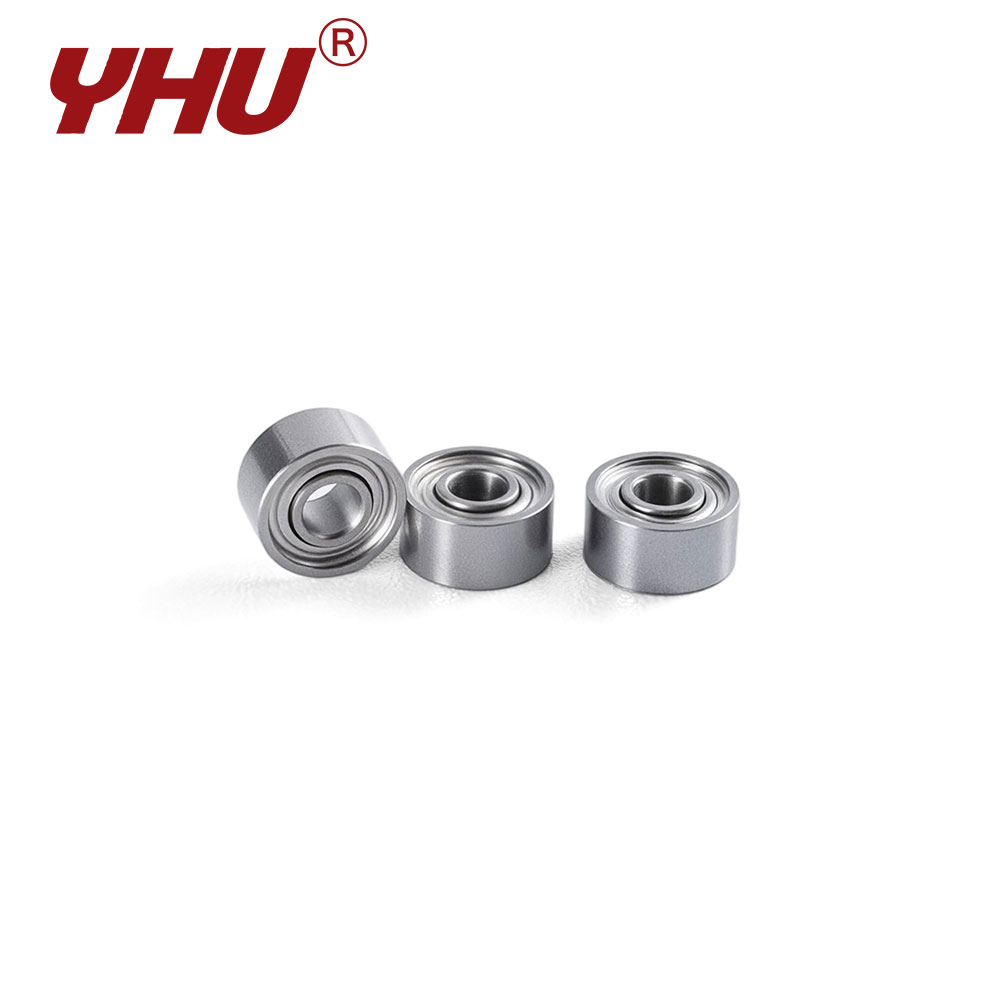
 Zirconia Ceramic Bearings for Corrosive and Insulating ApplicationsCovers full ceramic and hybrid zirconia bearings for corrosive, non-magnetic or electrically insulating environments, with custom sizes, seals, cages and lubrication options.View Product →
Silicon nitride full ceramic bearings
Silicon nitride full ceramic bearings are often considered when speed, temperature and weight reduction are more important than raw shock tolerance. The material has low density, high hardness and good resistance to thermal cycling. In high-speed spindles, the lower mass of the rolling elements reduces centrifugal loading on the outer ring. That can translate into lower friction and less heat, but it does not remove the need for a balanced cage, clean lubrication and correct preload. A full ceramic bearing can still fail through ring cracking if it is pressed on by the inner ring or struck during handling.
Hybrid bearings with steel or stainless rings
Hybrid ceramic bearings combine ceramic balls with bearing steel or stainless steel rings. Bearing steel rings provide high fatigue strength and predictable raceway geometry, while ceramic balls reduce friction and resist welding or smearing in marginal lubrication. Stainless steel hybrid versions add corrosion resistance, although the grade of stainless steel and the environment still matter. A stainless ring is not a universal shield against chlorides, acids or sterilisation chemicals, and the cage and lubricant must be compatible with the same conditions. Hybrid construction is often a strong compromise in high-speed motor spindles, dental handpieces, vacuum pumps and precision instruments.
Load, Stiffness and Deflection in Service
The first practical difference appears under load. Hybrid bearings usually tolerate higher shock and impact because the steel rings can yield and redistribute stress instead of cracking. Full ceramic bearings have high stiffness, which is helpful for precision positioning, but the same stiffness can concentrate stress at mounting edges and ball-race contacts. They are not the first choice for repeated hammering, heavy press fits or uncontrolled axial loads. The table below compares general engineering tendencies, not catalogue ratings for a specific size.
| Design point | Full ceramic bearing | Hybrid ceramic bearing |
|---|---|---|
| Rolling elements | Ceramic balls | Ceramic balls |
| Raceways | Ceramic rings | Bearing steel or stainless steel rings |
| Shock tolerance | Lower in many designs; mounting care is critical | Generally higher because steel rings absorb impact |
| Electrical insulation | Excellent in a true all-ceramic path | Not fully insulating because steel rings conduct |
| Corrosion response | Material-dependent but generally strong | Depends on ring grade, cage and lubricant |
| High-speed potential | High when cage and preload are controlled | High, with steel rings providing stable raceways |
| Failure mode | Brittle cracking or spalling under overload | Steel raceway fatigue, wear or lubricant failure |
| Typical cost position | Higher material and processing cost | Moderate premium over all-steel bearings |
Relative tendency
Illustrative only: longer bars indicate a stronger general tendency, not a published load or speed rating.
Speed, Temperature and Lubrication Windows
Ceramic balls are lighter than steel balls of the same size. At high speed, lower mass means lower centrifugal force, less ball skid and reduced heat generation. This is one reason ceramic rolling elements appear in machine tool spindles, dental turbines and high-speed pumps. A hybrid bearing often handles this duty well because the steel rings maintain precise raceway geometry and tolerate the fit pressures of a metal housing. A full ceramic bearing can also run at high speed, but the cage, preload and thermal expansion of the ceramic rings need careful engineering.
Temperature is another separating point. Full ceramic bearings can operate where steel rings would soften or oxidise, provided the cage and lubricant are suitable. Silicon nitride is particularly attractive for thermal cycling because it resists sudden temperature changes. Hybrid bearings are limited by the steel rings and by the lubricant. A ceramic ball does not turn a standard steel bearing into an unlimited high-temperature bearing. Grease life, cage strength and ring hardness still set the ceiling.
Lubrication is where application experience matters. Ceramic surfaces can run with very thin films in some conditions, and they resist adhesive wear better than steel-on-steel contacts. That does not mean a full ceramic bearing is a dry-running bearing by default. Starved lubrication can still damage cages, generate heat and cause wear. Hybrid bearings are often selected when a small amount of lubricant must do more work, but the lubricant must match the ceramic balls, steel rings, cage and seals. A lubricant that works well with bearing steel may not protect a polymer cage in a chemical washdown.
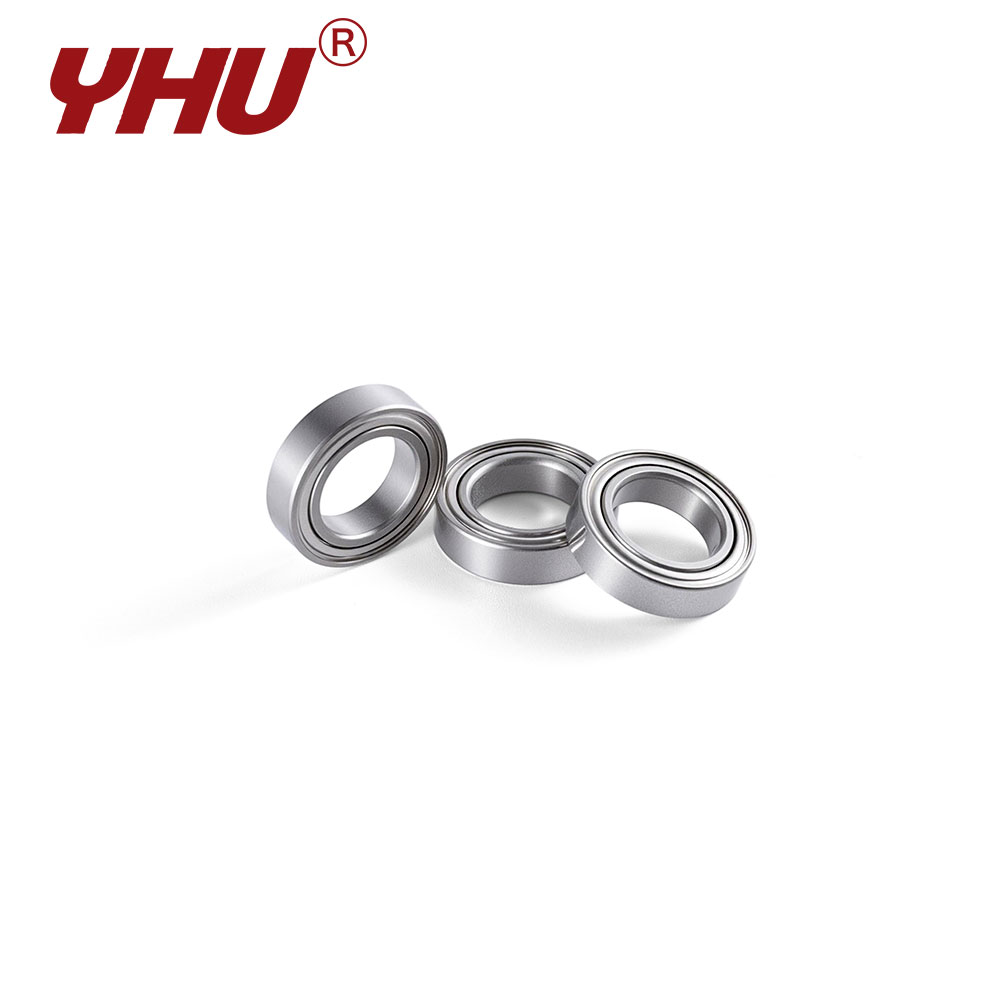
Bearing Steel Hybrid Ceramic Bearings for Motors and Precision EquipmentCombines hardened steel rings with silicon nitride ceramic balls for higher speed, lower friction, electrical insulation and reduced lubricant dependence in motors, pumps and instruments.View Product →Corrosion, Contamination and Electrical Behavior
Corrosion is a frequent reason to move away from all-steel bearings. Full ceramic bearings remove the steel raceways from the rolling path, so they can be attractive in chemical processing, marine instruments, medical equipment and food-adjacent machinery where washdown and cleaning agents shorten steel life. The result still depends on the ceramic grade and the cage. Zirconia and silicon nitride do not behave identically in every chemical, and a polymer cage may be the first component to degrade. It is safer to confirm chemical compatibility than to assume that “ceramic” means universal resistance.
Hybrid bearings with stainless steel rings improve corrosion resistance compared with bearing steel, but they are not equal to a full ceramic rolling path. The steel rings remain exposed to the environment, and pitting at the raceway can start the failure process. If the application involves seawater, acidic cleaners or frequent sterilisation, the stainless grade, surface finish, cage and lubricant all need review. Readers comparing stainless ring options can review our notes on stainless steel raceway alternatives before choosing a hybrid design.
Electrical insulation is a clearer dividing line. In a true full ceramic bearing, the rolling contact and rings do not provide a conductive steel path. That can help where shaft currents, inductive heating or electrical isolation are concerns. A hybrid bearing still has steel rings, so it does not provide full electrical isolation. Ceramic balls alone do not stop current from passing through the rings, housing or shaft. If insulation is the main requirement, the housing and adjacent components must be reviewed as a system, not just the bearing.
Noise, Vibration and Precision in Small Assemblies
In small precision assemblies, the difference between full ceramic and hybrid ceramic bearings often shows up as a change in vibration signature rather than a dramatic load change. Ceramic balls can reduce rolling friction and improve dimensional stability, but they also transmit vibration differently through the structure. A full ceramic ring is stiff and light, so housing resonance and fit quality can become more visible. A hybrid bearing with steel rings may damp vibration in a way that suits compact motor spindles, dental handpieces and instrument bearings.
Dental handpiece bearings are a useful example because the duty cycle combines high speed, small size, repeated sterilisation and strict noise expectations. Hybrid ceramic bearings are often used in high-speed dental drills because ceramic balls reduce mass and friction while steel rings maintain a stable, manufacturable raceway. Full ceramic bearings can be considered where chemical exposure or electrical isolation is more important, but the cage, preload and turbine balance must be handled carefully. A bearing that is excellent on a test bench can become noisy if the housing fit is too tight or the shaft shoulder is not square.
Noise is not a single number. It can come from ball pass frequency, cage rattle, raceway waviness, lubricant churning or housing resonance. Changing from steel to ceramic balls alters the mass and contact stiffness, so the same housing may sound different even when the bearing is healthy. For precision assemblies, it is better to evaluate vibration across the operating speed range and after temperature stabilisation. A low-noise result at idle does not prove that the bearing will remain quiet at high speed.
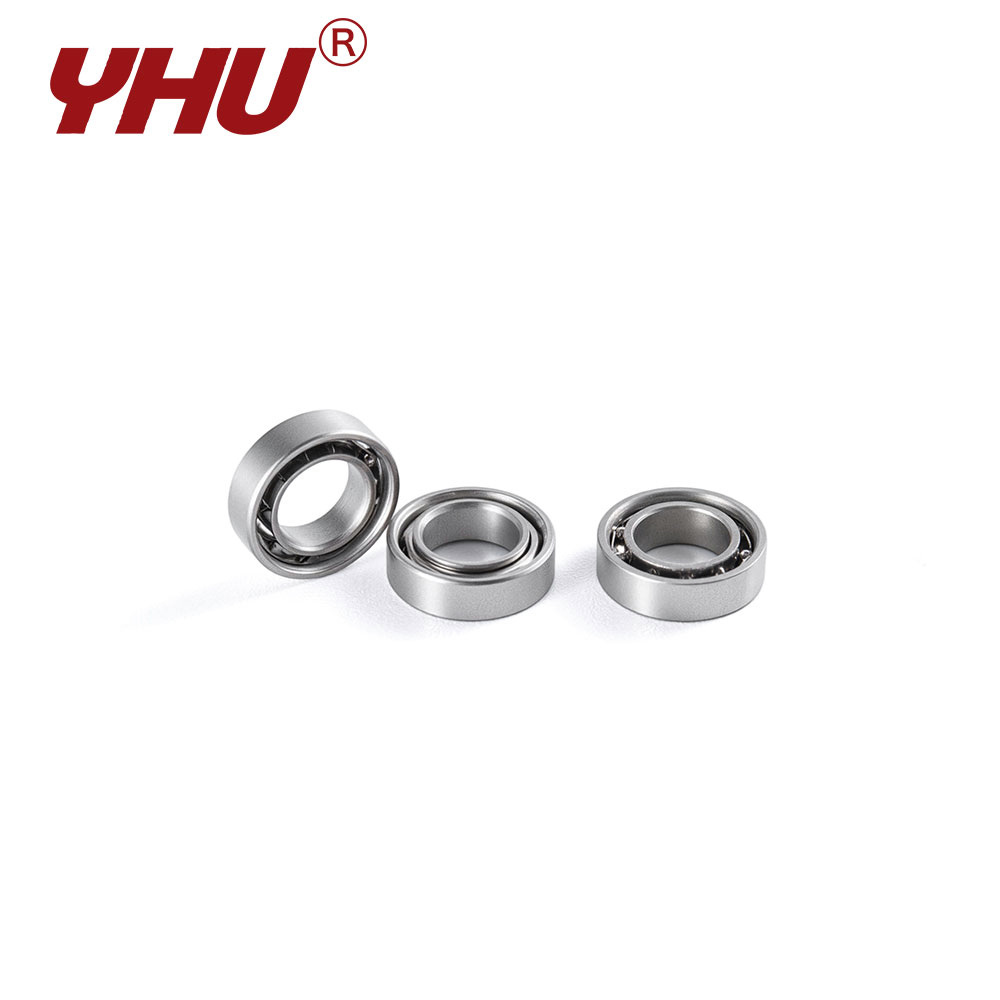
Silicon Nitride Full and Hybrid Ceramic BearingsAvailable as full ceramic or steel-ring hybrid bearings for high-speed, insulating, non-magnetic and washdown applications, with custom cages, seals, preload and lubrication.View Product →Cost, Lifecycle and Failure Modes
Full ceramic bearings usually carry a higher purchase cost because ceramic rings require specialised grinding, inspection and handling. The business case depends on what the bearing protects. If a failed steel bearing can contaminate a process, stop a high-value machine or require frequent maintenance access, the higher bearing cost may be justified. If the application is a low-cost consumer mechanism with moderate loads and good lubrication, a hybrid or all-steel bearing may deliver a better total result.
Full ceramic advantage
Process protection
No steel raceway in the rolling path can reduce the risk of rust particles and metallic wear debris in sensitive processes. This matters in laboratory, medical and chemical handling equipment.
Hybrid advantage
Mechanical reserve
Steel rings provide a familiar load path and better tolerance for shock, press fits and occasional overload. Maintenance teams often find hybrid bearings easier to integrate into existing metal housings.
Hidden cost
Mounting discipline
Full ceramic rings can crack from a poor press fit or a dropped tool. The saved maintenance cost can disappear if assembly practices are not updated for brittle materials.
Failure modes are different enough to affect maintenance planning. A hybrid bearing often fails in a way that resembles a steel bearing: raceway fatigue, lubricant breakdown, cage wear or contamination. A full ceramic bearing may show little warning before a ring crack propagates, especially after an impact. Inspection should include housing seats, shaft shoulders, cage condition and lubricant appearance, not only radial play. A bearing that spins freely by hand can still have a cracked ring that opens under load.
Lifecycle cost also depends on re-lubrication. A full ceramic bearing may allow longer intervals in some environments, but it is not maintenance-free in every case. High-speed cages, seals and contamination still set limits. Hybrid bearings may need the same lubricant discipline as steel bearings, with additional attention to ceramic ball surface condition. The practical question is not “which bearing lasts longer” in isolation, but which design keeps the whole assembly within temperature, vibration and contamination limits for the planned service interval.
Selection Checklist for Your Application
Use the following sequence to narrow the choice. It avoids starting with material preference and instead connects the bearing to the real duty cycle. The same equipment can need different bearings at different positions, so evaluate each shaft separately.
- Define the load type: steady radial load, combined load, axial load, shock load or reversing load. Full ceramic designs need extra caution with impact and edge loading.
- Record the speed range and the time spent at maximum speed. Ceramic balls help with centrifugal load, but cage design and lubrication decide the usable speed.
- List chemicals, cleaning agents, moisture and sterilisation cycles. Confirm compatibility for the ceramic grade, cage, seals and lubricant, not only the rings.
- Check electrical requirements. Choose a full ceramic path only when true insulation is needed; a hybrid bearing with steel rings does not provide it.
- Review temperature at the bearing seat, not only the surrounding air. Steel rings and polymer cages can limit a hybrid design before the ceramic balls reach their limit.
- Examine mounting practice. Press fits, induction heating, hammer blows and dropped components are more dangerous for ceramic rings than for steel rings.
- Confirm cleanliness and lubrication. Ceramic rolling elements can tolerate marginal films in some conditions, but contamination still damages cages and raceways.
- Set acceptance criteria for noise, vibration, starting torque and radial play. Measure after the assembly reaches operating temperature.
For a broader starting point, review our ceramic bearing families and compare the available material routes before locking a drawing. The choice between zirconia, silicon nitride and hybrid construction should follow the duty cycle, not the other way around. A small change in cage material or internal clearance can matter as much as the ceramic grade when the bearing runs at high speed or in a corrosive washdown.
Where Each Design Fits in Real Equipment
Full ceramic bearings are often considered for chemical pumps, laboratory instruments, electrical isolation points, high-temperature rollers and applications where metallic wear debris is unacceptable. They can also appear in food and medical equipment where washdown and cleanliness are important, provided the cage and lubricant are compatible. The limiting factors are usually shock, mounting stress and the cost of a precision ceramic ring. When those factors are controlled, the full ceramic path can simplify corrosion and insulation problems that would otherwise require coatings or isolated housings.
Hybrid ceramic bearings are common in high-speed spindles, dental handpieces, vacuum pumps, blowers, small motors and precision instruments. The steel ring gives the designer a familiar seat and fit, while the ceramic balls reduce friction and heat. In dental handpieces, the small size and high speed make ball mass important, and the steel ring helps maintain a stable raceway through repeated sterilisation cycles. In machine tool spindles, hybrid bearings can support high speed with lower friction, but preload and lubrication remain critical. A hybrid bearing is not a drop-in upgrade for every steel bearing; the internal clearance and contact angle must still match the application.
High speed
Motor and spindle positions
Ceramic balls reduce centrifugal load. Use controlled preload, balanced cages and clean lubrication to turn that advantage into stable running.
Corrosion
Washdown and chemical exposure
Full ceramic rolling paths are attractive, but the cage, seals and housing must survive the same environment. Hybrid stainless versions need grade review.
Precision
Small instrument bearings
Low friction and dimensional stability help, but fit quality and shaft squareness often decide noise and runout more than the ball material alone.
Questions Buyers Ask Before Changing Material
Can a hybrid ceramic bearing replace a full ceramic bearing?
Only after checking the reason for the original choice. If the application needs electrical insulation or a non-metallic rolling path, a hybrid bearing with steel rings will not provide the same result. If the goal is lower friction or higher speed, a hybrid design may be a practical alternative, but load, clearance and lubrication must be reviewed.
Are full ceramic bearings good for heavy shock loads?
They are usually less forgiving than hybrid or all-steel bearings. Ceramic rings are hard and stiff, but they can crack under impact or edge loading. Applications with repeated shock need careful housing design, controlled fits and a realistic load review.
Do ceramic balls make a bearing corrosion-proof?
No. In a hybrid bearing, the steel rings, cage and lubricant are still exposed. In a full ceramic bearing, the ceramic grade and cage still need chemical compatibility. Corrosion resistance is a system property, not a property of the ball alone.
Which design runs quieter?
There is no universal answer. Ceramic balls change mass and contact stiffness, and the housing may respond differently. A hybrid bearing with steel rings can damp vibration in some assemblies, while a full ceramic bearing may suit others. Noise should be measured across the speed range and after temperature stabilisation.
What matters most during assembly?
Cleanliness, fit control and avoiding impact. Full ceramic rings should not be pressed by the wrong ring or heated without checking the cage and lubricant limits. Hybrid bearings still need correct fits, but steel rings give more tolerance for normal assembly practice. In both designs, a damaged seal or contaminated grease can shorten life more than the material choice.
Message Feedback

Professional Manufacturer of Precision Bearings
- Contact Information
-
-
+86 162 6918 9999 +86 136 1619 2555

-
+86 153 0641 4247

-
jeffrey@yhu1988.com

rose@yhu1988.com -
Yinghong Industrial Park, Zexin Avenue, Xingou Auto Parts Industrial Park, Funing County, Yancheng City, Jiangsu Province, China

-
- QR Code
Copyright ©
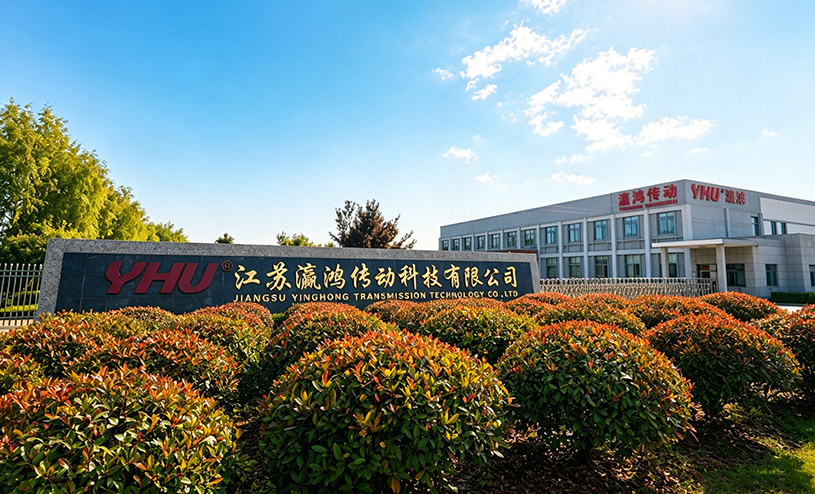
Jiangsu Yinghong Transmission Technology Co., Ltd.
All Rights Reserved.
Custom Miniature Ball Bearing Manufacturers

