


 English
 русский
 Español
 عربى
 日本語

 Home / News / Industry News / Ceramic vs Steel Bearings: Speed, Heat and Cost Compared for Smarter Bearing Selection
Ceramic vs Steel Bearings: Speed, Heat and Cost Compared for Smarter Bearing Selection
 2026.11.13
 Industry News
Content
- 1 Ceramic vs Steel Bearings: The Practical Differences That Drive Selection
- 2 Speed: Why Ceramic Bearings Handle High RPM Differently
- 3 Heat Generation and Thermal Stability: Where the Material Gap Shows Up
- 4 Cost: Purchase Price Is Only the First Number
- 5 Load, Shock, and Misalignment: The Side of the Comparison Steel Often Owns
- 6 Corrosion, Contamination, and Lubrication: Ceramic’s Quiet Advantage
- 7 Application Fit: Matching Bearing Material to Real Equipment
- 8 Selection Checklist: A Practical Decision Sequence
- 9 Supplier Evaluation: What to Ask Before You Commit
- 10 Frequently Asked Questions
Ceramic vs Steel Bearings: The Practical Differences That Drive Selection
Ceramic bearings and steel bearings differ most clearly in mass, friction behavior, thermal expansion, corrosion resistance, and impact tolerance. Those five differences explain almost every real selection decision, from a high-speed dental handpiece to a pump shaft that sees washdown chemicals every day. The comparison is not a simple upgrade story. A ceramic bearing can solve a speed and heat problem that steel cannot solve economically, while a steel bearing can survive shock and misalignment that would chip a ceramic rolling element.
For buyers and engineers, the useful comparison is therefore not “which material is better” but “which material matches the operating envelope.” Speed, heat, and cost are the three variables that usually decide the case, but they interact with load, lubrication, contamination, and mounting practice. A bearing that runs cooler at 60,000 rpm may be the wrong choice for a heavily preloaded spindle that sees tool impact. A lower-cost steel bearing may consume more lubricant and downtime over five years than a hybrid ceramic design that costs more at the outset.
Speed
Ceramic balls reduce centrifugal load and friction at high RPM, but cage design, lubrication, and preload still set the real limit.
Heat
Lower ball mass and different friction behavior can reduce heat, while thermal expansion and lubrication choice decide stability.
Cost
Purchase price favors steel, but lifecycle cost depends on speed, lubricant life, corrosion, downtime, and replacement intervals.
Risk
Steel tolerates shock and misalignment better; ceramic resists corrosion and wear but needs a design that respects brittleness.
The most reliable way to compare the two families is to separate the bearing into its functions: rolling elements, rings, cage, lubrication, and sealing. A full ceramic bearing uses ceramic balls and ceramic rings. A hybrid ceramic bearing uses ceramic balls with steel rings. A conventional steel bearing uses through-hardened or stainless steel components. Each combination changes speed capability, heat path, corrosion resistance, and cost in a different way, so the material label alone is not enough to predict performance.
Speed: Why Ceramic Bearings Handle High RPM Differently
At high rotational speed, the rolling elements become the dominant source of centrifugal force. A ceramic ball weighs roughly 40 percent of a comparable steel ball, depending on the ceramic grade and steel grade being compared. Lower mass means lower centrifugal load on the outer ring, less ball skidding at rapid acceleration, and lower friction between the ball and the raceway. In a high-speed spindle or dental handpiece, those effects can translate into lower temperature, longer lubricant life, and more stable preload.
Speed capability is not decided by ball material alone. The cage must guide the balls without excessive sliding, the lubricant must form a film at the actual contact pressure, and the rings must resist deformation under preload. A ceramic ball in a poorly matched steel ring can still skid, overheat, or fail early. This is why high-speed bearing selection usually starts with the application’s DN value, load profile, duty cycle, and cooling method, then moves to material. Angular contact designs are often used where combined radial and axial loads appear at speed; the angular contact ball bearings category shows how contact angle and preload are built into the bearing structure rather than added later.
| Speed factor | Ceramic or hybrid ceramic | Steel | Practical effect |
|---|---|---|---|
| Rolling element mass | Lower | Higher | Less centrifugal load at high RPM |
| Friction at high speed | Often lower with correct lubrication | Higher in many high-speed cases | Lower heat rise and less lubricant stress |
| Skidding risk during acceleration | Lower ball inertia helps | Higher inertia can promote skidding | Faster run-up may be possible with proper preload |
| Cage and lubricant sensitivity | High | High | Material cannot compensate for poor cage or lubricant choice |
| Shock tolerance at speed | Lower | Higher | Steel remains safer for interrupted cutting or impact |
A common mistake is to assume that a ceramic bearing can be run faster simply because it contains ceramic balls. In practice, the limiting speed is often set by the cage, the lubricant, the seal, or the housing fit. A steel bearing with a well-designed cage and oil-air lubrication can outperform a poorly specified ceramic bearing. The material comparison only becomes useful after the speed target, load, and thermal environment are defined.
Heat Generation and Thermal Stability: Where the Material Gap Shows Up
Heat in a bearing comes from rolling friction, sliding friction, lubricant churn, seal drag, and misalignment. Ceramic balls can reduce rolling friction and lower the centrifugal load that drives outer-ring contact stress. That often leads to a cooler running bearing at the same speed, especially in lightly loaded, high-speed applications. However, ceramic materials also have different thermal expansion and thermal conductivity from steel, so the ring and housing design must be adjusted to keep internal clearance stable as temperature rises.
Bearing steel typically has a thermal expansion coefficient around 11 to 12 × 10⁻⁶/K. Silicon nitride ceramic is much lower, roughly 3 × 10⁻⁶/K, while zirconia ceramic is closer to 10 × 10⁻⁶/K depending on grade. Lower expansion can be an advantage in precision spindles because preload changes less with temperature. It can also be a disadvantage if the housing grows faster than the bearing and clearance changes in an unexpected direction. Thermal conductivity matters too: steel conducts heat relatively well, while some ceramics conduct heat poorly. The heat path from the contact zone to the housing therefore changes when ceramic balls are used.
Lubrication is the other half of the heat equation. Ceramic balls can run with lower lubricant viscosity in some high-speed cases, but they are not self-lubricating. A dry ceramic bearing will fail quickly if the application does not provide a suitable transfer film or solid lubricant. Grease selection, fill quantity, and relubrication intervals must match the actual temperature and speed. In high-speed dental handpieces, for example, the lubricant and cage design are as important as the ball material because the bearing may run at very high speed with limited space and strict cleanliness requirements.
Cost: Purchase Price Is Only the First Number
Ceramic bearings usually cost more than steel bearings at the point of purchase. Full ceramic bearings carry the highest material and processing cost, hybrid ceramic bearings sit in the middle, and conventional steel bearings are usually the lowest-cost option. The price gap depends on size, precision grade, ceramic type, cage material, lubrication, and lot quantity. For a small miniature bearing, the difference may be modest in absolute terms; for a large precision spindle bearing, the difference can be significant.
The more useful comparison is lifecycle cost. A steel bearing that runs hot at high speed may need shorter lubricant intervals, more frequent replacement, and more downtime. A ceramic bearing that lasts longer and runs cooler can justify its price in those conditions. In a clean, low-speed application with mild loads, however, steel is often the more economical choice because the ceramic advantage has little opportunity to pay back. The decision should be based on the cost drivers that actually change: energy use, lubricant consumption, replacement labor, scrap risk, and production downtime.
| Cost factor | Steel bearing | Hybrid ceramic | Full ceramic |
|---|---|---|---|
| Initial purchase price | Lowest | Moderate to high | Highest |
| High-speed lubricant life | Often shorter | Often longer | Often longer with correct lubricant |
| Corrosion resistance | Depends on steel grade | Better than standard steel | Highest |
| Shock and misalignment tolerance | Best | Moderate | Lowest |
| Typical payback condition | Low speed, moderate load | High speed with steel rings | Corrosive or high-speed, low-shock |
Hybrid ceramic bearings are often the practical compromise. They keep steel rings, which are easier to fit and more tolerant of housing interference, while using ceramic balls to reduce mass and friction. That combination can improve speed and heat behavior without the full cost and brittleness of a complete ceramic bearing. For many equipment designs, the hybrid route is the first step to evaluate before committing to a full ceramic bearing.
Load, Shock, and Misalignment: The Side of the Comparison Steel Often Owns
Steel is tough. It deforms plastically before it fractures in many loading conditions, which gives it a margin of tolerance for shock, misalignment, and mounting error. Ceramic is hard and wear-resistant, but it is brittle. A ceramic ball or ring can chip or fracture under impact, especially at the edge of the raceway or when the bearing is mishandled during installation. That does not mean ceramic bearings are fragile in normal high-speed service; it means the application must respect their limits.
Static load capacity and shock load capacity are therefore important selection criteria. A ceramic bearing that is correctly sized for a smooth, high-speed spindle may be a poor choice for a portable tool that is dropped, a conveyor that sees jam loads, or a pump that experiences cavitation. Steel bearings are more forgiving in those conditions, and a stainless steel bearing may be the better compromise when corrosion resistance is also needed. The selection factors for stainless steel bearings are useful here because they connect material grade to load, corrosion, and lubrication rather than treating stainless steel as a single solution.
Misalignment tolerance is also a system property. A self-aligning bearing design can accommodate shaft deflection, but material choice affects how much edge stress the rolling elements can survive. Ceramic balls do not conform to misalignment the way steel balls can, so housing and shaft alignment become more critical. In precision applications, that is acceptable because the machine is built to tight tolerances. In general industrial equipment, the added alignment discipline may be a hidden cost.
Corrosion, Contamination, and Lubrication: Ceramic’s Quiet Advantage
Ceramic materials do not rust. Silicon nitride and zirconia are chemically stable in many environments that would attack bearing steel, including water, mild acids, and cleaning agents. That makes ceramic bearings attractive for washdown equipment, medical devices, dental handpieces, and laboratory instruments where corrosion or contamination can shorten bearing life. Full ceramic bearings can also run without conventional grease in some specialized designs, although most practical applications still use a lubricant to control friction and wear.
Contamination is a different problem. Hard particles that enter a steel bearing can dent the raceway and start a fatigue failure. Ceramic raceways are harder and more wear-resistant, but they can still be damaged by impact or by improper handling. Sealing and filtration remain important. A ceramic bearing is not a substitute for clean operating conditions; it is a material choice that can extend life when the contamination is chemical rather than mechanical, or when the lubricant film is thin and the speed is high.
Lubrication strategy should be decided with the material, not after it. Grease for a ceramic bearing must be compatible with the cage, the ring material, and the operating temperature. Oil-air lubrication may be preferred in high-speed spindles because it removes heat and provides a controlled oil film. Dry running is possible only in specific designs with solid lubricants or ceramic cages, and it requires validation. In dental handpieces and high-speed dental drills, the bearing must survive repeated cleaning and lubrication cycles while maintaining low noise and smooth rotation. That is a system-level requirement, not just a ball material decision.
Application Fit: Matching Bearing Material to Real Equipment
High-speed spindles, dental handpieces, turbo-molecular pumps, and precision motors are the applications where ceramic bearings most often earn their cost. The common thread is high speed with relatively low shock and a need for thermal stability. In these systems, the lower mass of the ceramic ball reduces centrifugal load, and the lower friction can reduce heat. The bearing designer can then use a lighter preload or a different cage to improve efficiency. The result is not automatic; it depends on the complete bearing arrangement.
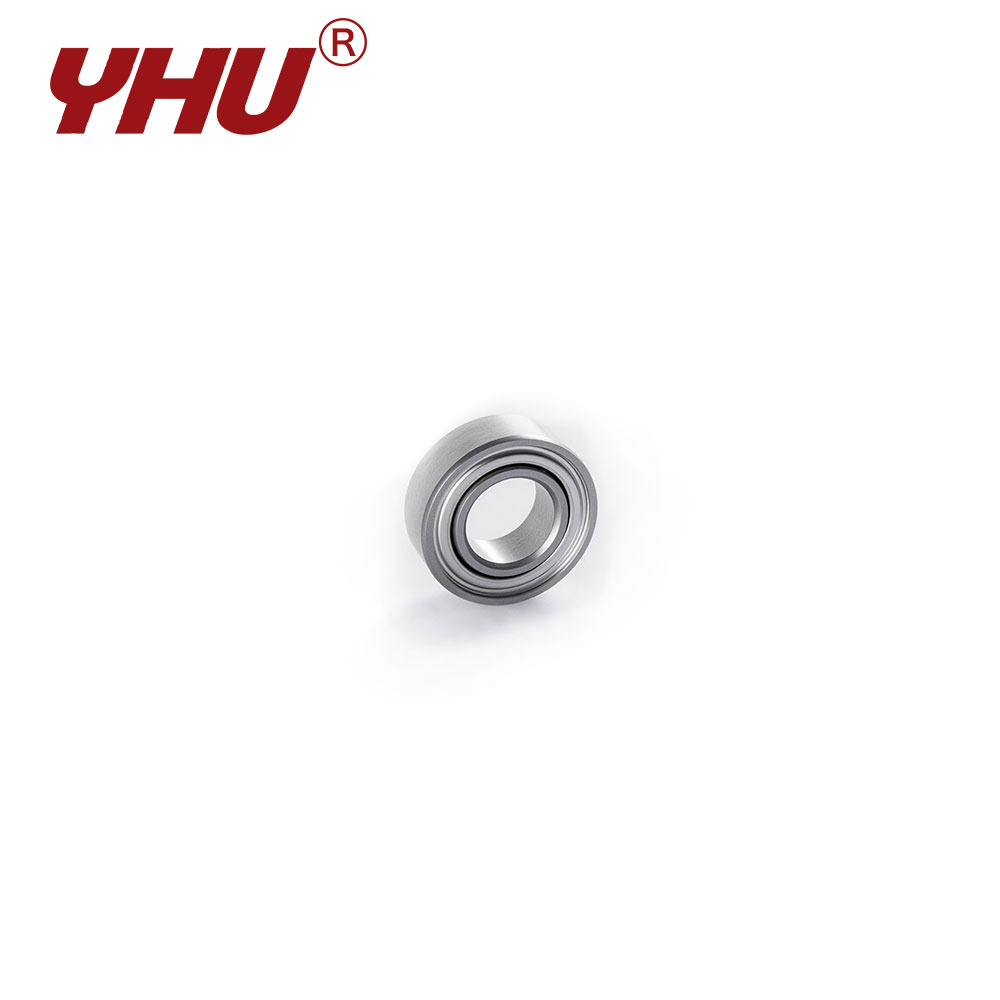
 Ceramic Bearing Families for High-Speed and Corrosive ApplicationsCompare zirconia, silicon nitride, steel hybrid, and stainless hybrid options with cages, seals, lubrication, and custom configurations for demanding rotating equipment.View Product →
The ceramic bearing family includes full ceramic and hybrid options built around different ceramic materials. Silicon nitride is often chosen for high-speed and high-load applications because it has good strength and fatigue resistance. Zirconia is often chosen for corrosion resistance and lower cost, but its thermal and mechanical properties differ from silicon nitride. The application temperature, load, and lubrication must be matched to the ceramic grade. A supplier who treats all ceramic bearings as equivalent is not giving you a real selection service.
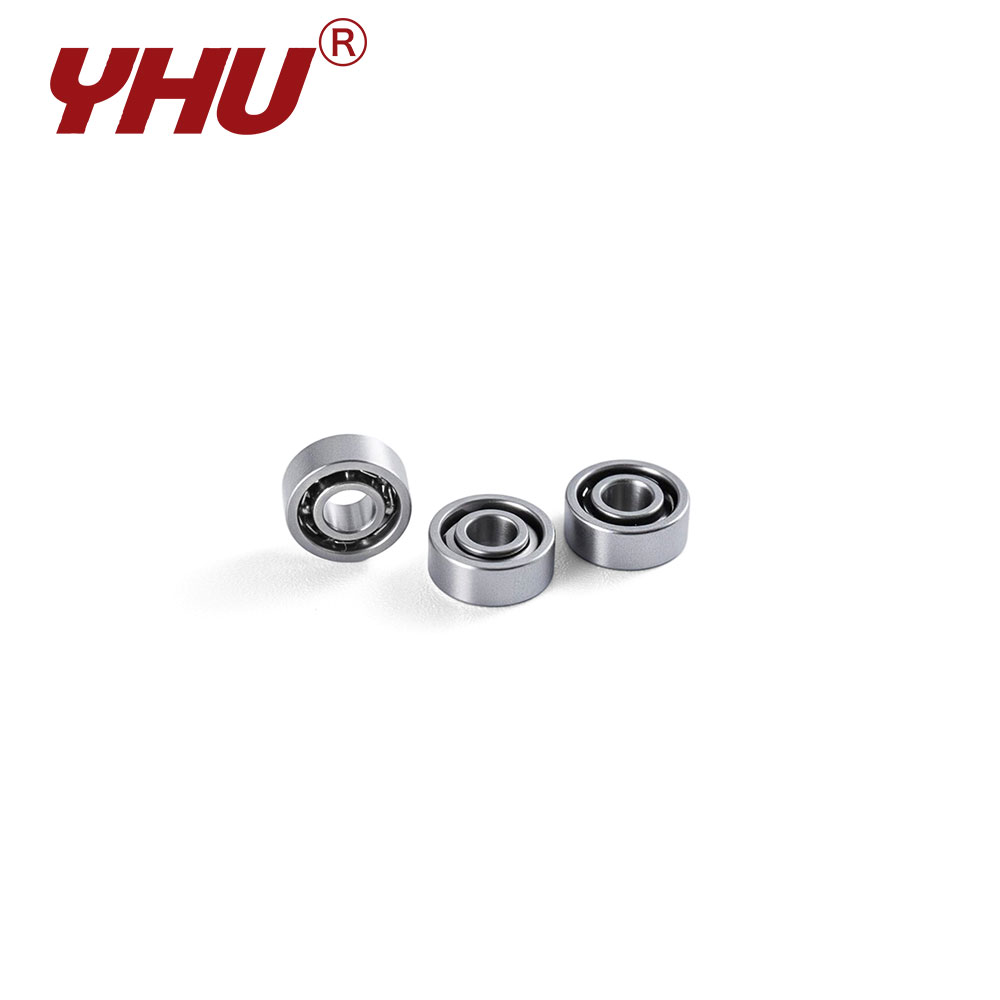
Silicon Nitride Ceramic Bearings for High-Speed and Hybrid DesignsReview full-ceramic and hybrid Si3N4 bearings for high-speed motors, spindles, electrical insulation, corrosion resistance, and custom configurations.View Product →
Silicon nitride ceramic bearings are a strong fit for high-speed rotating equipment where dimensional stability and low mass matter. They are also used in hybrid designs with steel rings. The steel ring provides a familiar mounting interface and helps absorb some misalignment, while the ceramic balls reduce mass and friction. That combination is often easier to integrate into an existing housing than a full ceramic bearing, because the steel ring can be fitted with the same interference and thermal growth assumptions as a conventional bearing.
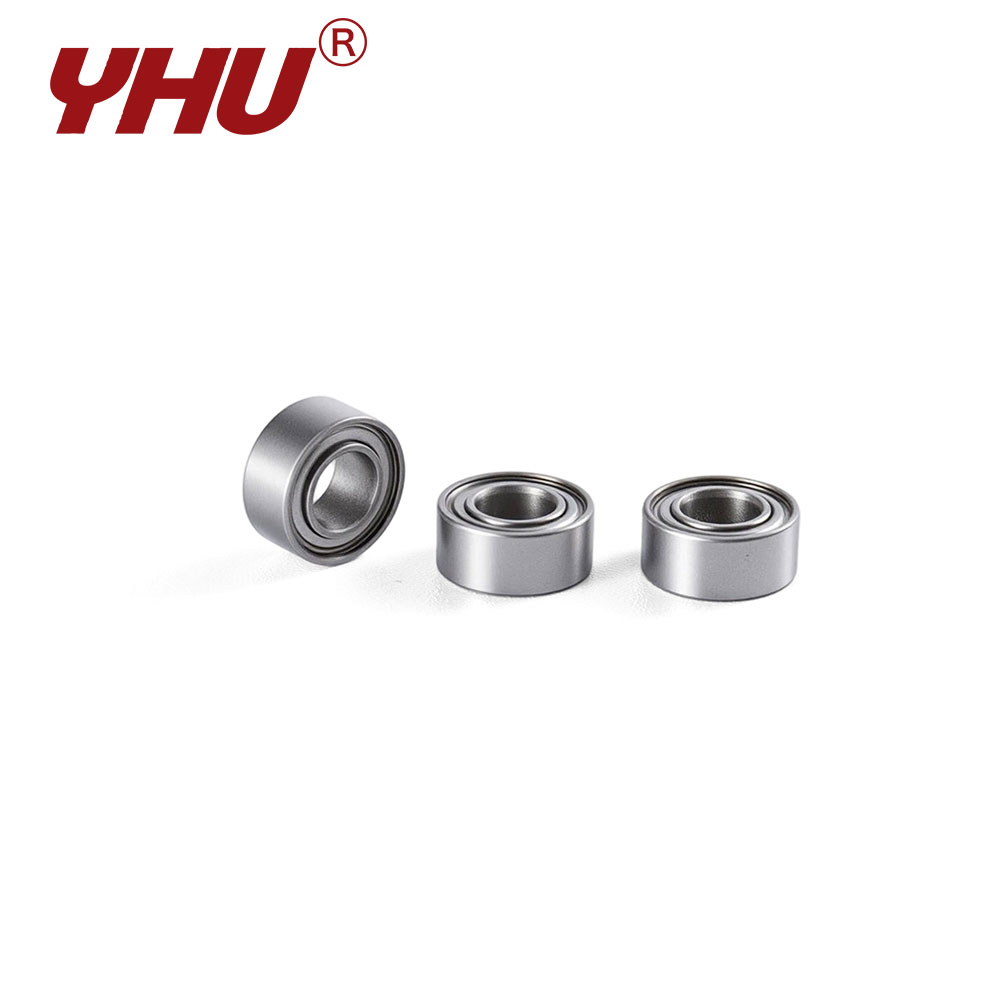
Zirconia Ceramic Bearings for Corrosive and Non-Magnetic EnvironmentsExamine full and hybrid ZrO2 bearings for chemical pumps, medical devices, marine systems, electrical insulation, and custom OEM applications.View Product →
Zirconia ceramic bearings are frequently considered for pumps, valves, and instruments where corrosion resistance is the primary driver. They can operate in wet or chemical environments that would shorten steel bearing life. The trade-off is that zirconia is not the best choice for every high-speed or high-shock application, so the operating envelope must be reviewed carefully. In food processing, medical equipment, and marine devices, the corrosion resistance can be the deciding factor, provided the load and temperature remain within the ceramic’s limits.
More conventional equipment often stays with steel. Deep groove ball bearings, flanged bearings, and miniature bearings in low-speed motors, fans, and consumer devices are usually cost-sensitive and do not benefit enough from ceramic to justify the price. Stainless steel bearings may be the better upgrade when moisture or cleaning is present. The product range should be treated as a toolbox: ceramic for speed and corrosion, stainless steel for wet environments, and standard bearing steel for general mechanical duty.
Selection Checklist: A Practical Decision Sequence
A structured review prevents the material comparison from becoming a debate about preferences. Start with the operating conditions, then move to the bearing material, then confirm the commercial case. The sequence below is the one we use when reviewing application drawings and duty cycles with equipment designers.
- Define the speed range, including acceleration and deceleration. A high maximum speed is not the same as a high continuous speed, and rapid run-up can cause skidding.
- Map the load profile: radial load, axial load, preload, shock, and misalignment. Ceramic is less tolerant of impact, so shock must be explicit.
- Measure or estimate the operating temperature and the heat path. Consider housing growth, shaft growth, and lubricant temperature limits.
- Review the environment for moisture, chemicals, washdown, dust, and cleaning agents. Corrosion resistance may favor ceramic or stainless steel.
- Choose the lubrication method before the material. Grease, oil, oil-air, and solid lubricants each impose different speed and temperature limits.
- Compare the total cost of ownership, not only the bearing price. Include lubricant, labor, downtime, scrap, and energy where relevant.
- Confirm the cage, seal, and fit. These components often determine whether a ceramic bearing delivers its theoretical advantage.
- Run a controlled validation if the application is critical. Start with a small batch and measure temperature, noise, vibration, and runout under realistic conditions.
The checklist is deliberately conservative. Ceramic bearings can be excellent, but they are not a universal answer. A steel bearing that is correctly sized, properly lubricated, and protected from contamination can outperform a ceramic bearing that was selected only for its material label. The goal is to match the material to the job, then verify the result with data.
Supplier Evaluation: What to Ask Before You Commit
Material claims are easy to make, so the supplier review should focus on evidence and engineering support. Ask how the ceramic grade is specified, how the rings and balls are matched, and how the bearing is tested before shipment. For hybrid ceramic bearings, the steel ring grade, heat treatment, and raceway finish are just as important as the ball material. For full ceramic bearings, the ring sintering process and the cage design deserve close attention because they affect brittleness, clearance, and load capacity.
Ask for dimensional reports, noise or vibration data where relevant, and a clear statement of the lubricant and cage materials. If the application is high-speed, ask about preload control and runout. If the application is corrosive, ask about the ceramic grade and the seal or shield arrangement. A supplier who can explain the limits of the product is more useful than one who promises that ceramic will solve every problem. That is especially true when the equipment must pass validation, because the bearing is only one part of a rotating system.
From a manufacturing perspective, the most successful projects are the ones where the bearing is treated as part of the machine design. The housing fit, shaft fit, lubrication path, and assembly method all influence life. A ceramic bearing installed with the same interference and preload as a steel bearing may not deliver the expected benefit. The supplier should be willing to review the mounting conditions and recommend adjustments, not simply quote a part number.
Frequently Asked Questions
Are ceramic bearings faster than steel bearings?
Ceramic bearings can support higher speed in many designs because the balls are lighter and generate less centrifugal load. The actual speed limit still depends on the cage, lubricant, preload, and ring design. A well-designed steel bearing can be faster than a poorly specified ceramic bearing.
Do ceramic bearings run cooler?
They often run cooler in high-speed, low-shock applications because friction and ball mass are lower. The difference is not guaranteed. Lubricant choice, fill quantity, preload, and cooling method can have a larger effect on temperature than the ball material alone.
Are ceramic bearings worth the cost?
They are worth the cost when the application uses their advantages: high speed, corrosion, low friction, or thermal stability. In low-speed, heavily loaded, or shock-prone equipment, steel is often the more economical and reliable choice.
Can ceramic bearings handle shock loads?
They are less tolerant of shock than steel because ceramic materials are brittle. A ceramic bearing can chip or fracture under impact. If the equipment sees jam loads, drops, or severe misalignment, steel or a hybrid design with steel rings may be safer.
Do ceramic bearings need special lubrication?
They need lubrication matched to the cage, ring material, speed, and temperature. Ceramic is not self-lubricating in most practical designs. Some specialized bearings use solid lubricants or dry running, but those designs require validation for the specific application.
Are hybrid ceramic bearings a good compromise?
Yes, for many applications. Hybrid ceramic bearings use ceramic balls with steel rings, which reduces ball mass and friction while keeping a familiar steel mounting interface. They are often the first option to test when full ceramic cost or brittleness is a concern.
Message Feedback

Professional Manufacturer of Precision Bearings
- Contact Information
-
-
+86 162 6918 9999 +86 136 1619 2555

-
+86 153 0641 4247

-
jeffrey@yhu1988.com

rose@yhu1988.com -
Yinghong Industrial Park, Zexin Avenue, Xingou Auto Parts Industrial Park, Funing County, Yancheng City, Jiangsu Province, China

-
- QR Code
Copyright ©
Jiangsu Yinghong Transmission Technology Co., Ltd.
All Rights Reserved.
Custom Miniature Ball Bearing Manufacturers

