


 English
 русский
 Español
 عربى
 日本語

 Home / News / Industry News / Stainless Steel Bearings: Grades, Selection Tips, and Industrial Applications
Stainless Steel Bearings: Grades, Selection Tips, and Industrial Applications
 2026.10.23
 Industry News
Content
- 1 Stainless Steel Bearings: More Than Just Rust Protection
- 2 Stainless Steel Grades That Matter for Bearings
- 3 Types of Stainless Steel Bearings We Manufacture
- 4 Stainless Steel Deep Groove Ball Bearings
- 5 Stainless Steel Flanged Bearings
- 6 Stainless Steel Angular Contact Ball Bearings
- 7 Stainless Steel Thrust Ball Bearings
- 8 Custom Non-Standard Stainless Steel Bearings
- 9 How Stainless Steel Bearings Are Made in Our Factory
- 10 Key Selection Criteria for Stainless Steel Bearings
- 11 Common Applications of Stainless Steel Bearings
- 12 Maintenance and Service Life of Stainless Steel Bearings
- 13 Frequently Asked Questions About Stainless Steel Bearings
Stainless Steel Bearings: More Than Just Rust Protection
Stainless steel bearings are often chosen for their ability to resist moisture and chemicals, but the material selection also influences hardness, load capacity, surface finish, and running accuracy. For applications in food processing, marine equipment, pharmaceutical packaging, and dental handpieces, the bearing must not only avoid corrosion but also maintain consistent performance under repeated cleaning cycles and challenging temperatures.
From a manufacturing perspective, stainless steel is more difficult to machine than conventional bearing steel. It requires specialized tooling, controlled heat treatment, and careful grinding to achieve the same dimensional accuracy as a standard bearing. This is why a factory with dedicated stainless steel production experience can make a noticeable difference in product consistency. Our bearing factory in Jiangsu, China, has developed a focused stainless production line that covers both standard and custom sizes. Yinghong Transmission Technology is one example of a manufacturer that treats stainless bearing production as a core specialty rather than a side process.
Stainless steel bearings are not automatically superior to chrome steel bearings in every situation. They excel when corrosion, contamination, or washdown conditions are present. In other situations, a well-sealed bearing steel product may deliver better load capacity at a lower cost. The key is to understand how each stainless grade behaves and where it fits in the real operating environment.
Stainless Steel Grades That Matter for Bearings
There is no single “stainless steel” used for bearings. The industry commonly relies on four families: 304, 316, 420, and 440. Each grade has a different microstructure, corrosion resistance, and hardness. Choosing the right grade is just as important as choosing the right bearing type.
304 Stainless Steel
304 is an austenitic stainless steel with excellent forming characteristics and good overall corrosion resistance. It is not hardenable by heat treatment, so its surface hardness is relatively low compared with martensitic grades. Bearings made from 304 are suitable for light-load, low-to-medium-speed applications where corrosion resistance is the priority and rolling contact stresses are modest. Typical examples include laboratory equipment, small conveyors, and food contact components that are occasionally rinsed.
316 Stainless Steel
316 adds molybdenum to the alloy, which gives it noticeably better resistance to chlorides, seawater, and many industrial chemicals. It is also austenitic and has limited hardness, but its corrosion resistance makes it a first choice for marine hardware, chemical dosing pumps, and pharmaceutical washdown zones. In our experience, customers who have tried 304 in coastal environments often switch to 316 after seeing pitting around seal grooves.
420 Stainless Steel
420 is a martensitic stainless steel that can be hardened through heat treatment. It offers higher hardness and better wear resistance than 304 or 316, while retaining moderate corrosion resistance. Bearings made from 420 work well where the application needs more surface durability and the environment is only mildly corrosive. For example, some food processing machines use 420 bearings because the machine is dry most of the time but is subject to periodic steam cleaning.
440 Stainless Steel
440, especially 440C, is the classic bearing-grade stainless steel. It has the highest carbon content among common stainless bearing materials and can be hardened to around 58–62 HRC. This makes 440C suitable for high-speed spindles, dental handpieces, and precision instruments where load capacity and running accuracy matter. Its corrosion resistance is lower than 304 or 316, but it is still far better than standard chrome steel in moist environments. Most stainless steel deep groove bearings in our catalog, including the SR series, are available in 440C.
To make the trade-offs easier to see, we have summarized the main differences in the table below.
| Grade | Hardness | Corrosion Resistance | Magnetic | Best For |
|---|---|---|---|---|
| 304 | Low | Good | Slightly magnetic | Food contact, light machinery |
| 316 | Low | Excellent | Slightly magnetic | Marine, chemical, washdown |
| 420 | Medium | Moderate | Magnetic | Wear-resistant applications |
| 440C | High | Moderate | Magnetic | Precision spindles, dental tools |
The chart below gives a general sense of how the four grades compare in corrosion resistance. Values are relative and should be used as a starting point rather than an absolute specification.
316
304
440C
420
Types of Stainless Steel Bearings We Manufacture
Our catalog is built around the idea that stainless steel bearings should be available in all the common configurations used by industrial and precision equipment designers. We produce deep groove, flanged, thrust, angular contact, and custom non-standard stainless bearings, in both inch and metric dimensions.
Stainless Steel Deep Groove Ball Bearings
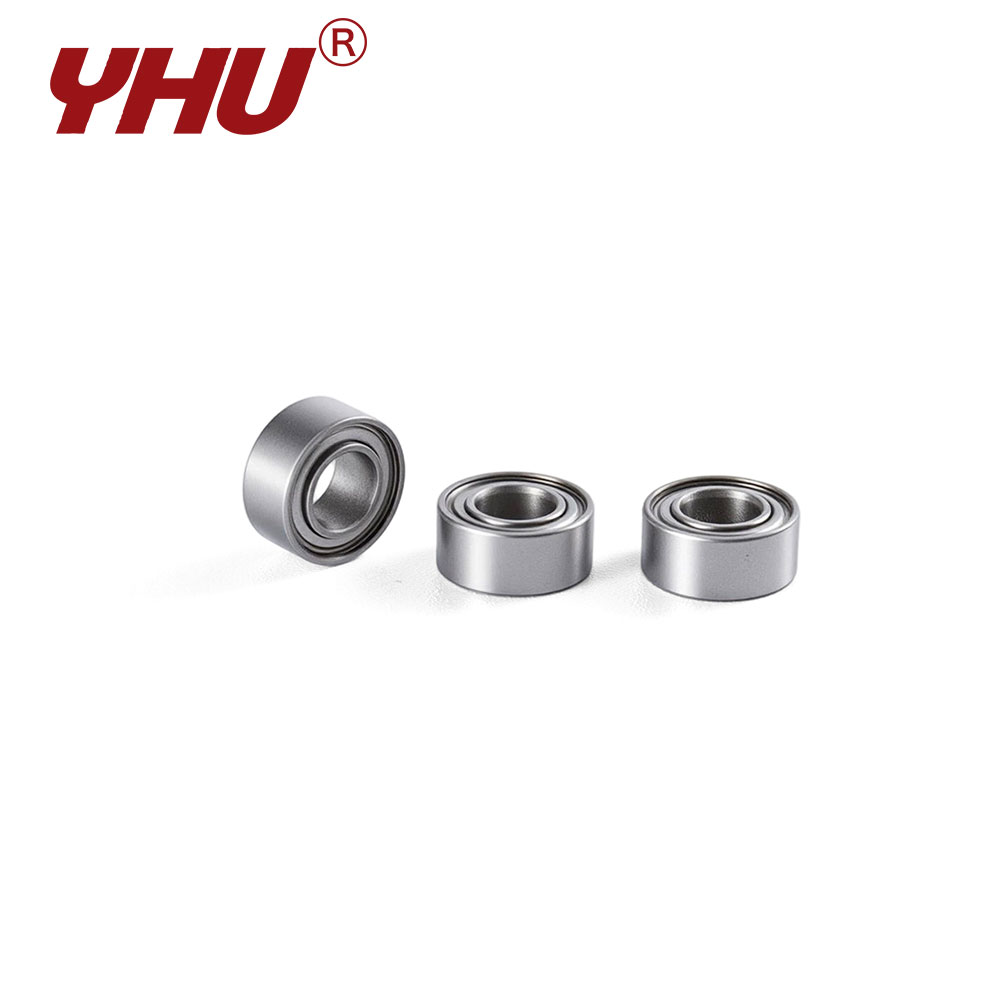
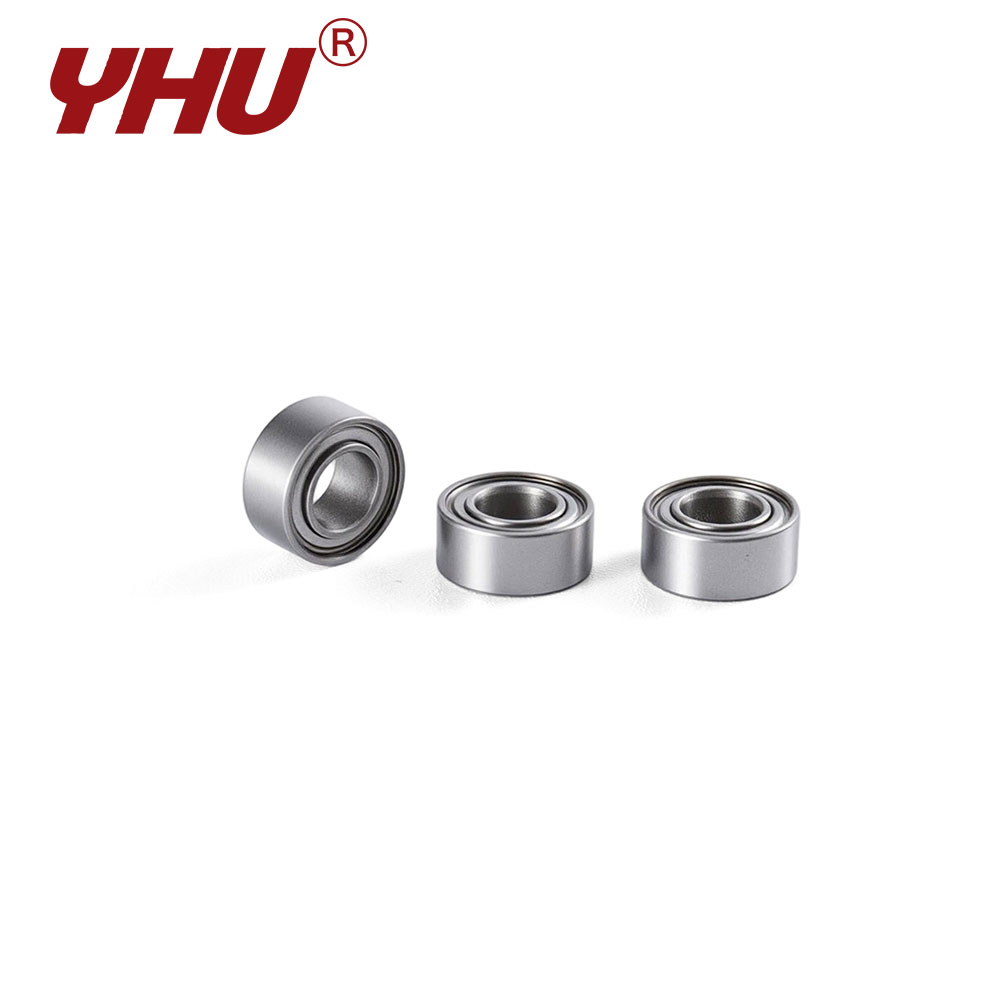
Deep groove ball bearings are the most widely used bearing type because they handle radial loads, axial loads, and combined loads in a compact package. In stainless steel form, they are used wherever corrosion resistance has to be combined with moderate to high speed capability.
Our stainless deep groove range includes the SR series in 304 and 440C, as well as metric 60, 68, and 69 series in 316, 420, and 440C. For example, SR133, SR155, and SR188 are common choices in small gearboxes and automated doors. The S67, S68, and S69 series cover thin-section applications where space is limited.
What sets a good stainless deep groove bearing apart is the raceway finish and ball roundness. If the grinding process is not carefully controlled, the bearing may still rotate but will produce more noise and vibration, especially at higher speeds. We use the same precision grinding lines for stainless as we do for chrome steel, which is why many OEM customers specify our SR series for their standard machine designs.
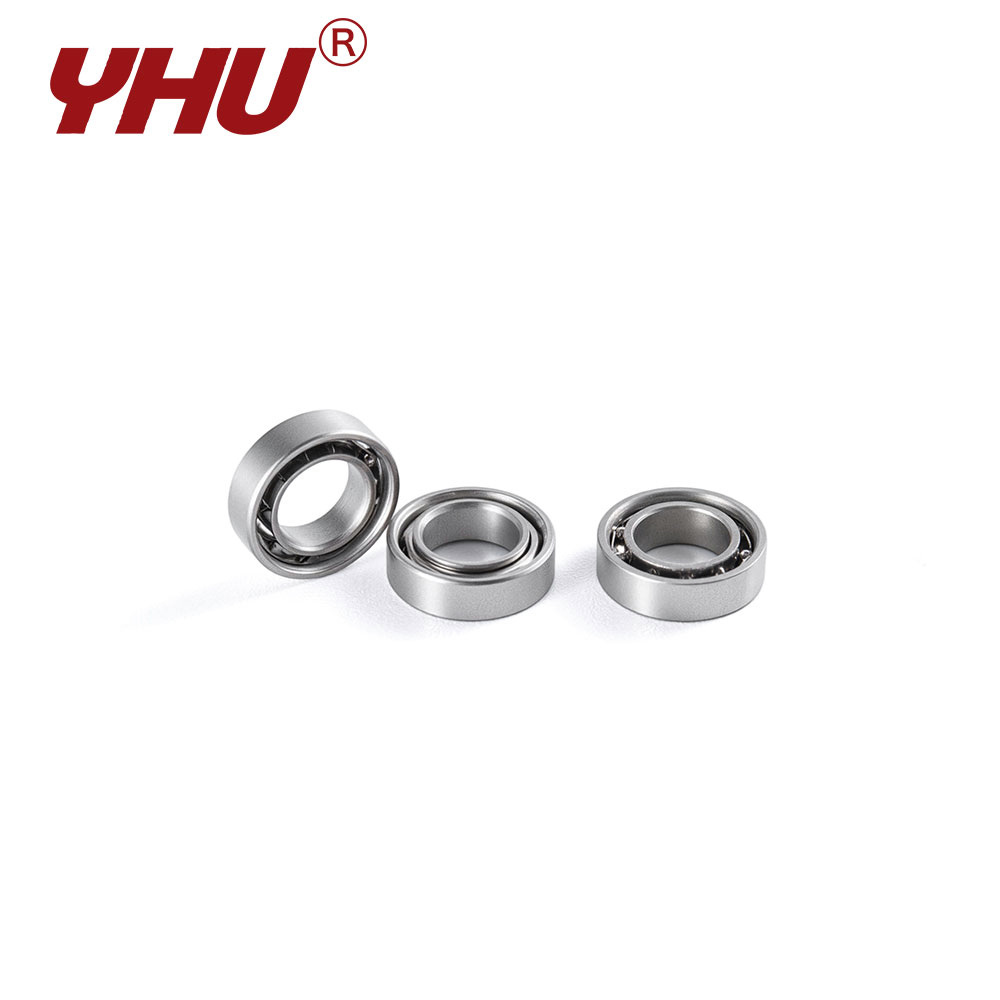
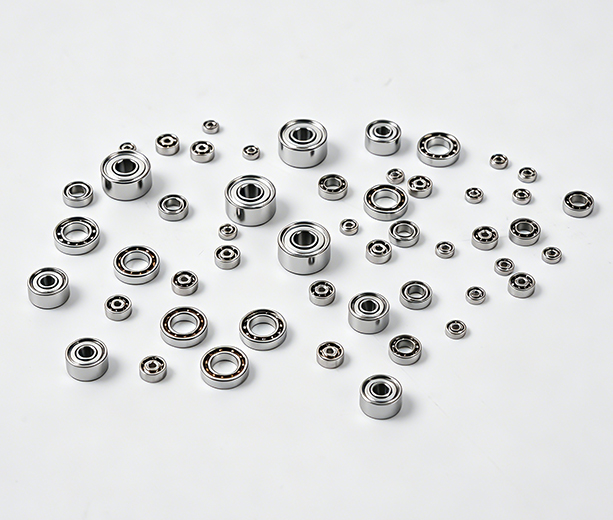 Precision Stainless Steel Deep Groove Ball BearingsDesigned for demanding machinery, these bearings feature controlled raceway finish and ball roundness for low noise and vibration. Ideal for OEM standard machine designs.View Product →
Stainless Steel Flanged Bearings
Flanged bearings add an integral flange on the outer ring, which simplifies housing design. Instead of requiring a separate shoulder or snap ring, the bearing can be located axially with a simple flat seat. This is why stainless flanged bearings are popular in pulley assemblies, conveyor rollers, and compact drive units.
Our stainless flanged range includes the SFR series in 304 and 440C, which corresponds to the inch FR sizes, as well as metric SF60, SF62, SF63, SF67, SF68, and SF69 series in 316, 420, and 440C. The SF67 and SF68 series are thin-wall flanged bearings that fit neatly into space-constrained housings.
One detail that engineers often overlook is the flange thickness. A thin flange can distort when the bearing is pressed into a tight housing, which changes the internal clearance. We control the flange grinding in a separate step, not at the same station as the raceway, to avoid thermal distortion and preserve the original clearance setting.
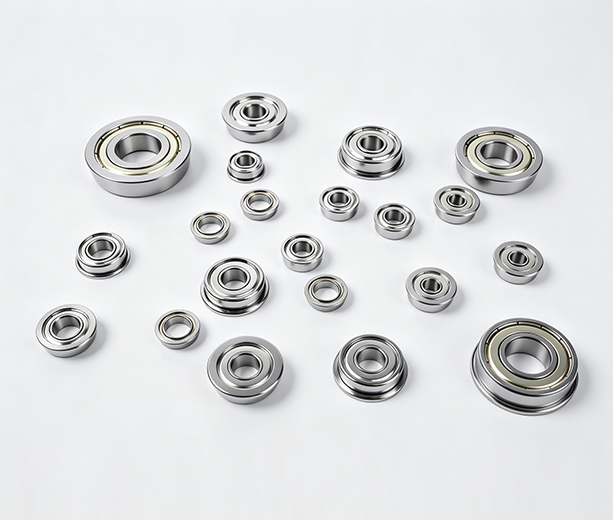 Stainless Steel Flanged Bearings with Integrated FlangeSimplify housing design with an integral flange that provides axial location without separate shoulders. Ideal for pulleys, conveyors, and compact drives, they maintain clearance integrity.View Product →
Stainless Steel Angular Contact Ball Bearings
Angular contact ball bearings are designed to support combined radial and axial loads simultaneously. The contact angle allows the bearing to handle axial forces in one direction with a higher capacity than a deep groove bearing of the same size. In stainless steel form, they are used in pumps, compressors, machine tool spindles, and medical devices where both corrosion resistance and positioning accuracy are required.
We offer stainless angular contact bearings in 304, 316, 420, and 440C, with the 440C version being the most common for precision spindles. These bearings can be paired in a back-to-back or face-to-face arrangement to handle bidirectional axial loads, depending on the application design.
Because angular contact bearings rely heavily on the raceway contact angle, we inspect every batch with a contact angle gauge before assembly. Small variations in the angle can change the bearing’s stiffness and heat generation, so consistency is critical.
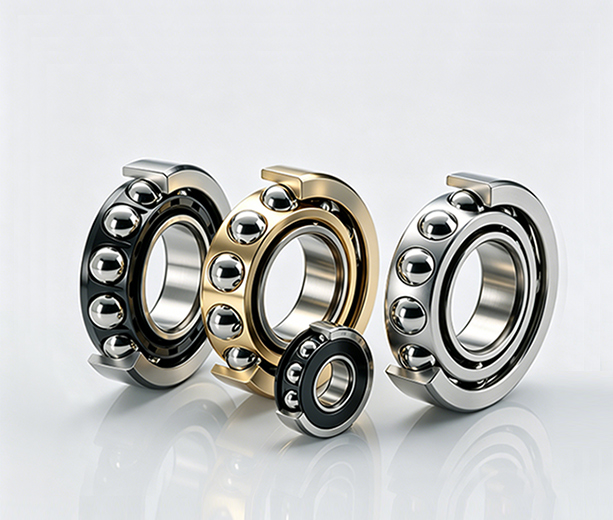 Corrosion-Resistant Stainless Steel Angular Contact BearingsSupport combined radial and axial loads with precision contact angles, suitable for washdown and hygienic environments. Ensure consistent stiffness and low heat in demanding applications.View Product →
Stainless Steel Thrust Ball Bearings
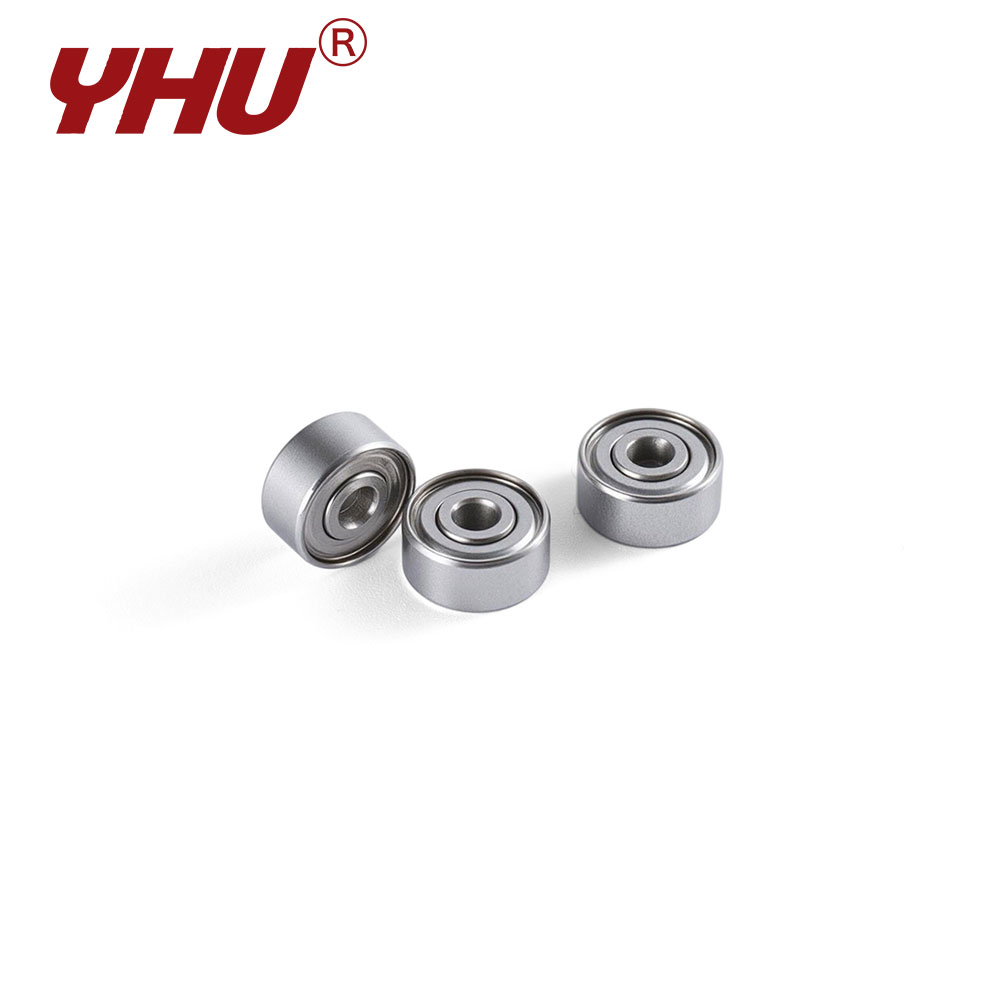
Thrust ball bearings are designed to support axial loads in one direction. They are compact, quiet, and often used in vertical shaft applications, small gearboxes, and ball screws. In stainless steel form, they add corrosion resistance to environments where lubrication is washed away or where moisture enters the housing.
Our stainless miniature thrust ball bearings are available in 304, 316, 420, and 440C, with the 316 version preferred in marine and chemical dosing equipment. Because thrust bearings operate under lower speeds than radial bearings, the hardness requirement is sometimes lower, which allows the designer to use 316 for its corrosion performance.
When selecting a stainless thrust bearing, pay attention to the shaft and housing washer flatness. If the washers are not parallel, the balls will not track uniformly and the bearing will wear prematurely.
Custom Non-Standard Stainless Steel Bearings
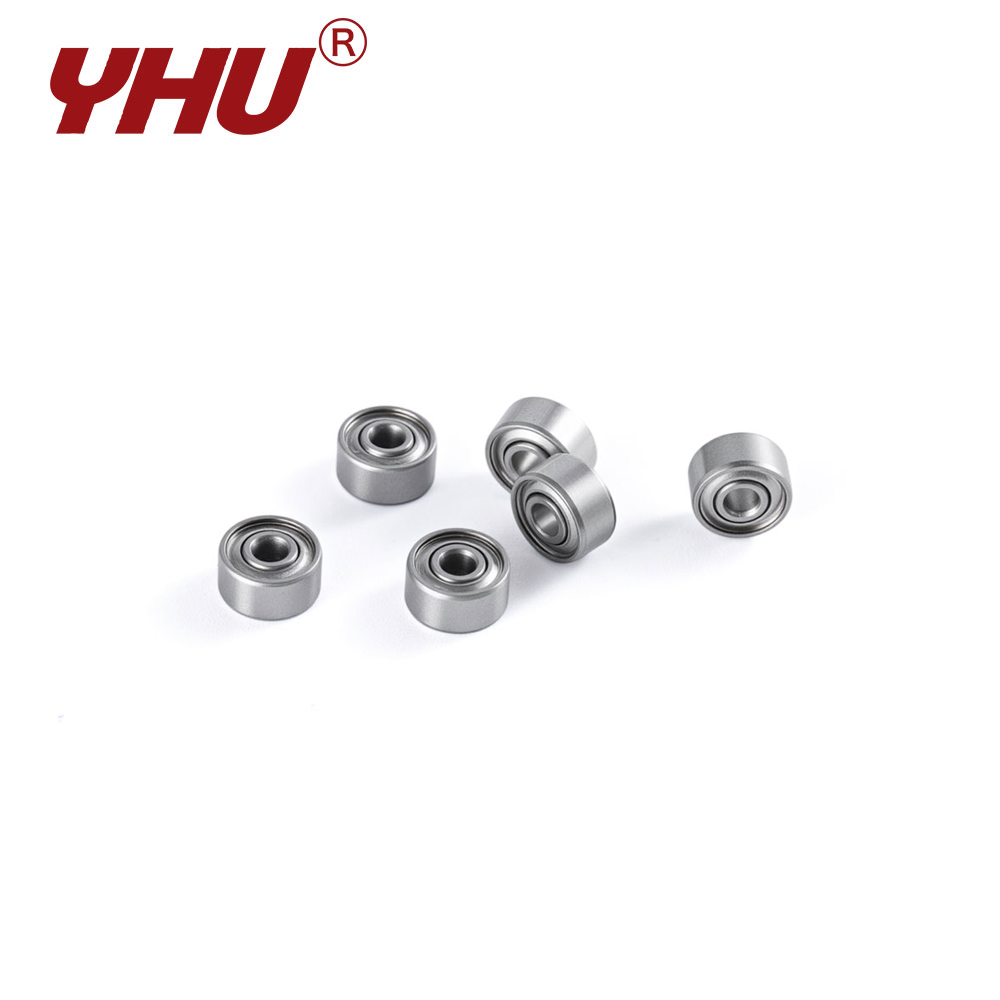
Not every application fits a standard catalog number. Some equipment needs a special bore size, a wider inner ring, a custom flange shape, or a non-standard ball complement. We handle custom non-standard stainless bearings in 304, 316, 420, and 440C, as well as combined configurations such as stainless rings with ceramic balls.
Custom work usually starts with a dimensional drawing or a worn sample from the customer. Our engineers review the load direction, speed, and housing design before proposing a material and heat treatment route. For small series, we can produce as few as a few dozen pieces because we control the machining and grinding in our own factory.
This flexibility is especially valuable for maintenance teams that repair imported equipment. Instead of waiting months for a replacement from the original machine builder, they send us the old bearing and we match the dimensions using stainless steel or a hybrid material.
How Stainless Steel Bearings Are Made in Our Factory
Understanding the production process helps you see why stainless steel bearings cost more than standard bearings and why quality can vary between suppliers. Our own manufacturing route is designed to handle the specific challenges of stainless steel.
Material Inspection
Incoming stainless steel bars and tubes are checked for alloy composition and hardness. A certificate is kept for each heat number so the material history can be traced.
Turning and Forming
Rings are cut and turned on CNC lathes. Stainless steel requires lower cutting speeds and more rigid tooling than chrome steel, so the machine settings are adjusted for each grade.
Heat Treatment
Martensitic grades like 420 and 440C are hardened and then tempered to achieve the required hardness. Austenitic grades such as 304 and 316 are not hardened in this way; they are used in the naturally soft condition.
Grinding
Raceways, bores, and outside diameters are ground on precision grinders. For stainless steel, coolant flow is increased to prevent micro burns that can weaken the race surface.
Ball and Cage Assembly
Stainless steel balls are matched according to grade and roundness. Cages can be made from stainless steel, PTFE, nylon, or other materials depending on operating conditions.
Washing and Inspection
Finished bearings are washed in a multi-stage ultrasonic bath, then inspected for noise, vibration, radial clearance, and final dimensions. The acceptable limits are set to international tolerance classes.
One point that is not obvious from a drawing is the cleanliness of the bearing. Stainless steel bearing surfaces are less forgiving than chrome steel when particles are left inside. A tiny metal chip can cause raceway brinelling in a high-speed dental handpiece. That is why we run a separate clean wash for stainless products instead of mixing them with standard steel bearings on the same line.
Key Selection Criteria for Stainless Steel Bearings
Choosing a stainless steel bearing is not a single-step decision. The operating environment, the load profile, and the available space all work together. Below are the main factors we ask customers to consider before we recommend a specific material and design.
- Corrosion medium: Is the bearing exposed to fresh water, salt water, acid vapor, or cleaning chemicals? The answer determines whether 304 is enough or if 316 is required.
- Load and speed: High radial loads require a raceway with sufficient hardness, which points to 440C over 304 or 316.
- Temperature range: Stainless steel expands more than chrome steel, so the internal clearance must be adjusted for high-temperature operation.
- Lubrication: Food-grade grease, high-temperature oil, or dry lubrication can change the bearing’s friction and service life.
- Sealing requirement: Rubber seals protect the bearing from contamination, but they also generate additional torque. Flanged stainless bearings with seals are common in conveyor rollers.
- Magnetic behavior: If the application is sensitive to magnetism, austenitic grades like 304 and 316 are preferred, although cold working can make them slightly magnetic.
For a more step-by-step review of these factors, you can refer to our article on what to consider when selecting a stainless steel bearing. That guide explains how we translate application data into a bearing specification.
In many cases, the best solution is not the highest grade but the most balanced one. A 440C bearing with a good seal may outperform a 316 bearing in a wet environment if the seal keeps moisture away from the raceway. The reverse is also true: an open 316 bearing may survive where a sealed 440C bearing traps water inside and corrodes at the seal lip.
Common Applications of Stainless Steel Bearings
Because stainless bearings resist corrosion and can be made with food-safe lubricants, they appear in a wide range of industries. The following list reflects the most frequent uses we see in our daily production and customer inquiries.
Food and Beverage Equipment
Conveyors, filling machines, mixers, and packaging lines are washed down regularly. Stainless deep groove and flanged bearings keep the rollers moving without rust contamination.
Medical and Dental Devices
Dental handpieces, grinding machines, and surgical instruments use small stainless and hybrid bearings that can be sterilized. High hardness and smooth running are essential.
Marine and Offshore
Boat hatch systems, winches, and monitoring equipment face salt spray. 316 stainless bearings are a common choice for deck hardware and submersible sensors.
Chemical Processing
Pumps, valves, and mixing shafts come into contact with aggressive fluids. Stainless thrust and angular contact bearings support axial loads while resisting attack.
Textile and Printing
Humidity and fiber dust are common in textile mills. Stainless flanged bearings reduce downtime in roller assemblies and guide wheels.
Automation and Robotics
Collaborative robots and automated guided vehicles use small stainless bearings in joints and wheel assemblies where corrosion resistance and low noise are required.
Maintenance and Service Life of Stainless Steel Bearings
Even stainless bearings need regular maintenance. The stainless steel does not prevent contamination from entering the bearing, and it does not replace the lubricant. What it does is protect the raceways from rust when the lubricant film is temporarily broken or when moisture condenses inside the housing.
For long service life, keep the following rules in mind:
- Use a lubricant compatible with the operating temperature and the chemical environment. Silicone-free food-grade grease is a common choice in food lines.
- Do not over-lubricate. An overfilled bearing generates heat and may push grease out through the seals, attracting dust.
- If the bearing has been washed with a high-pressure cleaner, spin the shaft slowly after cleaning to expel trapped water through the seals or shields.
- Inspect the bearing for discoloration or noise during scheduled maintenance. A slight gray tint on the raceway is normal after break-in, but black streaks indicate overheating or contamination.
- When replacing a stainless bearing, check the shaft and housing tolerances. A worn bearing seat will quickly damage a new bearing.
Stainless steel bearings also need a different handling procedure than chrome steel bearings. Because stainless can be scratched by steel tools, we recommend using clean bronze or nylon tools when mounting or removing the bearings. A scratched surface becomes a weak point for corrosion to start.
Frequently Asked Questions About Stainless Steel Bearings
Are stainless steel bearings stronger than chrome steel bearings?
Not generally. Chrome steel bearing steel (such as GCr15 or 52100) has high hardness and excellent fatigue life. Stainless steel bearings are chosen mainly for corrosion resistance. In the same size, a chrome steel bearing usually has a higher dynamic load rating than a 304 or 316 stainless bearing, while a 440C stainless bearing can come close to chrome steel performance in many applications.
Can stainless steel bearings be used underwater?
Yes, but the performance depends on the grade. 316 stainless has better resistance to seawater and dilute acids than 304. The bearing still needs proper lubrication. If the bearing runs fully submerged continuously, a water-compatible grease or a solid lubricant may be necessary.
What is the difference between 420 and 440C stainless steel bearings?
420 has moderate hardness and better corrosion resistance, while 440C has higher hardness and wear resistance but slightly lower corrosion resistance. 440C is the standard for precision stainless bearings that must support higher loads and speeds. 420 is sometimes used for lower-cost versions in less demanding conditions.
Do stainless steel bearings require a different shaft tolerance?
The shaft tolerance is based on the bearing internal clearance and the application load, not just the material. However, because stainless steel expands more than chrome steel at elevated temperatures, the effective internal clearance may change more with temperature. In that case, a larger radial clearance class may be required.
Can you manufacture custom stainless steel bearings in small quantities?
Yes. We produce custom non-standard stainless bearings in small batches. The process is more efficient when you provide a drawing or a sample. We also make hybrid bearings with stainless steel rings and ceramic balls for applications that need electrical insulation or even lower friction.
Message Feedback

Professional Manufacturer of Precision Bearings
- Contact Information
-
-
+86 162 6918 9999 +86 136 1619 2555

-
+86 153 0641 4247

-
jeffrey@yhu1988.com

rose@yhu1988.com -
Yinghong Industrial Park, Zexin Avenue, Xingou Auto Parts Industrial Park, Funing County, Yancheng City, Jiangsu Province, China

-
- QR Code
Copyright ©
Jiangsu Yinghong Transmission Technology Co., Ltd.
All Rights Reserved.
Custom Miniature Ball Bearing Manufacturers

