


 English
  русский
  Español
  عربى
عربى  日本語
日本語 
 Home / Products / Thrust Ball Bearings / Stainless Steel Miniature Thrust Ball Bearings / SUS304 Thrust Ball Bearings
 SUS304 Thrust Ball Bearings Manufacturers
information to be updated
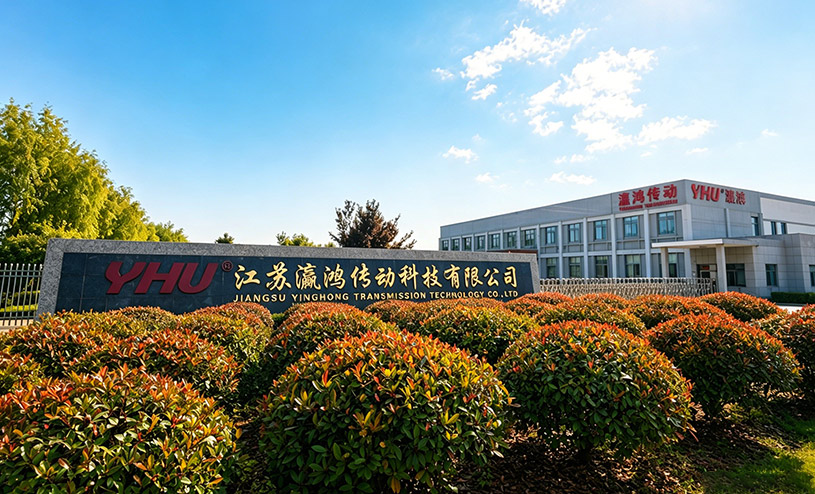
About Us
The company covers more than 70 mu of land and operates nearly 10,000 square meters of manufacturing facilities. As a professional manufacturer of precision special bearings in China, we have introduced advanced Japanese precision manufacturing technology and equipped our facility with automated production lines and high-precision testing equipment. A comprehensive quality management system ensures consistent product quality and reliable performance.
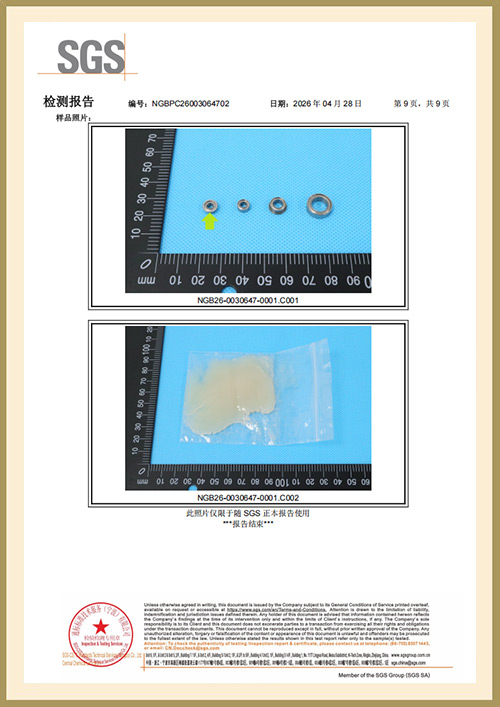
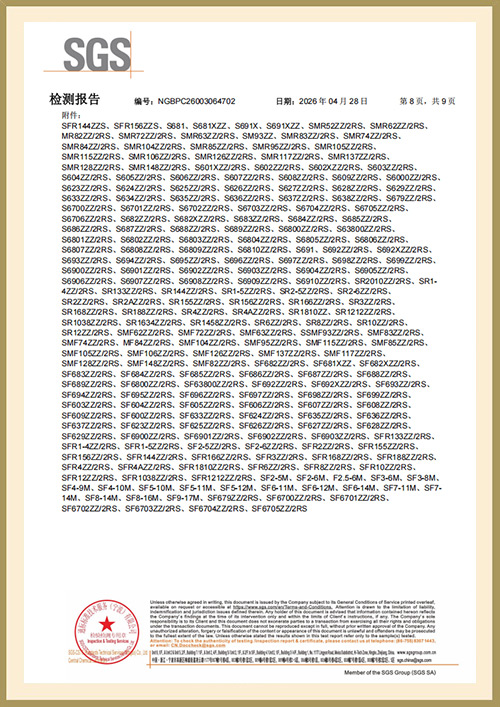
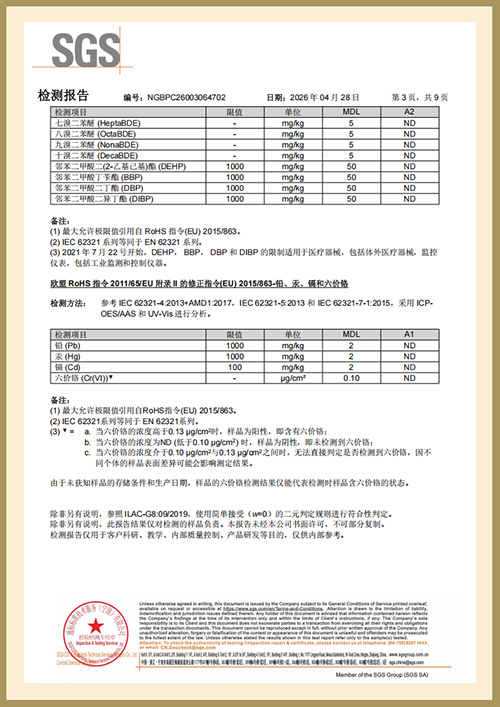
As a National High-Tech Enterprise, Yinghong holds multiple invention and utility model patents and has obtained internationally recognized certifications including IATF 16949, RoHS, CE, and SGS. These certifications enable us to meet diverse customer requirements and provide effective solutions for demanding applications and complex technical challenges.
We specialize in the production of high-precision deep groove ball bearings and custom non-standard bearings under our registered trademark, “YHU”. Our main products include bearing steel bearings, stainless steel bearings, ceramic bearings, and plastic bearings.
YHU bearings are designed to deliver low noise, low vibration, low friction, high precision, great sealing performance, and high-speed operation. They also offer self-lubrication, corrosion resistance, rust resistance, acid and alkali resistance, chemical resistance, electrical insulation, non-magnetic properties, high-temperature resistance, low-temperature adaptability, and long service life, making them suitable for demanding operating environments.
As professional China SUS304 Thrust Ball Bearings Manufacturers and Wholesale SUS304 Thrust Ball Bearings Factory, our bearings and bearing assemblies are widely used in electric motors, power tools, pneumatic tools, robotics, drones, household appliances, precision instruments, semiconductor equipment, medical devices, marine equipment, aerospace applications, financial equipment, textile machinery, fishing equipment, and a wide range of specialized industrial equipment.
Honor
-
 SGS Test Report
 -
 SGS Test Report
 -
 SGS Test Report
 -
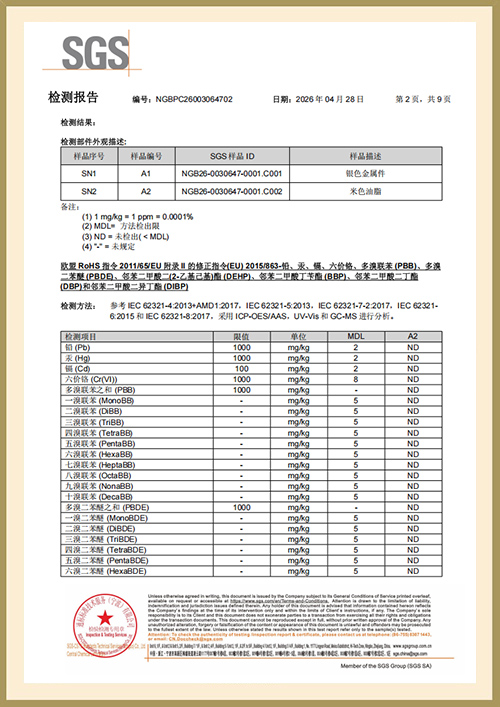 SGS Test Report
 -
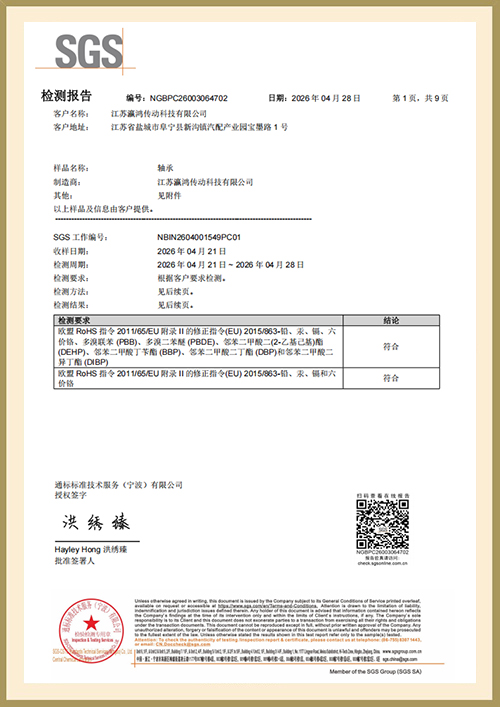 SGS Test Report
News
-
Industry News 2026-09-21
A flange bearing is a housed bearing assembly in which the outer housing carries a machined flange plate drilled with mounting holes. The flange plate allows the unit to be bolted directly onto a mac...
View More -
Industry News 2026-09-21
Most procurement teams comparing stainless steel bearings hold a material comparison sheet. 440C versus 316. Hardness versus corrosion resistance. Magnetic versus non-magnetic. None of that informati...
View More -
Industry News 2026-09-21
Bearing Steel: The Metallurgical Foundation Behind Every Rolling Contact Every rotating assembly in modern machinery depends on a handful of highly engineered contact points. A pump running at 3,600 ...
View More -
Industry News 2026-04-22
Angular contact ball bearings are essential for handling combined loads because their inner and outer raceways are offset along the bearing axis. This built-in contact angle creates a direct, uninter...
View More -
Industry News 2026-04-22
In a special production environment, many stainless steel bearings are equipped with corresponding sealing devices. On the one hand, it keeps the grease (oil) inside the stainless steel bearing from b...
View More -
Industry News 2026-04-22
Under normal circumstances, stainless steel bearings will produce a certain amount of noise during machine operation. However, if the vibration level of stainless steel bearings increases significantl...
View More
Contact us now
Industry Knowledge Extension
SUS304 Thrust Ball Bearings for Corrosion-Resistant Axial-Load Applications
We are a professional SUS304 Thrust Ball Bearings manufacturer and operate our precision bearing factory in Jiangsu, China under the YHU brand. These bearings are made for equipment that must carry axial load while exposed to moisture, washdown, food contact, chemicals, or outdoor conditions.
Our Wholesale SUS304 Thrust Ball Bearings Factory controls the complete production chain, from incoming stainless steel verification through grinding, assembly, testing, and packaging. That lets us support both serial production and non-standard versions engineered around your installed envelope.
Why SUS304 Is Specified for Thrust Bearings
SUS304 is the Japanese JIS name for 18-8 austenitic stainless steel, equivalent to AISI/UNS 304. The chromium and nickel content creates a self-healing passive oxide layer that resists rust in fresh water, food products, mild chemicals, and humid industrial air. For a thrust ball bearing, that protection matters because the raceways are often the first point where condensation or cleaning agents attack.
In the annealed condition SUS304 is essentially non-magnetic. Cold work such as rolling, forming, and raceway grinding can create a light magnetic response in the surface layer. This is normal for this material grade and does not mean the steel has been substituted. If a fully non-magnetic assembly is required, we evaluate alternative stainless, ceramic, or hybrid material sets from the same engineering platform.
Application Fit and Operating Limits
Thrust ball bearings are intended for axial loads acting in one direction and for moderate to high-speed operation under relatively light loads. They should not be used as combined radial and axial bearings unless the design incorporates additional guidance. Within that scope, SUS304 is a strong match for:
- Food and beverage filling and packaging lines that are washed down with detergents and sanitizers.
- Medical and laboratory instruments where corrosion resistance and clean-running materials are expected.
- Marine and offshore equipment exposed to salt air, spray, and humidity.
- Chemical dosing and small pump drives handling mildly aggressive media.
- Textile, semiconductor, and precision instrument mechanisms with compact axial positioning requirements.
Positioning Within Our Stainless Thrust Bearing Family
We offer SUS304, SUS316, SUS420, SUS440, and special stainless thrust bearings under the Stainless Steel Miniature Thrust Ball Bearings line. The choice is based on the operating environment, hardness requirement, and whether magnetism is acceptable in the final assembly.
| Grade | Typical Application Fit | Selection Notes |
|---|---|---|
| SUS304 | Food, beverage, medical, marine, washdown environments | Good corrosion resistance, economical, non-magnetic when annealed |
| SUS316 | Seawater, chloride exposure, harsher chemical cleaning | Higher pitting resistance due to molybdenum content |
| SUS440 | Higher hardness and wear resistance with moderate corrosion protection | Martensitic grade, magnetic, often used in load-carrying bearings |
| SUS420 | Economical corrosion-resistant parts in dry or mildly humid service | Lower alloy content; we specify it only when the duty cycle supports it |
Engineering and Configuration Options
We build SUS304 thrust bearings around the customer's shaft size, housing bore, and available length. The bearing set can include a shaft washer, housing washer, ball complement, and a cage selected from stainless steel or specialty polymers depending on speed and chemical exposure. For miniature assemblies, we also review ball diameter and ball count against the axial load and expected service life.
- Shaft and housing washer dimensions per drawing or mating component
- Cage materials for dry, oil-lubricated, or grease-lubricated service
- Ball material options for improved corrosion performance
- Custom bore, outside diameter, and height configurations
- Lubrication selection based on temperature, food contact, and speed
- Preload and axial clearance adjustment for controlled end play
Our broader production program also includes Deep Groove Ball Bearings and Stainless Steel Bearings for rotating equipment that combines radial and axial loads.
Quality Control and Material Documentation
Our facility uses automated production lines and high-precision inspection equipment to control raceway geometry, surface finish, ball complement, and final runout. The quality system covers raw material warehousing, process control, and finished bearing inspection. We hold IATF 16949, RoHS, CE, and SGS certifications, and we can provide test documentation for material and dimensional characteristics.
Because the corrosion resistance of SUS304 depends on chromium and nickel content, we verify material certificates against the JIS range rather than relying on visual appearance alone. For serial orders, we can perform incoming material checks and maintain lot traceability through final packing.
Information We Use to Configure Your Solution
Every quotation starts with a clear definition of the duty point. The more accurate the application data, the closer the first sample will be to your expected life and running behavior.
- Axial load direction and magnitude (static and dynamic)
- Shaft diameter, housing bore, and available height
- Rotational speed, operating cycle, and expected life
- Environmental conditions: moisture, chemicals, washdown, temperature
- Magnetic, food-contact, or purity requirements
- Current lubricant, seals, or grease type if one is already defined
- Target annual quantity, packaging preference, and delivery location
- Drawing, sample, or existing bearing number for non-standard configurations
SUS304 Thrust Ball Bearings FAQ
What is the difference between SUS304 and SUS316 thrust ball bearings?
SUS316 adds molybdenum, which improves resistance to chlorides and seawater. SUS304 is more economical and is sufficient for fresh water, food, mild chemicals, and washdown environments. We confirm the selection against the actual cleaning agents and expected exposure.
Can SUS304 thrust ball bearings be used in food processing equipment?
Yes. SUS304 is a food-grade stainless steel and is a standard choice for equipment that contacts food or is cleaned with sanitizers. We also check the lubricant and cage material so the complete bearing assembly meets the relevant food-contact requirement.
Can you produce a non-standard SUS304 thrust bearing from a sample or drawing?
We specialize in customized special bearings and can develop the bearing from your drawing, sample, or installed envelope. Our engineering team handles design, prototype production, validation, and serial delivery.
Do you provide material certificates and test reports?
Yes. We can provide material certificates, dimensional inspection results, and SGS test documentation where required. Lot traceability is maintained from incoming steel through final inspection.
Why does a new SUS304 bearing show slight magnetism?
Cold working during rolling, grinding, and assembly can transform small areas of austenite into martensite, which is magnetic. This is normal for SUS304 and is not an indication of poor material quality. If magnetism must be avoided, we can review a different material grade.
Related Products and Categories
Our portfolio also includes Products for applications with different operating ranges, interfaces or integration requirements.

- Contact Information
-
-
+86 162 6918 9999 +86 136 1619 2555

-
+86 153 0641 4247

-
jeffrey@yhu1988.com

rose@yhu1988.com -
Yinghong Industrial Park, Zexin Avenue, Xingou Auto Parts Industrial Park, Funing County, Yancheng City, Jiangsu Province, China

-
- QR Code

